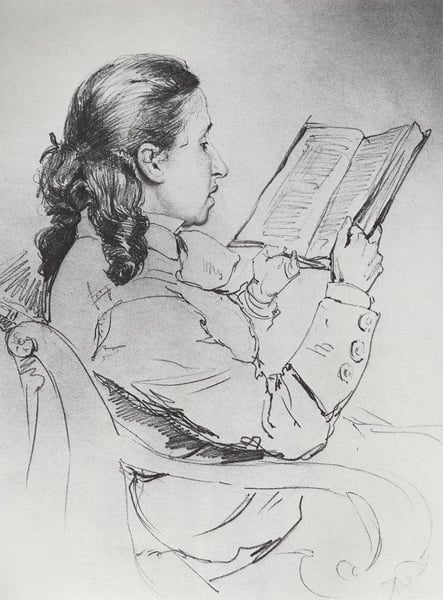
Analisi esperta di Portrait of E.G. Mamontova reading di Ilya Repin
Stile: Realism · Genere: portrait
Expert Analysis of Ilya Repin's "Portrait of E.G. Mamontova reading" (Style: Realism; Genre: Portrait)
Ilya Repin, a towering figure of 19th-century Russian Realism, is renowned for his unflinching depictions of both the mundane and the monumental. This portrait of Yelizaveta Grigoryevna Mamontova captures a moment of private stillness, elevating an everyday act—reading—to a subject worthy of serious artistic treatment. The work’s significance lies in how it fully realizes core tenets of the Realist movement:
Psychological Depth over Idealization
Realism rejected the polished, heroic poses of Neoclassicism and Romanticism. Here, Mamontova is not arranged as a distant muse or allegorical figure. She leans forward slightly, absorbed in her book, her gaze directed downward and inward. Her expression is contemplative, not performative; we are granted access to an interior world. Repin’s brushwork—loose in the fabric, precise in the face—creates a sense of immediacy, as if we have happened upon her in a genuinely private moment.
Everyday Life as Worthy Subject
Reading was a quintessentially Realist theme, symbolizing education, introspection, and domestic culture in an era of social change. By choosing this scenario, Repin aligns with the movement’s belief that truth and beauty reside in ordinary experiences. The absence of overt narrative or dramatic gesture forces the viewer to focus on the sitter’s humanity: her posture, the fall of light on her collar, the texture of the book’s pages. This quiet dignity is a hallmark of Repin’s portraiture.
Technical Naturalism
The lighting appears soft and diffused, likely from a nearby window, modeling the sitter’s features without theatrical shadows. The color palette is restrained—warm tones of brown, cream, and muted gold—enhancing the intimate atmosphere. Repin’s skill in rendering fabric (the crisp sleeve, the soft collar) and the subtle glint of light on the binding demonstrates his mastery of illusionistic fidelity, yet the work never feels photographic or stiff. Instead, it breathes with the vitality of a lived moment.
Significance Within the Period
This portrait exemplifies how Russian Realists transformed the portrait genre. Unlike the commissioned grand portraits of earlier centuries, which asserted status or lineage, Repin’s Mamontova asserts personhood—her quiet absorption is a quiet rebellion against spectacle. The work stands as a testament to the belief that a woman reading is as profound a subject as a battlefield or a coronation, a conviction that would influence later Intimist and Impressionist tendencies. In its fusion of technical mastery and empathetic observation, it remains a quintessential Realist achievement: art that finds the universal in the particular, and the profound in the everyday.
Visivamente simili
20 opere con composizione e palette affini
Jean-Louis Provost, seated and resting his left arm on the back of a chair
Jean Auguste Dominique Ingres
Oscar Wilde at Work
Aubrey Beardsley
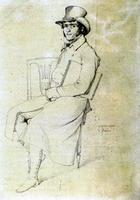
Jean François Julien Menager
Jean Auguste Dominique Ingres
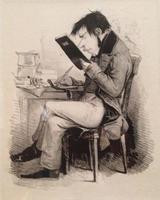
Caricature of the short-sighted editor of the Düsseldorfer Zeitung Dr. Heinemann
Andreas Achenbach
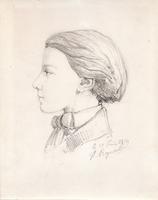
Presumed portrait of the artist's brother (23 June 1859)
Henri Regnault
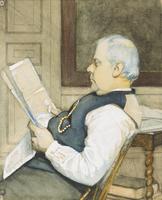
Porträtt Av Konstnärens Far
Eugène Jansson
John Russel, Sixth Duke of Bedford
Jean Auguste Dominique Ingres
Ivan Krylov among artists
Orest Kiprensky
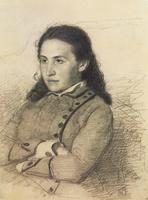
Portrait of E.G. Mamontova
Ilya Repin
Portrait of a Gentleman
Joseph Ducreux
Portrait of Madame la Comtesse Adèle de Toulouse Lautrec
Henri de Toulouse-Lautrec
Dr. Thomas Church
Jean Auguste Dominique Ingres
Self-portrait
Karl Bryullov
Luigi Calamatta
Jean Auguste Dominique Ingres
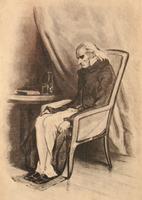
The paralyzed Bonapartist Girondist Noirtier de Villefort in 1838
Paul Gavarni
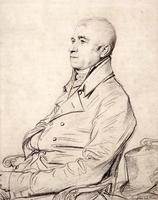
The Reverend Joseph Church
Jean Auguste Dominique Ingres
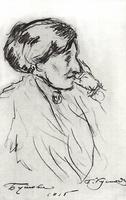
Portrait of N.S. Butova
Boris Kustodiev
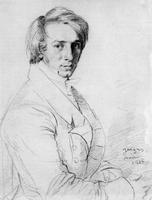
Ursin Jules Vatinelle
Jean Auguste Dominique Ingres
Sketch-Portrait of Louis-Michel-Victor Mercier
Henri Lehmann
Retrato De Goya
Rosario Weiss Zorrilla