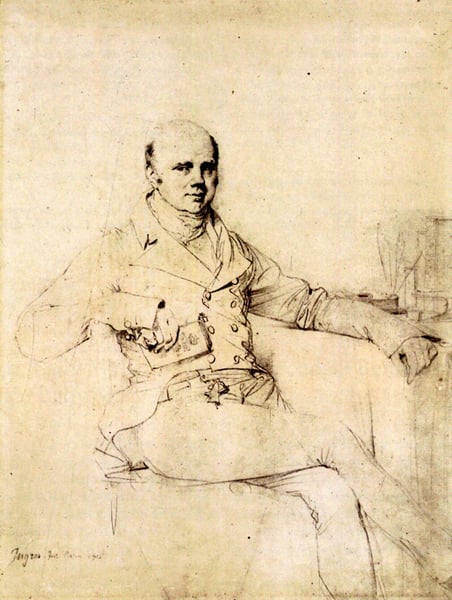
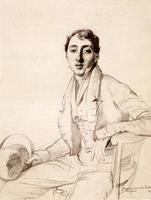
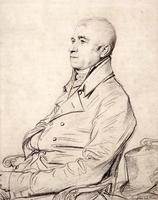
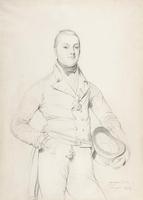
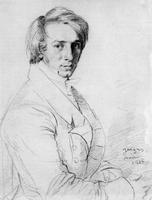
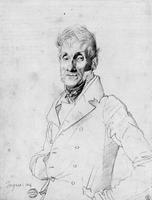
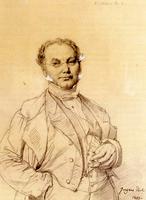
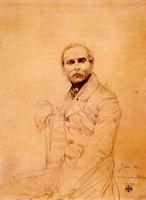
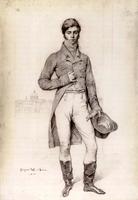
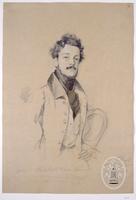
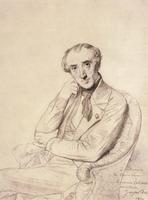
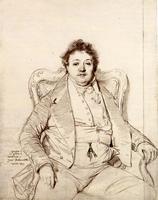
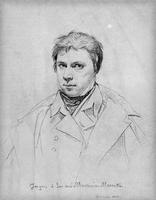
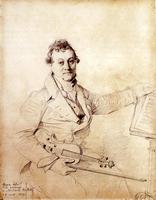
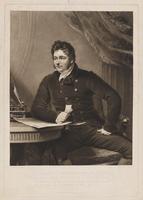
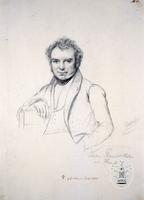
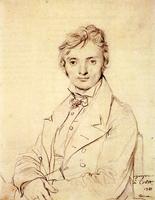
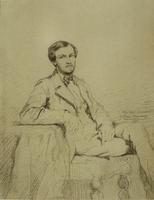
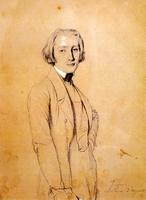
The artwork John Russel, Sixth Duke of Bedford by Jean Auguste Dominique Ingres is a consummate example of Neoclassical portraiture, executed with the rigorous linear precision and idealized form that define the style. As a Neoclassical portrait, its significance lies in Ingres’s ability to reconcile the demands of individual likeness with the timeless, sculptural clarity of antique art. The Duke is presented with a calm, elevated composure—his posture and expression reflecting the Enlightenment ideals of rational dignity and aristocratic grace. Ingres’s meticulous draftsmanship, evident in the crisp contours and restrained palette, transforms a state portrait into a study of immutable order. The work also marks a notable cross-cultural encounter: a French Neoclassical master portraying a British nobleman, merging the aesthetic principles of revolutionary-era France with the tradition of British landed gentry portraiture. This fusion underscores Ingres’s role in adapting Neoclassicism to convey modern authority, making the portrait not just a record of a sitter but an emblem of the period’s enduring pursuit of harmony and moral clarity.