Analisi esperta di Wanderer di Ilya Repin
Stile: Realism · Genere: genre painting
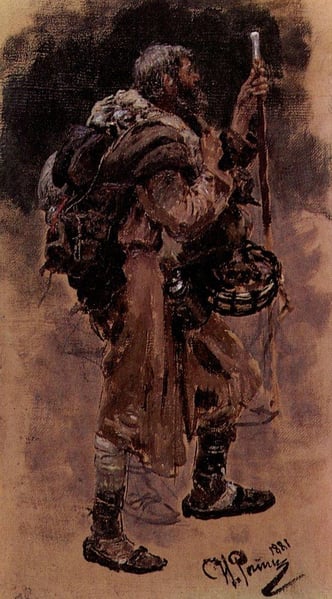
Analysis of Ilya Repin’s "Wanderer" (also known as "The Pilgrim" or "The Wanderer")
Style & Period Context:
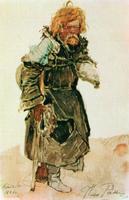
Painted in the late 19th century during the height of Russian Realism, Repin’s Wanderer exemplifies the Peredvizhniki (The Wanderers or Itinerants) movement’s commitment to depicting the authentic, often harsh, realities of Russian life. Unlike the idealized or mythological subjects of Academic art, Repin focuses on a lone peasant traveler—a figure marginalized by society yet emblematic of the nation’s restless soul.
Composition & Technique:
The painting presents a half-length figure set against a muted, open landscape. The wanderer’s weathered face, deep-set eyes, and threadbare coat are rendered with precise, unvarnished detail. Repin’s brushwork is both vigorous and controlled—thick impasto on the rough fabric, softer blending on the skin—creating a tactile sense of poverty and endurance. The neutral palette of grays, browns, and dull ochres reinforces the subject’s anonymity and his integration with the land.
Significance within Realism & Genre Painting:
-
Social Conscience: Repin elevates a humble, itinerant beggar to the status of a monumental subject. This was a deliberate break from academic hierarchy—genre painting of this era often trivialized rural life, but Repin bestows dignity and psychological depth. The wanderer is not merely a type; his weary, knowing gaze suggests a lifetime of hardship and a quiet, searching intelligence.
-
Symbol of the People: For the Peredvizhniki, the wanderer was a potent symbol of the Russian peasantry’s dispossession and spiritual quest. Repin captures both the physical toll of rootlessness and an inner resilience—the figure stands as a critique of Tsarist social neglect and a proto-revolutionary emblem of the common man’s latent power.
-
Technical Mastery: The painting’s realism is not photographic but interpretive. Repin uses subtle asymmetry in the wanderer’s posture and the direction of his glance to create an unsettling tension. The lack of narrative context (no destination, no companion) forces the viewer to confront the subject’s isolation—a hallmark of the best genre painting: specificity that evokes universal human experience.
Legacy:
Wanderer is often regarded as a companion to Repin’s monumental Barge Haulers on the Volga. While the Barge Haulers depicts collective suffering, the Wanderer isolates the individual tragedy. It remains a touchstone of Russian Realism for its fusion of empathetic observation, social critique, and painterly innovation—proving that a single, unnamed figure can embody an entire era’s conscience.
Genere
Stile
Visivamente simili
20 opere con composizione e palette affini
Wanderer
Vasily Surikov
Kneeling beggar
Vasily Surikov
Soldier
Charles Louis Muller
Pilgrim
Ilya Repin
Burlak who hold hands on the strap
Vasily Vereshchagin
Ukrainian
Henryk Rodakowski
Dervish
Konstantin Makovsky
Goatherd of the Campagna
George Hemming Mason
Farmer from Hungary
August von Pettenkofen
Septemvri 1923
Ivan Milev
Sage
Nicholas Roerich
Gipsy Tent
Arthur Verona
Buying a dagger
Konstantin Korovin
Peasant
Nikolay Bogdanov-Belsky
Andreescu at Barbizon
Nicolae Grigorescu
Secret
Viktor Oliva
Two pilgrims
Vladimir Makovsky
Volunteers
Simeon Velkov
Going Home
Ralph Hedley
The farmer with a sixth (study)
Viktor Vasnetsov