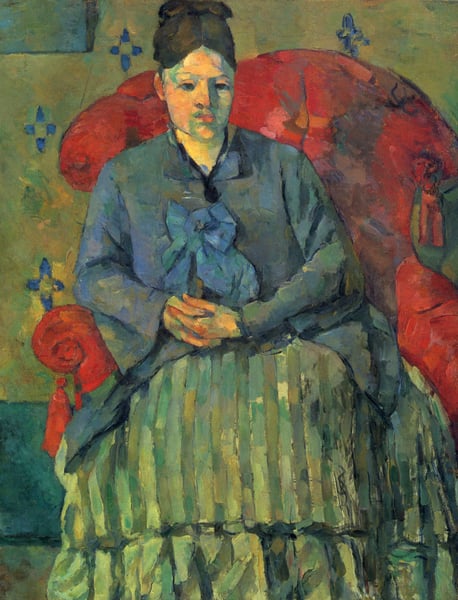
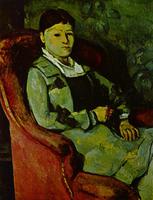
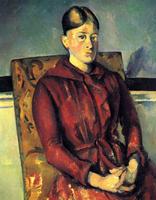
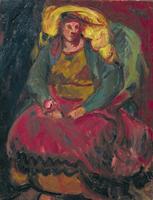
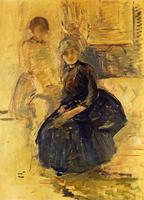
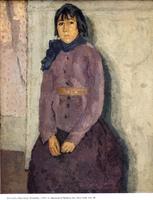
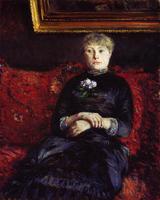
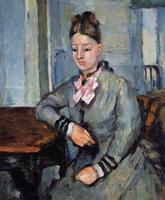
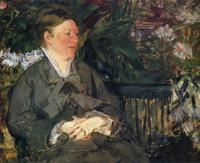
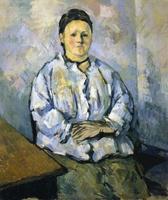
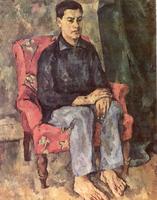
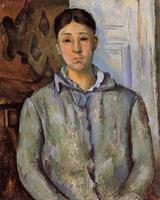
This portrait by Paul Cézanne exemplifies the Impressionist period’s focus on capturing modern life through subjective perception and expressive brushwork. As a portrait within the Impressionist style, it is significant for applying the movement’s hallmark loose, visible strokes and shifting color harmonies to a traditional genre, thereby redefining the formality of portraiture. Cézanne’s treatment of Madame Cézanne emphasizes the momentary, atmospheric qualities of light and pigment over exact likeness, reflecting the period’s move away from academic precision. This work thus stands as a key example of how Impressionism expanded its subject matter while maintaining its core emphasis on optical sensation and contemporary experience.