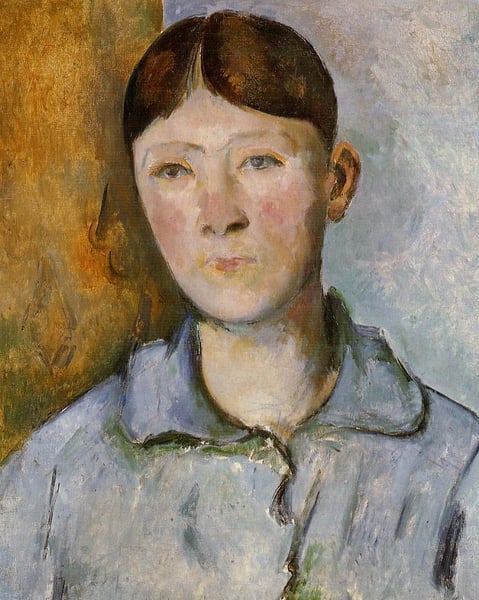
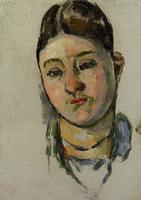
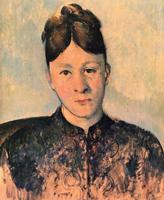
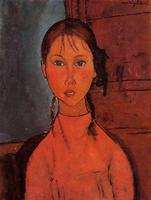
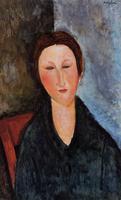
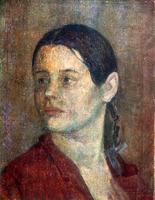
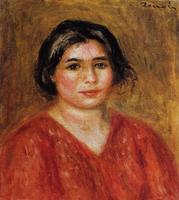
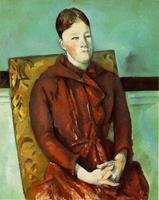
"Portrait of Madame Cezanne" is a significant work from Paul Cézanne's mature period, exemplifying the core principles of Post-Impressionism. As a portrait, it moves beyond mere likeness to explore structure and form through deliberate composition. Cézanne's mature style is characterized by a reduction of the subject into geometric planes and a subtle, rhythmic use of color to model volume, rather than relying on traditional chiaroscuro. This approach marks a critical departure from the fleeting impressions of Impressionism, emphasizing a more enduring, almost architectural solidity. The painting’s significance lies in how it prefigures the analytical concerns of early modernism—particularly Cubism—by treating the human figure as a subject for formal exploration, thereby redefining the purpose of portraiture within the Post-Impressionist canon.