
Expert analysis of Guy Rose’s My Sister Maud
Style: Impressionism · Genre: portrait
Expert Analysis: "My Sister Maud" by Guy Rose
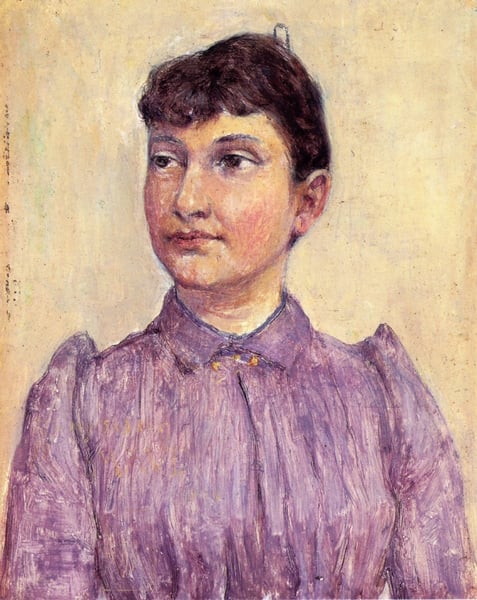
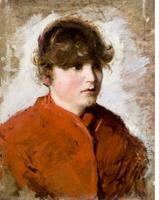
Guy Rose (1867–1925) was a leading figure in American Impressionism, and My Sister Maud exemplifies the movement’s departure from academic portraiture toward a more intimate, light-infused approach. Painted in the late 19th or early 20th century, this work captures not just a likeness but a fleeting moment of familial tenderness—Rose’s sister Maud rendered in soft, dappled light and broken brushwork characteristic of the style.
Significance within Impressionism and American Art
- American Impressionist Portraiture: While French Impressionists often focused on landscapes or scenes of modern life, Rose brought those techniques to portraiture, blending psychological presence with atmospheric effects. Here, the sitter’s identity is secondary to the play of light across her features and clothing, a hallmark of the movement’s emphasis on optical perception.
- Plein Air Sensibility: As a California-based artist and member of the Laguna Beach art colony, Rose adapted Impressionist color theory to the West Coast’s distinct golden light. In My Sister Maud, the warm, sunlit palette and soft shadows suggest an outdoor or window-lit setting, lending an air of natural spontaneity.
- Personal Subject Matter: The choice of a family member reflects the Impressionist interest in everyday life—informal, unposed moments that challenge the formality of earlier portraiture. The title itself, “My Sister Maud,” invites the viewer into a private world, making the artwork a document of both artistic innovation and personal affection.
- Technical Mastery: Rose’s confident use of loose, visible brushstrokes and a high-key palette (notable in the skin tones and background) demonstrates his assimilation of French Impressionism—he studied in Paris and at Giverny—while asserting an independent American voice. The portrait’s subtle modeling of form through color, rather than line, marks it as a mature work within his oeuvre.
Conclusion
My Sister Maud is significant as a quintessential American Impressionist portrait, bridging familial intimacy with the movement’s core concerns: light, atmosphere, and the transient beauty of a moment. It highlights Guy Rose’s role in translating European Impressionism into a distinctly American idiom, capturing both the sitter’s quiet grace and the luminous environment that surrounds her.
Museum / Gallery
Visually similar
20 works with related composition and palette
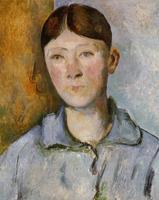
Portrait of Madame Cezanne
Paul Cezanne
Portrait of a young girl
Alessandro Zezzos
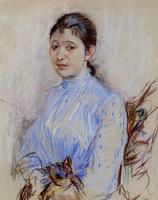
Young Woman in a Blue Blouse
Berthe Morisot
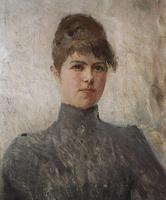
Portrait of actress M.Ya.Van-Zandt, in a marriage Cherinova
Valentin Serov
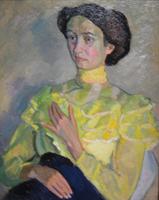
The Lady in the Yellow Blouse
Robert Falk
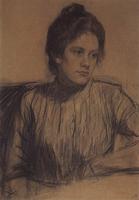
Portrait of Y.E. Proshinskaya
Boris Kustodiev
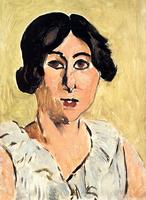
Lorette with Black Eyes
Henri Matisse
Woman`s Head
Pierre-Auguste Renoir
Self-Portrait
Helene Schjerfbeck
Margaret
Edward Burne-Jones
Woman in Blue
Zinaida Serebriakova
Gabrielle at Her Window
Pierre-Auguste Renoir
Portrait of the Artist's Wife
Bela Kadar
The red carnation
Silvestro Lega
Painting from Life
Richard Jack
Portrait of Sally Fairchild
John Singer Sargent
The daughter of an artist
Kuzma Petrov-Vodkin
Portrait of E. A. Surikova
Vasily Surikov
Portrait of An Italian Lady
Fujishima Takeji
The red corset
Silvestro Lega