Expertenanalyse zu Paul Cezannes The Drinker
Stil: Post-Impressionism · Genre: portrait
Expert Analysis of "The Drinker" by Paul Cézanne
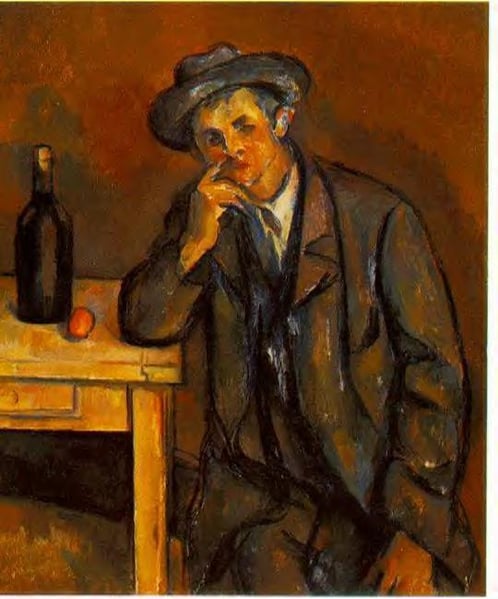
In this final-period portrait, The Drinker exemplifies the transformative power of Paul Cézanne’s Post-Impressionist vision. Executed during the artist’s late phase—a time of intense formal experimentation—the work transcends traditional portraiture by prioritizing structure and perception over mere likeness.
Significance within Post-Impressionism: Cézanne’s late style is defined by a radical simplification of form and a deliberate flattening of space, both evident here. The sitter’s figure is built from layered, parallel brushstrokes that merge solidity with atmospheric vibration, a hallmark of Cézanne’s quest to “treat nature by means of the cylinder, the sphere, the cone.” The drinker’s pose, though grounded, feels both monumental and precarious, as if his presence is distilled into a geometric essence. This approach directly influenced later movements like Cubism, marking Cézanne as the bridge between Impressionism and early modernism.
Genre and Period Context: As a portrait from the artist’s final period, The Drinker reveals Cézanne’s increasing focus on the psychological weight of his subjects. The figure’s downturned gaze and clenched posture suggest introspection or melancholy, yet the robust, almost sculptural handling of the hands and clothing emphasizes the materiality of the painted surface. Color is used not simply to describe but to construct: ochres, blues, and muted greens model form through subtle tonal shifts rather than sharp contrasts, typical of Cézanne’s late palette.
What Makes It Significant: The Drinker stands as a key example of Cézanne’s late mastery—a portrait that sacrifices anecdotal detail for a deeper, more universal representation of human presence. It demonstrates how Post-Impressionism could imbue a conventional genre with new formal and emotional complexity, paving the way for the abstraction of the 20th century. The painting’s rough, unfinished quality is not a flaw but a deliberate accentuation of the creative process, inviting viewers to engage with the act of perception itself.
Museum / Gallery
Visuell ähnlich
20 Werke mit ähnlicher Komposition und Farbpalette
The Smoker
Paul Cezanne
Man Smoking a Pipe
Paul Cezanne
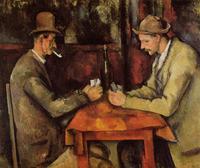
The Card Players
Paul Cezanne
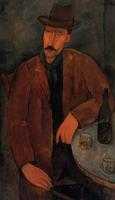
Man with a Glass of Wine
Amedeo Modigliani
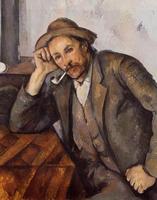
Smoker
Paul Cezanne
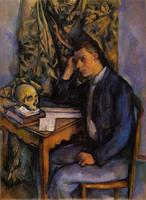
Young Man and Skull
Paul Cezanne
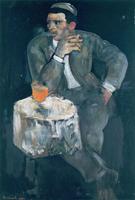
Al caffè
Mario Comensoli
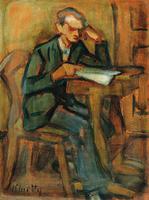
Reading Self Portrait
Kmetty János
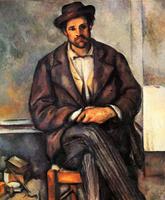
Seated Peasant
Paul Cezanne
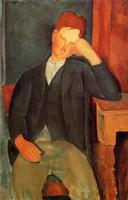
The young apprentice
Amedeo Modigliani
The Drunkards
James Ensor
Jeantaud, Linet and Laine
Edgar Degas
Portrait of the sculptor P. Bromirsky
Pyotr Konchalovsky
Mazin, the Poet
Marc Chagall
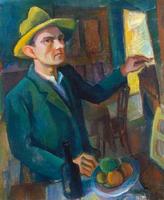
Self-Portrait
Kmetty János
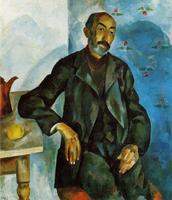
Portrait of an Older Man
Robert Falk
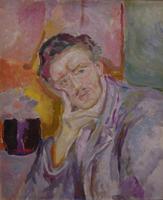
Self-Portrait with Hand under Cheek
Edvard Munch
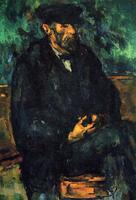
The Sailor
Paul Cezanne
The Card Players
Paul Cezanne
Czóbel Béla. .
Bela Czobel