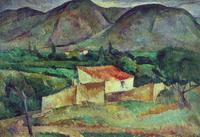
Expert Analysis of "The Gulf of Marseille Seen from L'Estaque" by Paul Cézanne
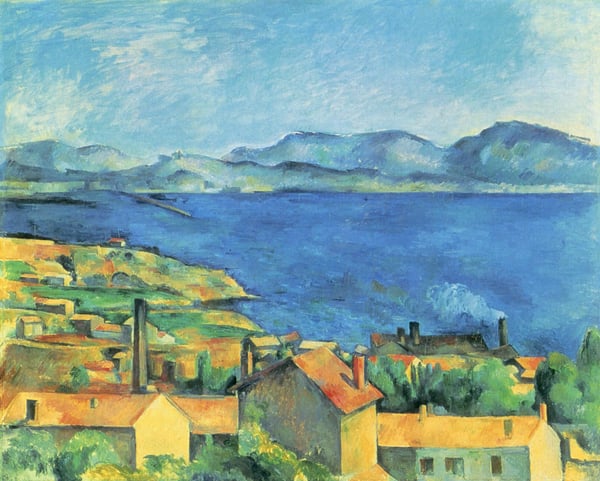
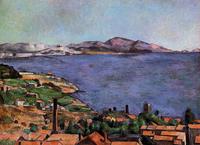
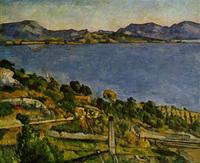
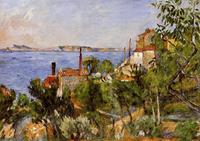
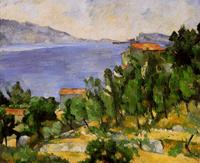
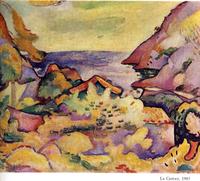
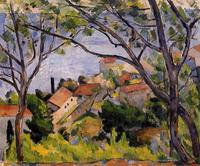
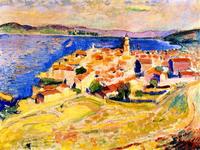
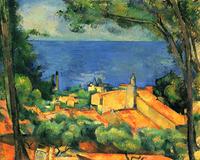
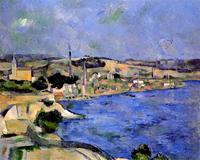
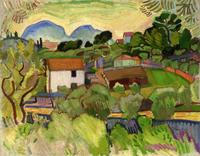
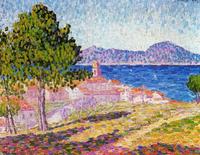
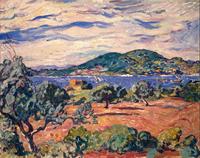
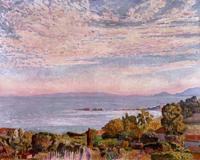
This landscape, painted during Cézanne's mature period, stands as a defining work of Post-Impressionism. Its significance lies in how it pushes beyond the naturalistic concerns of Impressionism, instead using color and structure to build a new visual logic. Cézanne reduces the view—the gulf, the distant hills, and the rooftops of L'Estaque—into simplified, almost geometric planes. The brushstrokes are measured and parallel, layering warm ochres, cool blues, and greens to create a sense of solidity rather than atmospheric flux. By synthesizing form and color, Cézanne's composition achieves a monumental calm that bridges the fleeting moment of Impressionist painting and the formal explorations of early 20th-century modernism. This work exemplifies his mature quest to "treat nature by means of the cylinder, the sphere, the cone," making it a cornerstone of Post-Impressionist landscape.