Expert Analysis: Three Bathers by Paul Cézanne
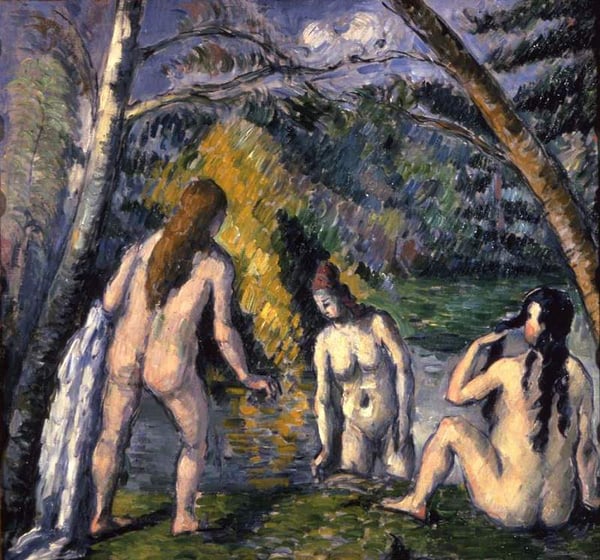
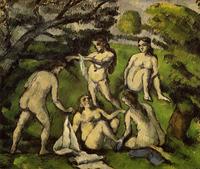
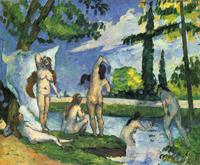
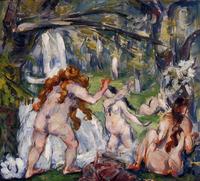
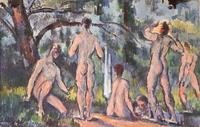
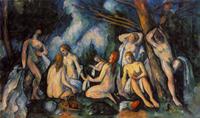
In Three Bathers, Cézanne distills the human figure into a monumental architecture of form, a hallmark of his mature Post-Impressionist period. The work reimagines the traditional genre painting—a scene of everyday life—by stripping away narrative detail in favor of structural harmony. The three bathers are not individualized portraits but interlocking volumes, their bodies modeled through parallel brushstrokes and modulated color rather than chiaroscuro. This approach anticipates Cubism and marks a decisive break from Impressionism’s fleeting light effects.
What makes the painting significant is its radical synthesis of nature and geometry. Cézanne builds the composition through a rigorous diagonal axis—the reclining figure, the standing bather, the seated one—that guides the eye across the canvas while the surrounding trees and water echo the same rhythmic planes. The landscape is not a backdrop but an equal participant in this tectonic balance. By treating the human form with the same analytical scrutiny as a mountain or apple, Cézanne elevates genre painting to a meditation on the underlying order of vision itself. This work stands as a key transitional piece: it looks back to classical figuration yet forward to the abstract structures of 20th-century modernism.