
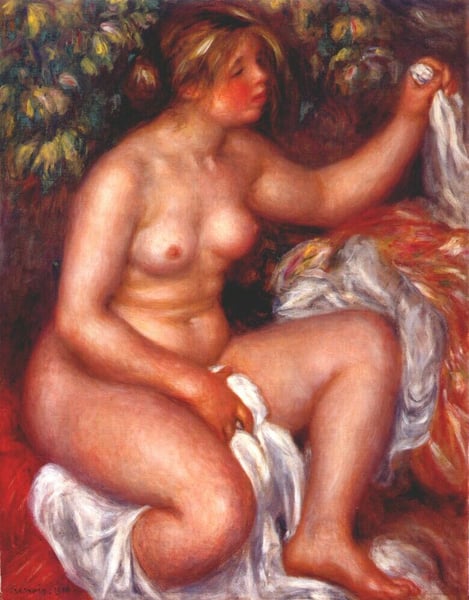
Expert analysis of Pierre-Auguste Renoir’s After the bath
Style: Impressionism · Genre: nude painting (nu)
Expert Analysis: “After the Bath” by Pierre-Auguste Renoir
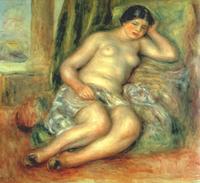
Pierre-Auguste Renoir’s “After the Bath” is a masterful example of the artist’s late-career reinvention within the Impressionist movement. Painted during his Later Years, this work marks a decisive shift from the flickering, outdoor light effects of early Impressionism toward a more timeless, classically inflected sensuality.
Significance within Impressionism & Renoir’s Oeuvre
- A departure from pure Impressionism: While still rooted in the movement’s luminous palette, Renoir here abandons loose, atmospheric brushwork for smoother, almost sculptural modeling. The figure is solid, weighty, and deliberately idealized—echoing the nudes of Titian and Rubens, whom Renoir admired.
- Celebration of the female form: As a nu (nude) painting, it exemplifies Renoir’s later obsession with the voluptuous, radiant female body. The soft, rosy flesh tones blend with warm highlights, creating a sense of tactile warmth and vitality that became his signature.
- Intimacy and domesticity: The title “After the Bath” suggests a private, everyday moment—a hallmark of Impressionist subject matter. Yet Renoir elevates the scene to a mythic, timeless sphere by bathing the figure in a golden, diffused glow that feels both natural and artificial.
What Makes It Significant
- Synthesis of Impressionist color with Classical form: Renoir fuses the broken color and vibrant highlights of Impressionism with a sculptural, volumetric handling of the body—a reconciliation that many critics had thought impossible.
- Transitional work: It stands as a bridge between Renoir’s early Impressionist spontaneity and the grand, decorative nudes of his final years (such as The Bathers, 1918–19).
- Emotional warmth: Unlike the cool, detached nudes of some contemporaries, Renoir’s bather radiates direct sensuality and contentment, inviting the viewer into a state of serene appreciation.
In “After the Bath,” Renoir proves that Impressionism could evolve beyond the fleeting moment to embrace permanence, beauty, and the timeless allure of the human body—securing his place as one of the movement’s most versatile and enduring masters.
Visually similar
20 works with related composition and palette
Woman in an Interior
Pierre-Auguste Renoir
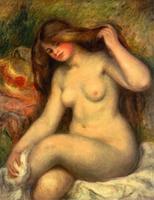
Large Bather with Crossed Legs
Pierre-Auguste Renoir
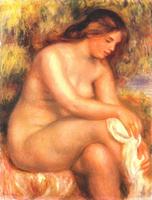
Bather drying her leg
Pierre-Auguste Renoir
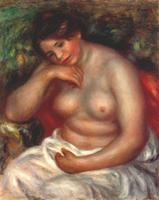
Woman sleeping
Pierre-Auguste Renoir
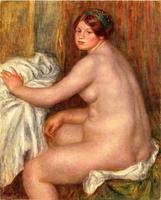
Seated Bather
Pierre-Auguste Renoir
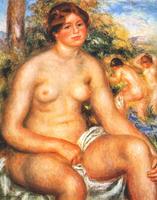
Seated Bather
Pierre-Auguste Renoir
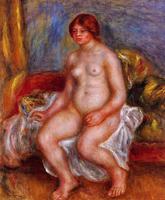
Nude Woman on Green Cushions
Pierre-Auguste Renoir
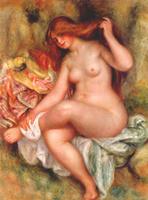
A Seating Bather
Pierre-Auguste Renoir
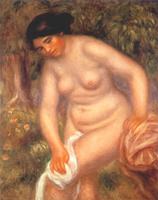
Bather drying herself
Pierre-Auguste Renoir
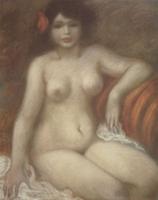
Seated Nude
Theophile Steinlen
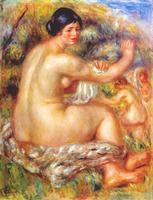
After the bath
Pierre-Auguste Renoir
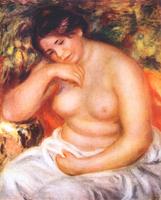
Seated bather
Pierre-Auguste Renoir
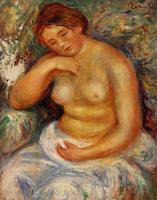
Seated Nude with a Bouquet
Pierre-Auguste Renoir
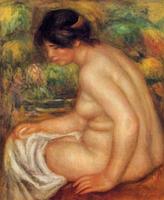
Seated Nude in Profile (Gabrielle)
Pierre-Auguste Renoir
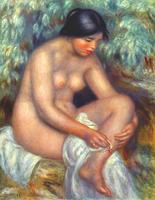
Bather wiping a wound
Pierre-Auguste Renoir
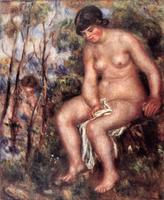
Bather
Pierre-Auguste Renoir
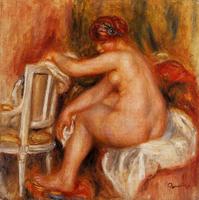
Seated Nude
Pierre-Auguste Renoir
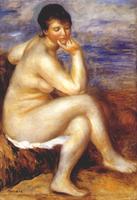
Bather with a rock
Pierre-Auguste Renoir
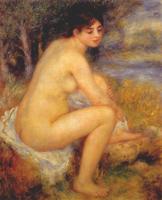
Nude in a landscape
Pierre-Auguste Renoir
Sleeping Odalisque (Odalisque with Babouches)
Pierre-Auguste Renoir