
Expert analysis of Pierre-Auguste Renoir’s Seated Bather
Style: Impressionism · Genre: nude painting (nu)
Expert Analysis: "Seated Bather" by Pierre-Auguste Renoir
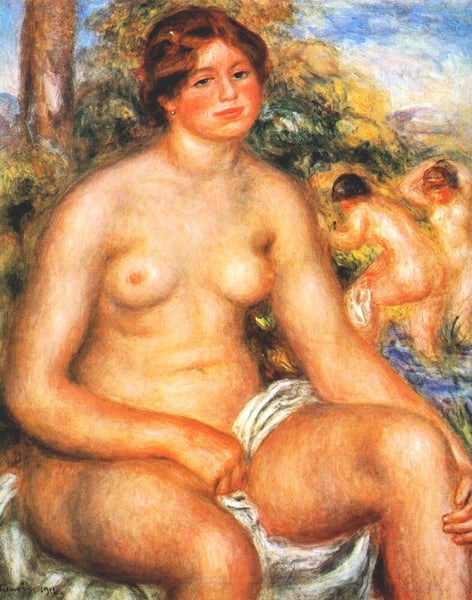
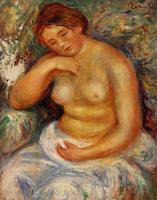
Pierre-Auguste Renoir’s Seated Bather stands as a quintessential example of his mature, later-period output, merging the radiant color and broken brushwork of Impressionism with a renewed interest in classical figure composition. Created during the artist’s later years, this nude painting (nu) demonstrates how Renoir transcended pure visual impression to synthesize warmth, sensuality, and timeless form.
Significance within Impressionism and the Later Period
-
Synthesis of Impressionist Light with Solid Form
While early Impressionism often dissolved figures into ambient light, Renoir’s later works—including Seated Bather—anchor the female nude in a more sculptural, rounded treatment. The dappled strokes of color that model the skin still flicker with outdoor luminosity, but the body feels palpable and weighty, reflecting Renoir’s lifelong study of Renaissance masters such as Titian and Rubens. -
Celebration of the Feminine Ideal
The subject—a solitary bather seated in an intimate, natural setting—echoes a motif Renoir revisited obsessively in his later years. Unlike the more confrontational nudes of Manet or the fleeting moments of Degas, Renoir’s bather is at once a vision of serene, unselfconscious grace and a vehicle for pure painterly pleasure. The soft, rosy flesh tones and the liquid play of light across shoulders and thighs epitomize his belief that painting should be “joyful and pretty.” -
Technical Hallmarks of the Period
By the time of this work, Renoir’s palette had shifted toward warmer, more opulent hues—coral, peach, gold, and soft green—applied in feathery, overlapping dabs. The background is often deliberately blurred, a loose arrangement of foliage and water that envelops the figure without competing for attention. This approach, sometimes criticized as overly decorative, is actually a refined distillation of Impressionist spontaneity into a more decorative, harmonious whole. -
Influence on Modern Figuration
Seated Bather reveals Renoir’s role as a bridge between Impressionism’s radical modernity and the re‑embrace of classical composition that would influence later painters like Pierre Bonnard and Henri Matisse. Its emphasis on tactile surface and human warmth anticipates the intimate, color‑driven nudes of the early 20th century.
In sum, Seated Bather is significant not only as a superb example of Renoir’s late style but also as a testament to how Impressionism could evolve—retaining its vibrant sensory immediacy while achieving a timeless, almost Romantic monumentality. The work embodies Renoir’s personal conviction that the greatest art captures both the transient beauty of a moment and the enduring grace of the human form.
Visually similar
20 works with related composition and palette
Bather
Pierre-Auguste Renoir
Bather drying her leg
Pierre-Auguste Renoir
Bather drying herself
Pierre-Auguste Renoir
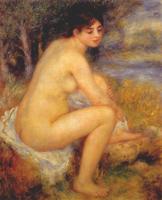
Nude in a landscape
Pierre-Auguste Renoir
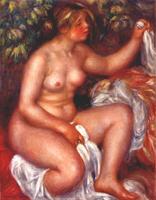
After the bath
Pierre-Auguste Renoir
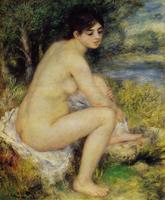
Seated Bather
Pierre-Auguste Renoir
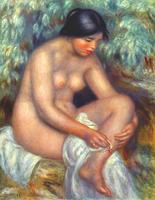
Bather wiping a wound
Pierre-Auguste Renoir
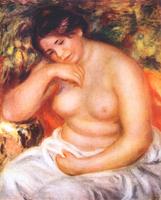
Seated bather
Pierre-Auguste Renoir
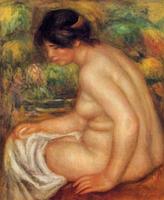
Seated Nude in Profile (Gabrielle)
Pierre-Auguste Renoir
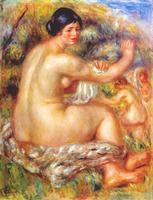
After the bath
Pierre-Auguste Renoir
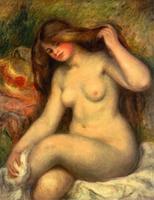
Large Bather with Crossed Legs
Pierre-Auguste Renoir
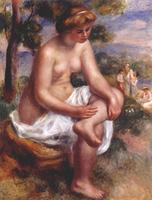
Seated bather in a landscape
Pierre-Auguste Renoir
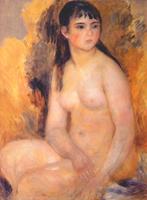
Nude
Pierre-Auguste Renoir
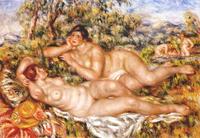
The Great Bathers (The Nymphs)
Pierre-Auguste Renoir
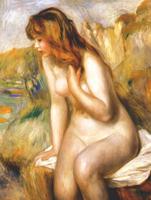
Bather seated on a rock
Pierre-Auguste Renoir
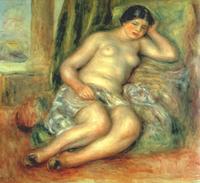
Sleeping Odalisque (Odalisque with Babouches)
Pierre-Auguste Renoir
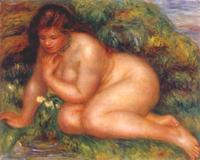
Bather Admiring Herself in the Water
Pierre-Auguste Renoir
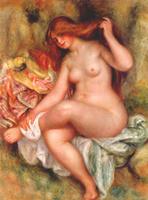
A Seating Bather
Pierre-Auguste Renoir
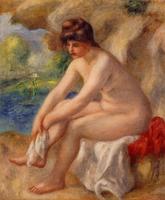
Leaving the Bath
Pierre-Auguste Renoir
Seated Nude with a Bouquet
Pierre-Auguste Renoir