
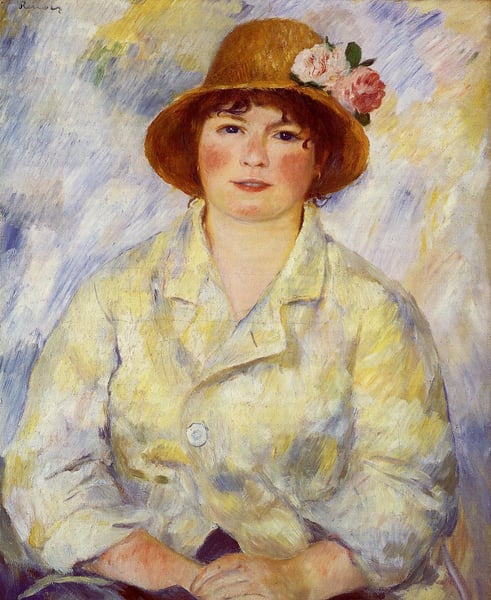
Analisi esperta di Aline Charigot (future Madame Renoir) di Pierre-Auguste Renoir
Stile: Impressionism · Genere: portrait
Expert Analysis: Aline Charigot (future Madame Renoir) by Pierre-Auguste Renoir
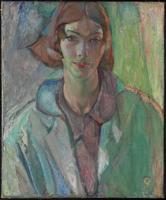
This portrait stands at a pivotal moment in Renoir’s career—marked stylistically as Impressionism yet chronologically aligned with his so-called “rejection” of the movement’s strict tenets. Painted in the early 1880s, the work depicts Aline Charigot, the artist’s future wife, who would become a recurring muse and anchor in his personal life. The painting is significant not only as an intimate biographical record but as a visual manifesto of Renoir’s evolving aesthetic.
Impressionist Roots and Personal Intimacy
True to Impressionist portraiture, Renoir captures Aline with soft, broken brushstrokes and a luminous palette that bathes her features in dappled light. The background is loosely rendered, dissolving into atmospheric warmth, which draws the viewer’s focus to her serene expression and the delicate play of light across her skin and clothing. This immediacy and fleeting quality—hallmarks of Impressionism—give the portrait a sense of living presence, as if we glimpse a candid moment of repose.
A Turn Towards Structure and Sensuality
What makes this work particularly significant is its subtle departure from pure Impressionism. By the early 1880s, Renoir had become dissatisfied with the movement’s dissolution of form and sought a more disciplined, classical approach—often referred to as his “Ingres period.” In this portrait, we see the seeds of that shift: Aline’s face is rendered with greater solidity and idealized symmetry than the feathery handling of the background. Her gaze is direct, her pose stable, and the contours of her body are hinted with a nascent sculptural clarity. This balance between atmospheric Impressionist color and emerging structural precision foreshadows Renoir’s later, more monumental nudes and portraits.
The Personal as Universal
Aline’s identity as the artist’s future wife adds emotional resonance. Renoir paints her not as a distant sitter but as a partner, suffusing the canvas with tenderness and a sense of domestic calm. This personal investment elevates the portrait beyond mere likeness; it becomes an exploration of feminine grace, stability, and the artist’s own yearning for permanence amid the fleeting sensations of Impressionism.
In short, Aline Charigot encapsulates Renoir’s transition from the radical immediacy of Impressionism toward a more enduring, classical ideal—while still celebrating the warmth and luminosity that define his masterpieces. It is a bridge between two worlds, and a testament to the power of personal love in shaping artistic vision.
Museum / Gallery
Visivamente simili
20 opere con composizione e palette affini
Portrait of Madame Cezanne
Paul Cezanne
Self-Portrait
Marie Duhem
Seated Woman
Paul Cezanne
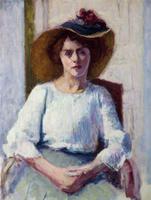
Woman in White
Roderic O'Conor
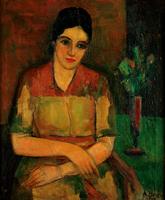
The Artist's Wife
Alexander Bogen
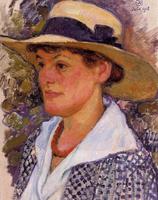
Portrait of a Woman
Theo van Rysselberghe
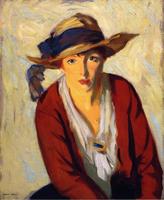
The Beach Hat
Robert Henri
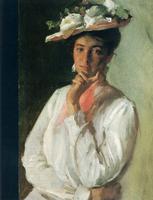
Woman in White
William Merritt Chase
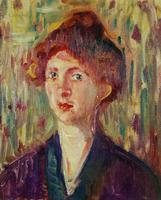
Rosa Meissner
Edvard Munch
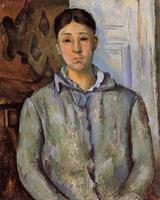
Madame Cezanne in Blue
Paul Cezanne
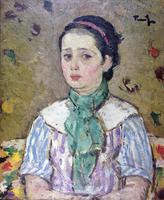
Untitled
Nicolae Tonitza
Bust of a Young Woman
Pierre-Auguste Renoir
Bust of a Young Girl in a Straw Hat
Pierre-Auguste Renoir
In the Garden
Ipolit Strambu
Lydia Sieligmann
Pierre-Auguste Renoir
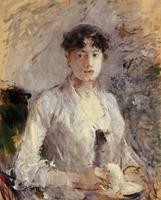
Young Woman in Mauve
Berthe Morisot
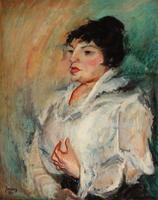
Berény Róbert, Spanyol Nő
Berény Róbert
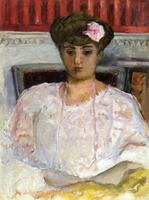
Misia with a Pink Corsage
Pierre Bonnard
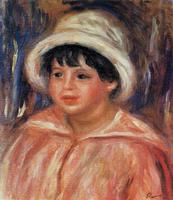
Claude Renoir
Pierre-Auguste Renoir
Vera
Frederick Varley