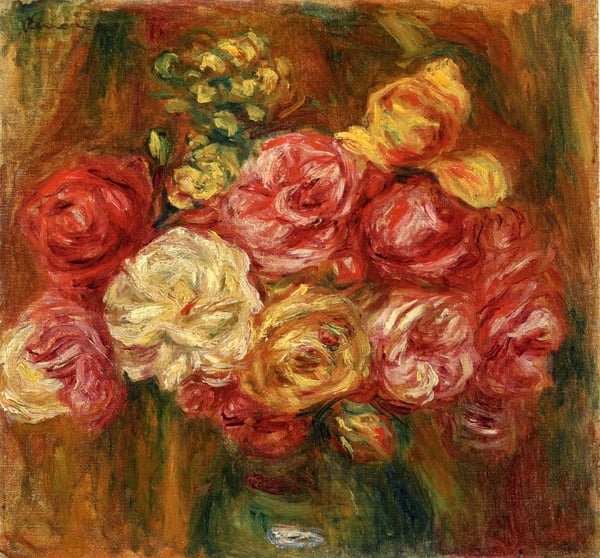
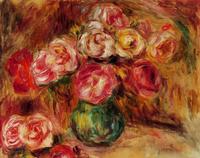
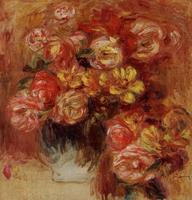
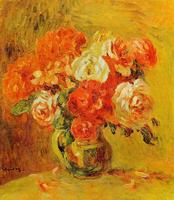
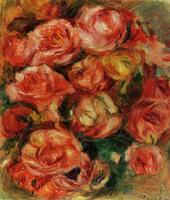
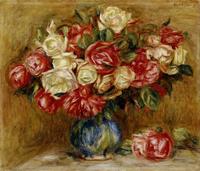
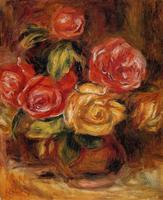
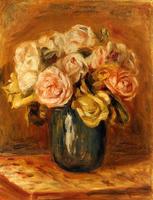
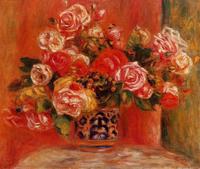
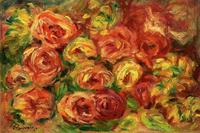
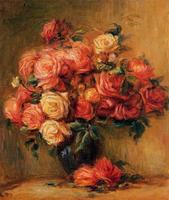
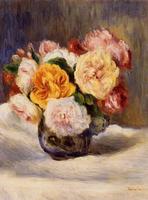
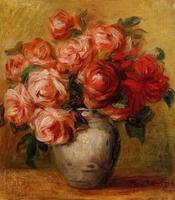
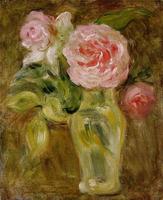
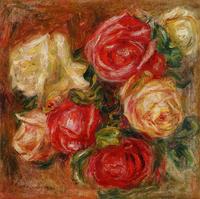
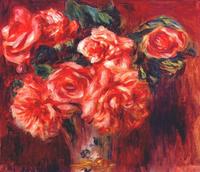
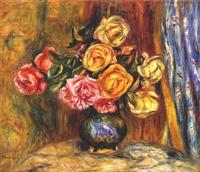
This still life exemplifies Pierre-Auguste Renoir’s Impressionist approach to the humble flower painting, elevating the genre through the movement’s core concerns with light, color, and immediacy. The work’s significance lies in how it transforms a conventional subject into a shimmering study of atmospheric effect: the green vase and roses are not rendered with firm outlines but built from rapid, broken brushstrokes of pure, unmixed pigment. This technique allows the bouquet to appear caught in a fleeting moment of natural light, with petals and leaves vibrating against one another. Renoir’s handling of the roses—using touches of pink, white, and crimson against the vase’s cool green—demonstrates the Impressionist belief that color and light, not narrative or detail, define a subject. By focusing on a domestic floral arrangement, he also reinforces the movement’s shift away from historical or mythological themes toward intimate, everyday beauty, making the painting a clear statement of Impressionism’s revolutionary vision.