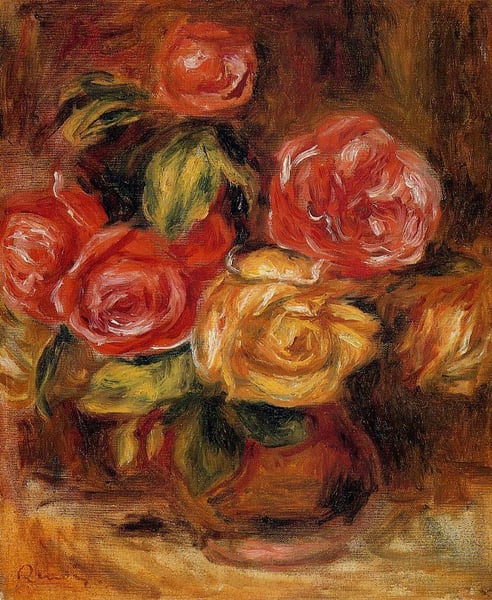
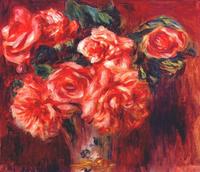
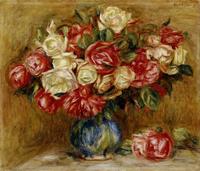
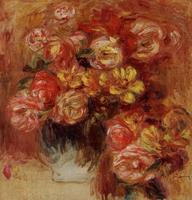
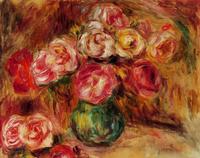
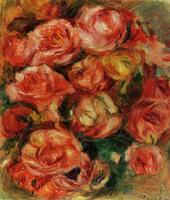
Expert Analysis of "Roses in a Vase" by Pierre-Auguste Renoir
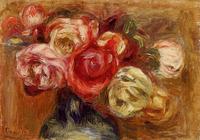
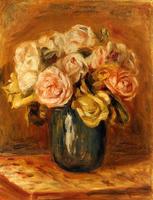
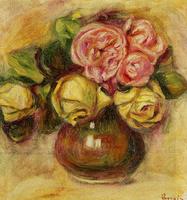
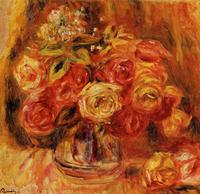
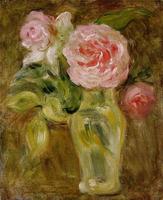
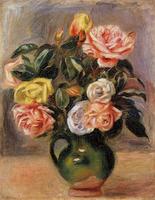
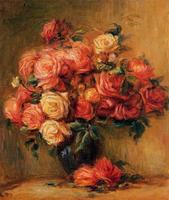
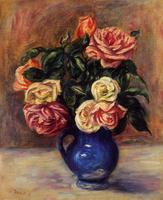
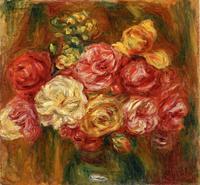
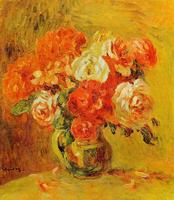
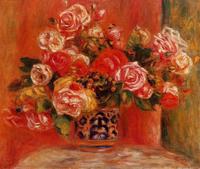
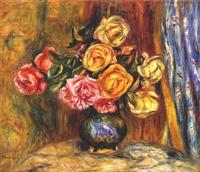
This work is a quintessential example of Impressionist flower painting from Renoir’s later years, a period when he deepened his exploration of intimate, domestic subjects. As an Impressionist piece, its significance lies in the artist’s masterful handling of light and color to capture the ephemeral beauty of the blooms. The vase of roses becomes a vehicle for Renoir’s signature soft, dappled brushstrokes, which dissolve the boundaries between petals, leaves, and background, creating a shimmering, atmospheric effect. In his later years, Renoir’s palette often grew warmer and more opulent, and this painting likely embodies that evolution—focusing on the sensual texture and radiance of the flowers rather than strict botanical accuracy. The genre of flower painting allowed Renoir to experiment freely with color harmonies and the play of light on complex surfaces, making “Roses in a Vase” a testament to the Impressionist commitment to capturing fleeting moments of visual delight. Its significance within his oeuvre and the period lies in how it distills the core tenets of Impressionism—immediacy, luminosity, and the celebration of ordinary beauty—into a serene yet vibrant composition.