
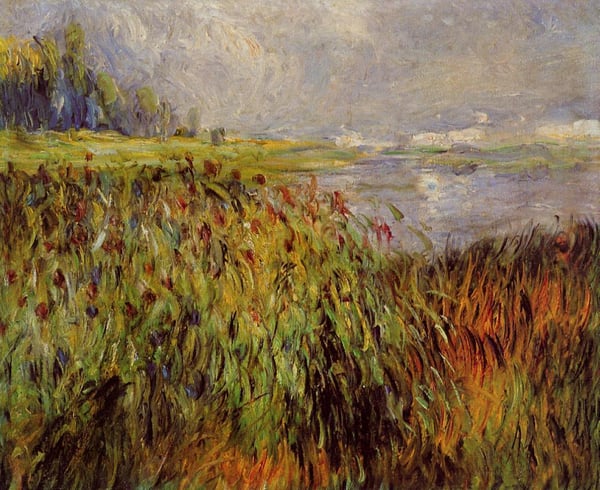
Expertenanalyse zu Pierre-Auguste Renoirs Bulrushes on the Banks of the Seine
Stil: Impressionism · Genre: landscape
Expert Analysis: "Bulrushes on the Banks of the Seine" by Pierre-Auguste Renoir
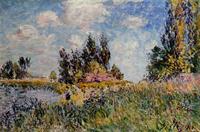
As a hallmark of Renoir’s involvement with the Impressionist movement, this landscape exemplifies the group’s radical departure from academic painting. Though Renoir is best known for his lively social scenes and figures, “Bulrushes on the Banks of the Seine” demonstrates his equally masterful handling of pure landscape—a subject central to Impressionist practice.
Significance within Impressionism:
-
Plein-air sensibility: Painted directly from nature, the work captures the transient effects of light and atmosphere along the river. Renoir’s broken, dappled brushwork dissolves solid forms into shimmering patches of color, mirroring the way light flickers on water and foliage.
-
Color and vibrancy: The palette—lush greens, soft blues, touches of violet and yellow—reflects the Impressionists’ rejection of earth tones in favor of pure, unmixed pigments. The bulrushes are not rendered as botanical specimens but as rhythmic, almost abstract vertical strokes, creating a sense of movement (wind, water currents) rather than static description.
-
Luminosity: The water, sky, and reeds are unified by a pervasive, airy brightness. Renoir employs complementary color contrasts (e.g., orange-tinted reflections against blue water) to enhance the sense of sunlight and moisture, making the scene feel alive and immediate.
-
Typical of Renoir’s mid-career: This piece belongs to the period when Renoir was most closely aligned with his Impressionist peers (Monet, Sisley, Pissarro). Unlike his later, more “dry” style, here he prioritizes optical sensation over draftsmanship—favoring blurred edges and soft focus to convey the fleeting moment.
Why it matters: While Renoir’s figure paintings often overshadow his landscapes, “Bulrushes on the Banks of the Seine” is a testament to his ability to treat nature with the same intimacy and joy he brought to human subjects. It shows how Impressionism transformed the humble riverbank scene into a study of perception itself—where a cluster of bulrushes becomes a symphony of light, color, and texture. The painting is significant precisely because it represents Impressionism at its most refined: spontaneous yet structured, natural yet deeply subjective.
Museum / Gallery
Visuell ähnlich
20 Werke mit ähnlicher Komposition und Farbpalette
Banks of the Seine at Champrosay
Pierre-Auguste Renoir
The Banks of the Seine at Champrosay
Pierre-Auguste Renoir
The Seine at Bougival
Pierre-Auguste Renoir
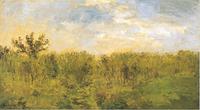
Young corn
Charles-Francois Daubigny
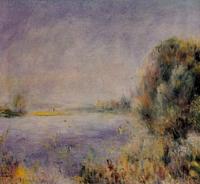
Banks of the River
Pierre-Auguste Renoir
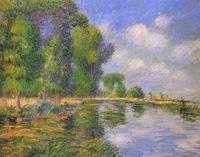
By the River in Autumn
Gustave Loiseau
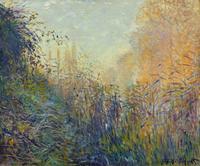
Study Rushes at Argenteuil
Claude Monet
The Seine near Vetheuil, Stormy Weather
Claude Monet
Springtime
Claude Monet
The Valley of the Scie at Pouville
Claude Monet
The Banks of a River, Rower in a Boat
Pierre-Auguste Renoir
Trees in Bloom
Gustave Loiseau
The Fields and Hills of Veneux Nadon
Alfred Sisley
Landscape near Essoyes
Pierre-Auguste Renoir
Spot on the Banks of the Seine
Claude Monet
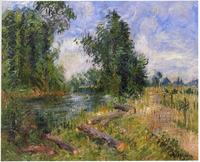
By the Lorne River near Caen
Gustave Loiseau
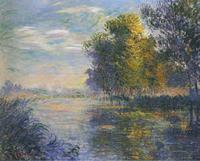
By the Eure River in Autumn
Gustave Loiseau
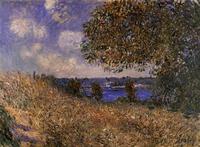
Near the Bank of the Seine at By
Alfred Sisley
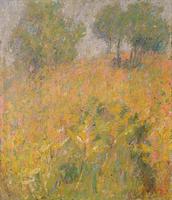
The autumn sun
Ivan Grohar
Landscape The Banks of the Loing at Saint Mammes
Alfred Sisley