Expertenanalyse zu Pierre-Auguste Renoirs Dead Pheasant in the Snow
Stil: Impressionism · Genre: still life
Expert Analysis: "Dead Pheasant in the Snow" by Pierre-Auguste Renoir
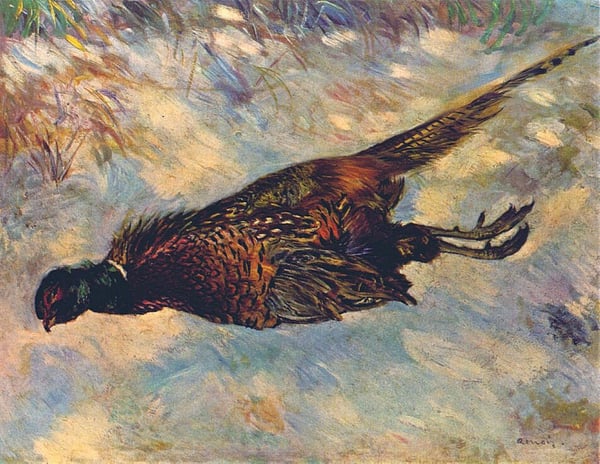
Pierre-Auguste Renoir’s Dead Pheasant in the Snow stands as a compelling example of how Impressionist principles could be applied to the traditionally static genre of still life. While Renoir is celebrated for his luminous figure studies and landscapes, this work demonstrates his mastery of capturing fleeting atmospheric effects even in a scene of inert subject matter.
The painting’s significance lies in its bold integration of Impressionist technique—particularly the handling of light and color—into a composition that might otherwise be classified as a conventional hunting trophy. The snow serves not merely as a neutral background but as an active, reflective surface that modulates the cool, blue-violet tones of shadow and the warmer, lavender-hued highlights of sunlight. Renoir applies short, broken brushstrokes to the bird’s plumage, avoiding sharp outlines and instead allowing the feathers to emerge from patches of muted brown, russet, and slate. This treatment infuses the dead pheasant with a surprising vibrancy, as if the last remnants of life are still shimmering in the chill air.
Within the context of the Impressionist period, the work subverts the traditional still life’s emphasis on symbolic decay or moral allegory. Instead, Renoir focuses on pure optical sensation: the way snow clings to the bird’s breast, the delicate play of pinkish light on its head, and the overall perception of cold, damp air. By applying the same broken-color techniques he used on sun-drenched gardens and café scenes, Renoir elevates a humble, even morbid subject into a study of sensory experience. This painting reminds us that for the Impressionists, no subject was too ordinary to be transformed by the artist’s perception of light and atmosphere.
Museum / Gallery
Visuell ähnlich
20 Werke mit ähnlicher Komposition und Farbpalette
Old English Pheasant
Archibald Thorburn
Pheasant
Viorel Marginean
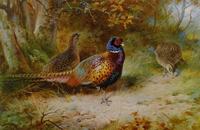
Autumn Covert
Archibald Thorburn
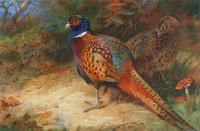
Cock and hen pheasant in the undergrowth
Archibald Thorburn
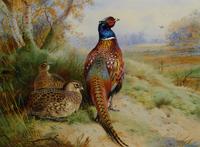
Cock and Hen Pheasant at the Edge of a Wood
Archibald Thorburn
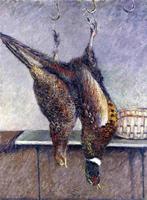
Two Hanging Pheasants
Gustave Caillebotte
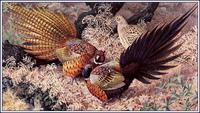
Ring-neck Pheasants
Charles Tunnicliffe
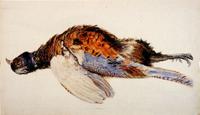
Dead Pheasant
John Ruskin
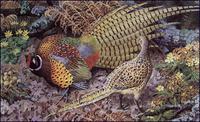
Pheasant Display
Charles Tunnicliffe
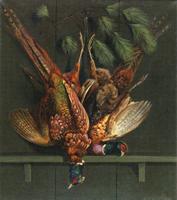
Hanging Pheasants
Alexander Pope
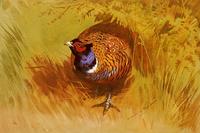
A Cock Pheasant
Archibald Thorburn
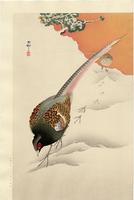
A Pair of Pheasants in the Snow
Ohara Koson
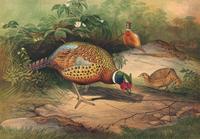
The Chinese Pheasant
Joseph Wolf
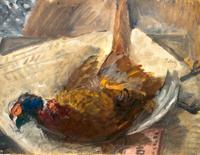
Pheasant
Theodor Pallady
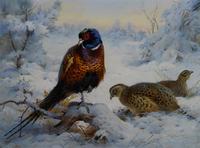
Cock and Hen Pheasant in Winter
Archibald Thorburn
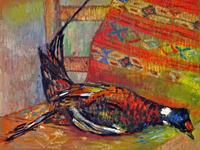
Pheasant
George Stefanescu
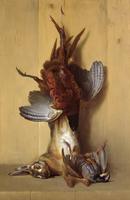
Still life with a hare, a pheasant and a red partridge
Jean-Baptiste Oudry
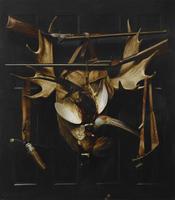
Trophies of the Hunt
Alexander Pope
Birds from Nature
Edward Ladell
Still Life with Pheasant, Partridge and Duck
Edward Ladell