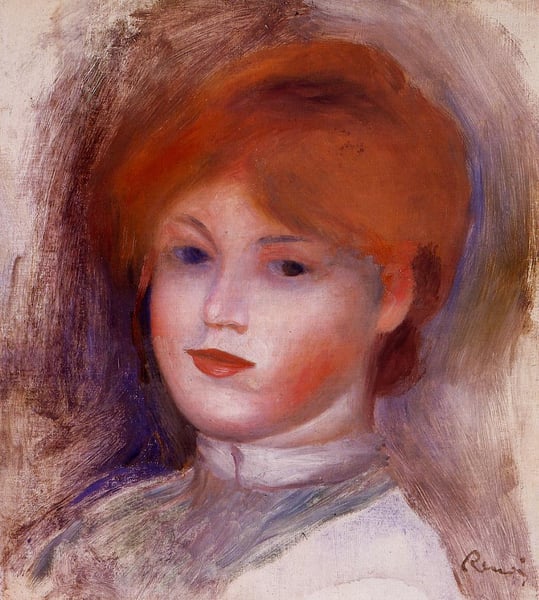
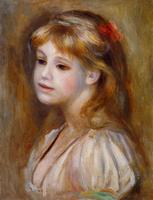
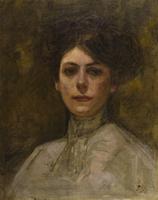
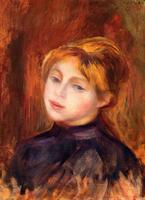
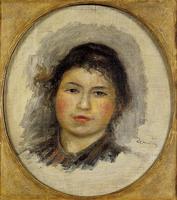
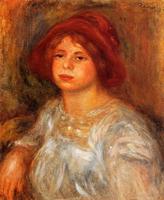
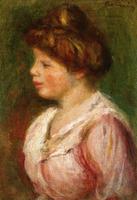
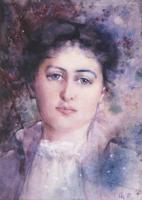
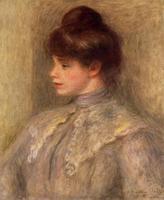
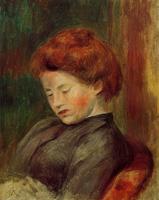
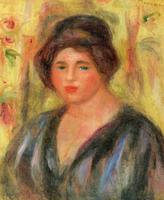
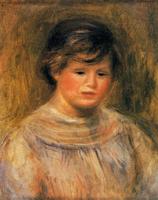
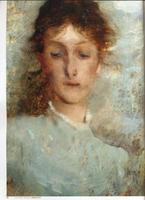
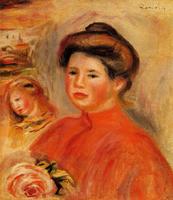
This portrait from Renoir’s Later Years exemplifies a pivotal shift in his approach to Impressionism. While retaining the luminous, warm palette and soft, feathery brushwork that defined his earlier work, Renoir here moves toward a more classical, idealized sense of form. The “Head of a Young Woman” is less about capturing a fleeting moment of light and more about emphasizing the sitter’s serene, rounded features and the tactile quality of her skin—a hallmark of his mature style. The significance lies in how Renoir synthesizes Impressionist color and atmosphere with a timeless, almost sculptural solidity, reflecting his ongoing interest in old masters like Raphael and Rubens. This work stands as a bridge between the transient effects of his peak Impressionist period and the more monumental, sensuous nudes and portraits of his final years, demonstrating his lifelong dedication to beauty and the human figure despite his physical struggles with arthritis.