
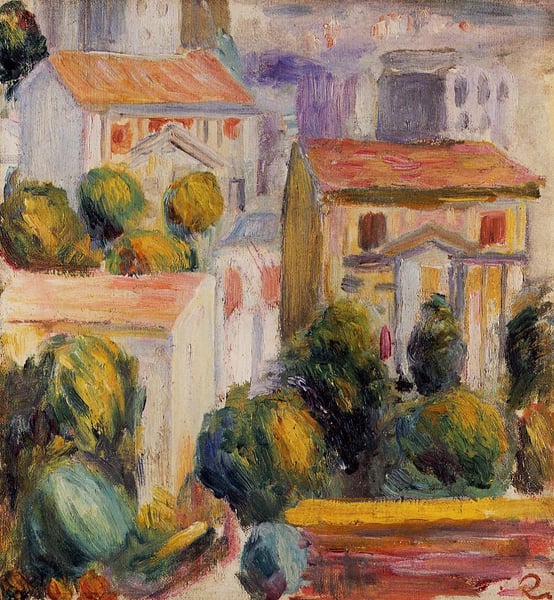
House at Cagnes
Analisi esperta di House at Cagnes di Pierre-Auguste Renoir
Stile: Impressionism · Genere: cityscape
As an expert art historian, I will analyze Pierre-Auguste Renoir's "House at Cagnes" based on the provided facts. The work is an Impressionist cityscape, and its significance lies in how it exemplifies the core principles of the movement through Renoir's mature vision.
Artwork Analysis: "House at Cagnes" by Pierre-Auguste Renoir
Style & Period Significance: This painting is a quintessential example of Impressionism, a late 19th-century movement that prioritized the capture of light, atmosphere, and the transient moment over precise, academic detail. Renoir’s "House at Cagnes" showcases the Impressionist commitment to painting en plein air (outdoors), where the artist directly observes and records the interplay of natural light on surfaces.
Genre & Subject Matter: As a cityscape, the artwork elevates an ordinary, everyday view—a house in the town of Cagnes-sur-Mer in the South of France—into a subject worthy of serious artistic study. This focus on modern, domestic life is a hallmark of Impressionism, which rejected historical, mythological, or grand narrative scenes in favor of immediate, lived experience.
Key Stylistic Elements & Significance:
- Color and Light: Renoir employs a vibrant, high-key palette dominated by warm hues (ochres, pinks, and greens) that reflect the Mediterranean sunlight. The house is not rendered with local color but with broken, dappled brushstrokes that blend in the viewer’s eye, creating the shimmering effect of light filtering through trees or reflecting off walls. This technique is central to Impressionism and gives the scene a sense of fleeting warmth.
- Brushwork: The loose, visible brushstrokes are energetic and seemingly spontaneous. Renoir applies paint in short, broken touches that avoid hard outlines. This method dissolves the solidity of the house and landscape into a pattern of colored daubs, emphasizing the visual sensation over the architectural structure.
- Composition and Atmosphere: The composition typically sets the building within a natural, sun-drenched environment, perhaps with foliage or a garden framing the view. The significance here is that the “house” becomes a vessel for light and atmosphere, not a document of a specific location. The mood is one of relaxed, sunlit tranquility—a hallmark of Renoir’s later, more sensuous period.
What Makes It Significant: "House at Cagnes" is significant because it encapsulates Renoir’s personal evolution within the Impressionist style. Painted in the region where the artist settled later in life, it reflects his deep engagement with the Provençal landscape and his mature mastery of rendering light. The work demonstrates how Impressionism, though initially revolutionary for its loose technique, could capture both the immediacy of a fleeting glance and the enduring, tranquil beauty of a specific place. Through its focus on chromatic harmony and atmospheric effect, the painting stands as a testament to Renoir’s belief that art should be joyous, sensual, and rooted in the optical truth of a moment.
Museum / Gallery
Genere
Stile
Visivamente simili
20 opere con composizione e palette affini
Maison de la Poste
Pierre-Auguste Renoir
Landscape
Amedeo Modigliani
Landscape
Pierre-Auguste Renoir
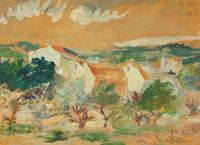
Balchik Landscape
Lucian Grigorescu
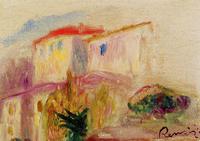
Le Poste at Cagnes (study)
Pierre-Auguste Renoir
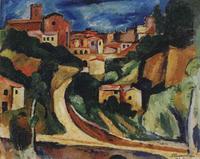
Siena
Pyotr Konchalovsky
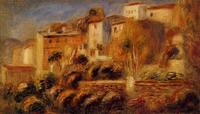
Houses at Cagnes
Pierre-Auguste Renoir
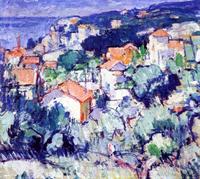
Landscape, South of France
Samuel Peploe
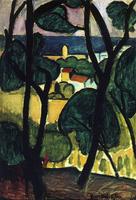
View of Collioure
Henri Matisse
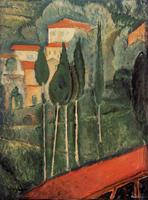
Landscape, Southern France
Amedeo Modigliani
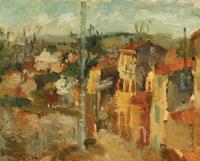
Balchik Landscape
Lucian Grigorescu
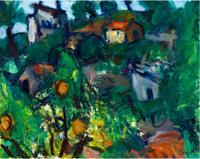
Cagnes
Bela Czobel
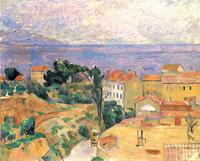
View of L'Estaque
Paul Cezanne
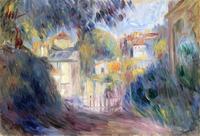
Landscape with Red Roofs
Pierre-Auguste Renoir

Agiasos Mutilhnhs
Spyros Papaloukas
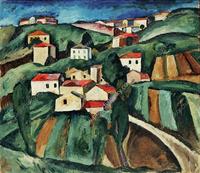
Near Siena
Pyotr Konchalovsky
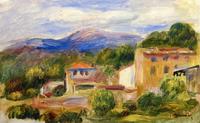
Cagnes Landscape
Pierre-Auguste Renoir
Vue De Collioure
Henri Matisse
Cassis. The view from the window.
Pyotr Konchalovsky
Landscape at Collioure III
Henri Matisse