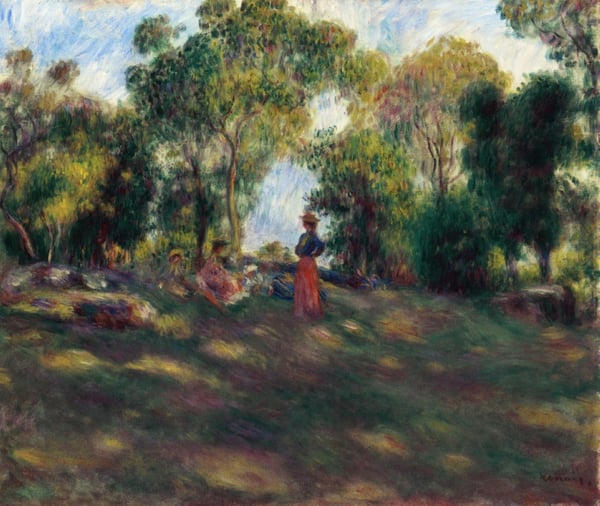
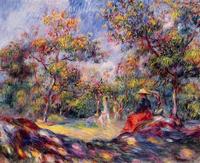
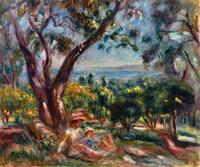
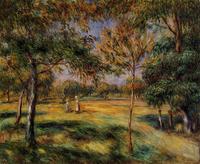
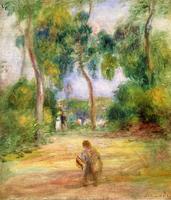
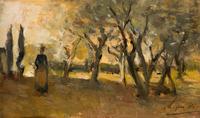
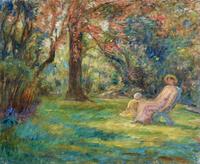
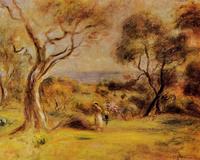
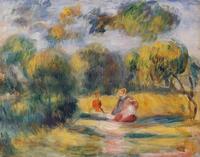
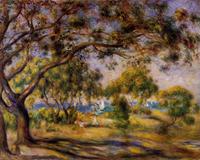
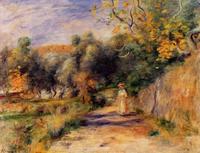
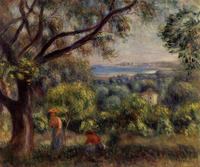
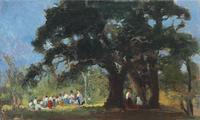
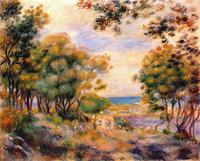
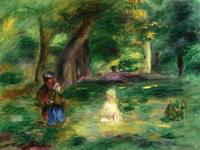
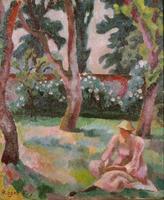
This landscape by Pierre-Auguste Renoir is a pivotal work, significant for its placement within the artist's self-conscious Rejection of Impressionism. While the Impressionist style and landscape genre remain recognizable, the painting marks a deliberate departure from the movement's core tenets of capturing fleeting light and spontaneous brushwork. Instead, Renoir here reasserts classical composition and structured form, signaling a return to more traditional, linear techniques. The work’s importance lies in documenting this critical transitional moment—a major figure in Impressionism actively turning away from its radical innovations to seek a more enduring, disciplined artistic language.