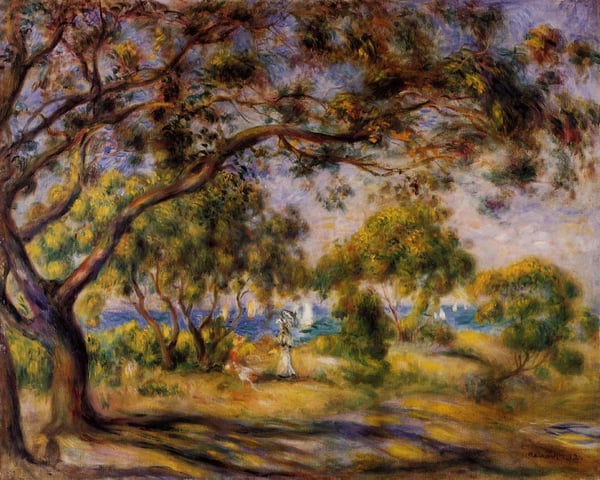
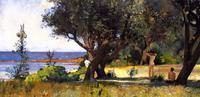
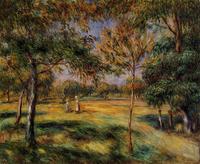
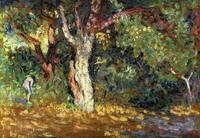
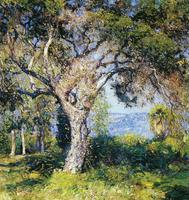
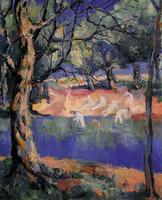
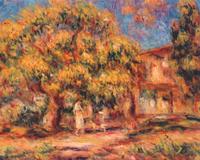
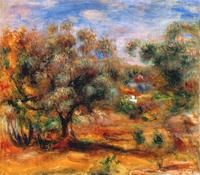
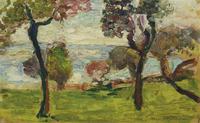
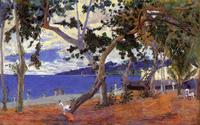
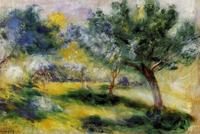
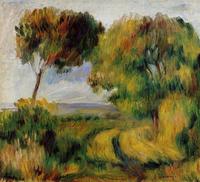
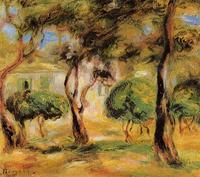
As an expert analysis of "Noirmoutiers" by Pierre-Auguste Renoir, based solely on the provided structured facts (Artwork: "Noirmoutiers", Style: Impressionism, Genre: landscape, Period: Later Years), the significance of this work lies in its representation of Renoir’s mature evolution within Impressionism.
During his Later Years, Renoir moved beyond the pure, rapid brushwork of early Impressionism toward a more refined, decorative harmony. As a landscape from this period, "Noirmoutiers" likely retains the hallmark Impressionist concern with capturing transient light and atmosphere—here, likely the coastal light of the island—yet demonstrates a greater structural solidity and a warmer, more sensual palette.
This painting is significant because it exemplifies how Renoir synthesized the core principles of Impressionism (luminous color, soft focus, plein-air observation) with a classical sense of order and figural stability characteristic of his later phase. The work thus stands as a transitional masterpiece, showing that Impressionism could evolve into a more enduring, lyrical form while still celebrating the immediate beauty of nature.