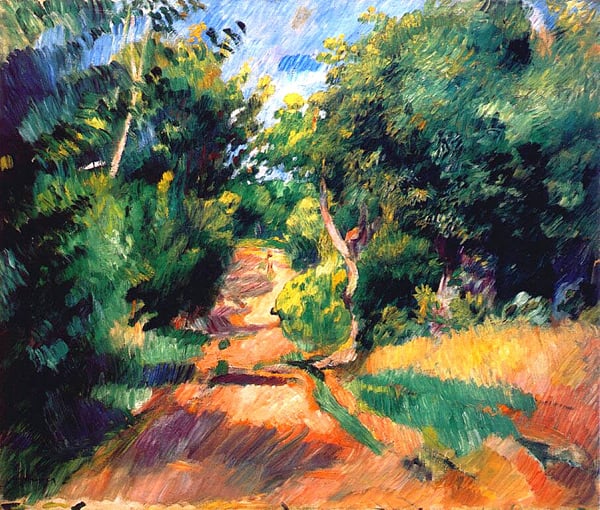
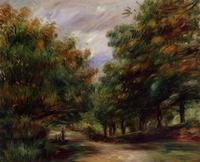
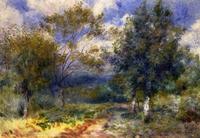
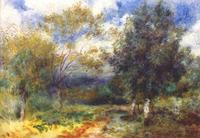
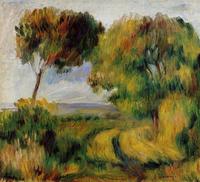
Expert Analysis: "Landscape Near Varengeville" by Pierre-Auguste Renoir
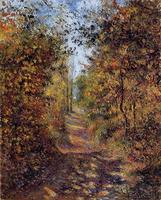
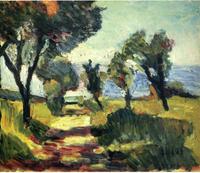
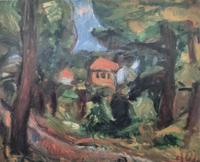
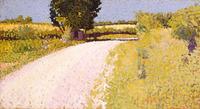
This work belongs to Renoir’s output during a period formally classified as the Rejection of Impressionism, a crucial turning point in his career. While the painting retains the Impressionist subject matter of a sunlit landscape, its significance lies in Renoir’s deliberate departure from the movement’s core principles. Here, the artist prioritizes structural clarity over atmospheric flux: forms are more firmly delineated, colors are less fractured, and the composition adopts a balanced, almost classical repose—a direct response to his dissatisfaction with Impressionism’s lack of formal discipline. The genre of landscape, typically the arena for Impressionist spontaneity, is instead used as a vehicle for Renoir to reanimate traditional pictorial order. This work exemplifies how he reconciled modernity with enduring painterly values, marking a pivotal moment in late 19th-century art where the artist consciously abandoned the very style he helped define.