
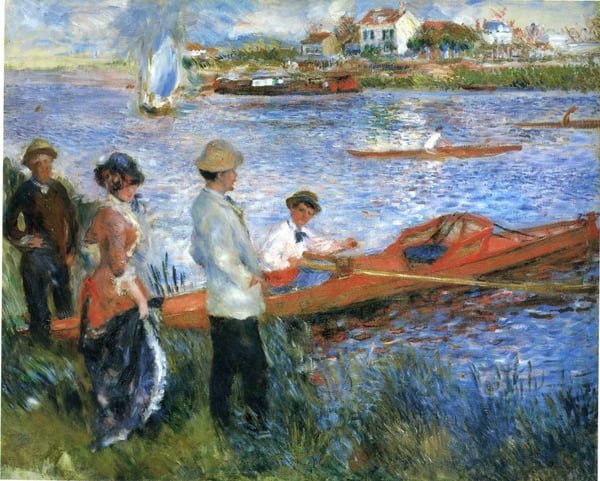
Oarsmen at Chatou
Dettagli
Analisi esperta di Oarsmen at Chatou di Pierre-Auguste Renoir
Stile: Impressionism · Genere: genre painting
Expert Analysis of Oarsmen at Chatou by Pierre-Auguste Renoir
Pierre-Auguste Renoir’s Oarsmen at Chatou stands as a quintessential example of the Impressionist movement’s revolutionary approach to painting, particularly within the context of genre painting—scenes of everyday modern life. Created during Renoir’s active association with the Impressionists, this work captures the leisure and vitality of the Parisian suburbs in the late 19th century, embodying the core principles of the style through its treatment of light, color, and motion.
Significance within Impressionism:
Renoir’s emphasis on the fleeting effects of natural light is central to the painting’s significance. The shimmering reflections on the water, the dappled sunlight filtering through the trees, and the vibrant, broken brushstrokes all demonstrate the Impressionist commitment to rendering optical sensations rather than precise details. The scene at Chatou—a popular boating spot along the Seine—typifies the movement’s fascination with modern leisure, capturing a spontaneous moment of recreation rather than a staged historical or mythological subject.
Contribution to Genre Painting:
As a genre painting, Oarsmen at Chatou elevates a casual, everyday activity to the level of fine art. Renoir’s focus on the figures—the oarsmen, their companions, and the relaxed social atmosphere—reflects the Impressionist interest in contemporary life and human interaction. The composition guides the viewer’s eye along the riverbank, creating a sense of immediacy and intimacy that invites the audience into the scene. This approach helped redefine what could be considered worthy of artistic representation, moving away from academic hierarchies toward a celebration of the ordinary.
Stylistic Hallmarks:
The work is significant for its masterful use of color harmony and light. Renoir’s palette, dominated by bright blues, greens, and warm skin tones, captures the glow of a sunlit afternoon. The loose, rapid brushwork (visible in the water’s ripples and the foliage) conveys the energy of the moment, while the soft, blurred edges evoke the sensation of heat and humidity. This technique aligns with the Association of Impressionists’ shared goal of capturing “the impression” of a scene rather than its fixed outline.
In summary, Oarsmen at Chatou is a landmark piece within Renoir’s oeuvre and Impressionism at large. It demonstrates how the movement’s technical innovations—combined with a focus on modern, genre subjects—transformed the artistic landscape, making the fleeting beauty of everyday life a timeless subject for art.
Genere
Stile
Visivamente simili
20 opere con composizione e palette affini
The Skiff (La Yole)
Pierre-Auguste Renoir
Boating at Argenteuil
Pierre-Auguste Renoir
Regata at Hampton Court
Alfred Sisley
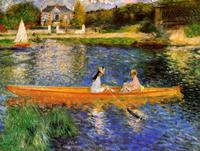
The Seine at Asnieres (The Skiff)
Pierre-Auguste Renoir
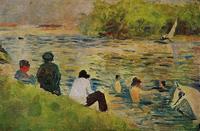
The Bank of the Seine
Georges Seurat
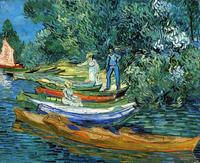
Rowing Boats on the Banks of the Oise at Auvers
Vincent van Gogh
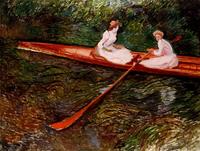
The Pink Skiff
Claude Monet
The Loing Canal
Alfred Sisley
Rainbow
Georges Seurat
The Riverbank at Petit-Gennevilliers, Sunset
Claude Monet
Saint Mammes
Alfred Sisley
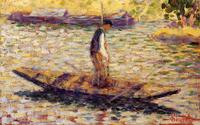
Riverman
Georges Seurat
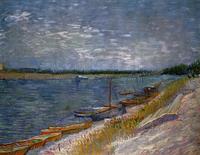
Moored Boats
Vincent van Gogh
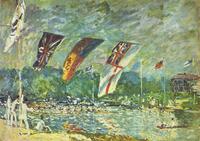
The regattas Moseley
Alfred Sisley
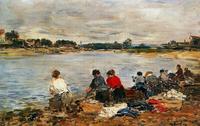
Laundresses on the Banks of the Touques
Eugene Boudin
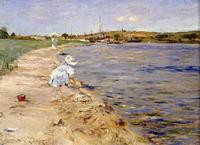
Beach Scene - Morning at Canoe Place
William Merritt Chase
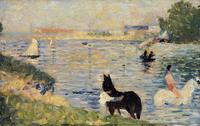
Horses in the Water
Georges Seurat
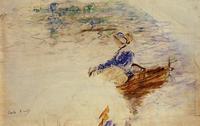
Young Woman in a Rowboat, Eventail
Berthe Morisot
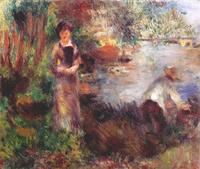
On the banks of the Seine at agenteuil
Pierre-Auguste Renoir
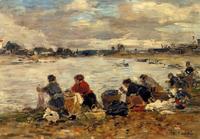
Laundresses on the Banks of the Touques
Eugene Boudin