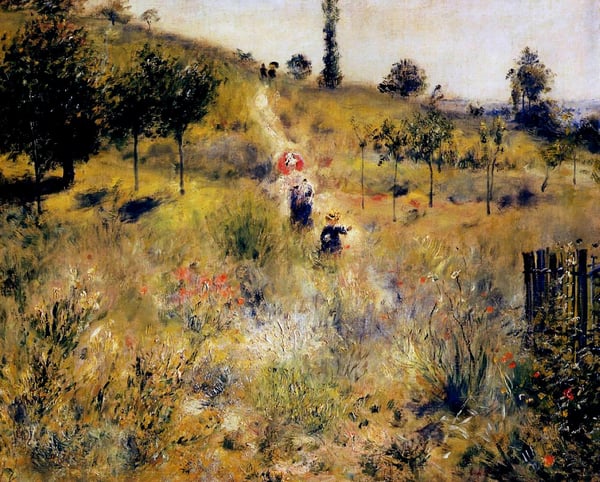
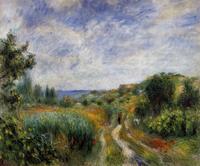
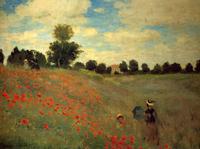
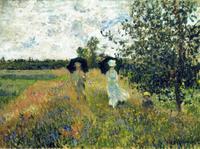
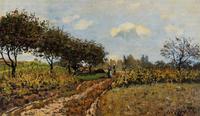
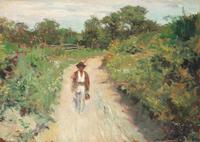
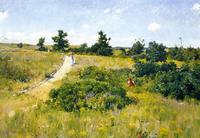
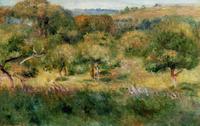
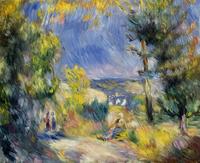
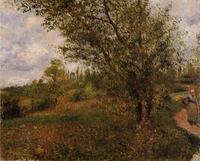
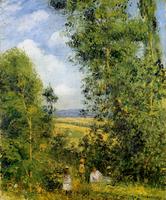
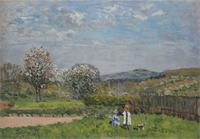
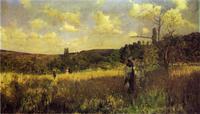
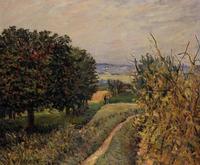
An expert analysis of Pierre-Auguste Renoir's Path Leading through Tall Grass must center on its embodiment of core Impressionist principles, particularly the movement's radical approach to capturing fleeting natural light and atmospheric effects through vibrant color and loose brushwork.
As a landscape executed during Renoir's period of association with the Impressionists, this work is significant for its rejection of conventional, tightly rendered landscapes in favor of a sensory experience. The "path" serves as a compositional device that draws the viewer's eye into the scene, but the true subject is the tall grass itself, rendered in rapid, broken strokes of green, yellow, and blue that suggest the shimmering, textured play of sunlight. Renoir's characteristic warmth and optimism are evident in the luminous palette, where dappled light creates a sense of intimacy and immediacy.
The painting's significance lies in its demonstration of a core Impressionist goal: to record a transient moment of perception. Rather than detailing every blade of grass, Renoir uses color and touch to evoke the sensation of a gentle breeze and the movement of light across the field. This technique, which prioritizes optical truth over photographic realism, places Path Leading through Tall Grass firmly within the revolutionary spirit of the Impressionist landscape tradition, where the artist's direct observation and vibrant brushstroke become the primary carriers of meaning.