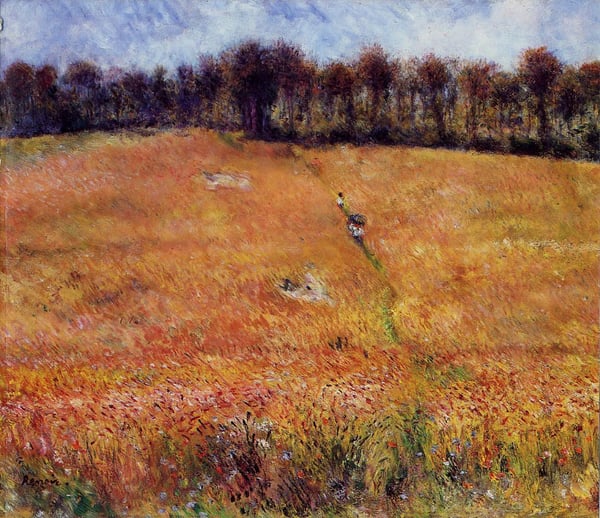
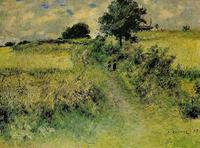
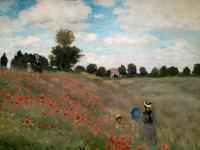
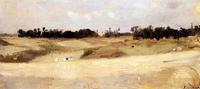
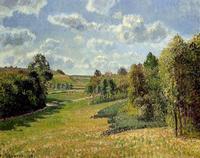
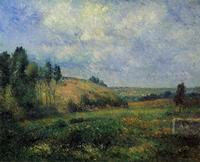
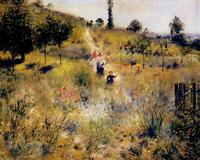
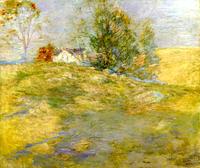
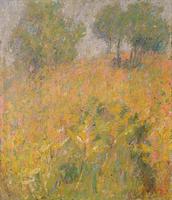
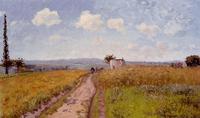
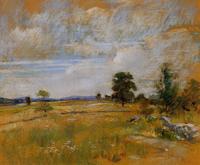
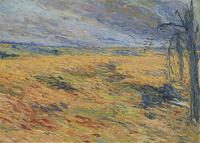
"Path through the High Grass" by Pierre-Auguste Renoir exemplifies the core principles of Impressionism through its lively depiction of a seemingly mundane rural scene. Painted during Renoir’s close association with the Impressionist circle, the work captures the fleeting effects of sunlight filtering through vegetation onto a winding path. The artist’s characteristic broken brushwork and vibrant, unblended colors create a shimmering surface that evokes the sensation of a warm, breezy day rather than a topographically precise landscape. This focus on optical experience over detail was revolutionary for the period, rejecting academic finish in favor of immediacy. Renoir’s treatment of the tall grass—using dabs of green, yellow, and blue—demonstrates how Impressionists dissolved solid forms into patches of light and color, emphasizing the interplay between atmosphere and nature. The painting’s significance lies in its embodiment of plein-air spontaneity and the Impressionist conviction that even the most ordinary subject—a path through grass—could convey profound visual and emotional richness.