
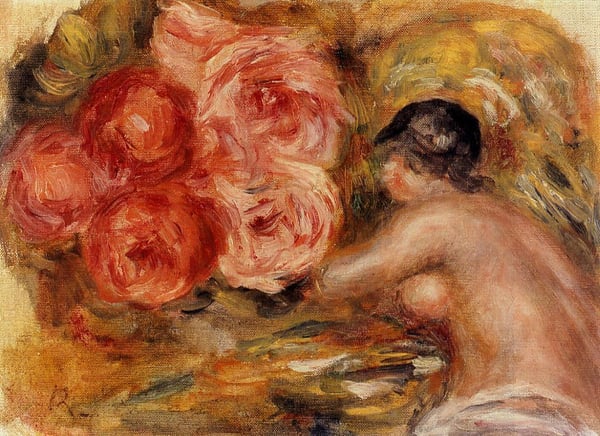
Expert analysis of Pierre-Auguste Renoir’s Roses and Study of Gabrielle
Style: Impressionism · Genre: sketch and study
Expert Analysis of “Roses and Study of Gabrielle” by Pierre-Auguste Renoir
This work is a compelling testament to Renoir’s late-career focus on intimate, domestic subjects and his evolving Impressionist technique. As a sketch and study, it offers a rare, unguarded glimpse into the artist’s creative process, where the immediacy of observation takes precedence over a finished, polished composition.
Significance within Impressionism and Renoir’s Later Period:
-
Intersection of Still Life and Portrait Study – Renoir masterfully combines two genres: a vibrant floral study (roses) and a figural sketch of Gabrielle, his wife’s cousin and one of his most frequent models in his later years. This fusion underscores his belief that both nature and the human form are equal vessels for capturing light and life. The roses are not mere props; they echo the soft, petal-like quality of Gabrielle’s skin, creating a visual dialogue between organic and human beauty.
-
A Window into Renoir’s Late Style – By the 1900s–1910s, Renoir’s palette had grown warmer and more saturated, and his brushwork became looser, almost feathery—traits evident here. The sketchy handling allows the eye to dwell on the play of light across Gabrielle’s face and the fleshy blossoms. The lack of rigid finish amplifies the sense of spontaneity, a core Impressionist value. This is not a formal portrait but a record of a fleeting moment of repose, reflecting Renoir’s later focus on domestic tranquility.
-
The Role of Gabrielle as Muse – Gabrielle Renard entered Renoir’s household as a nurse for his children and became a recurring subject. Here, she is depicted in a casual, unposed state, underscoring the intimate, private nature of the sketch. This aligns with Renoir’s later years, when his chronic arthritis limited his mobility but deepened his concentration on familiar, accessible subjects—his family, his garden, and the women who surrounded him.
-
Technical Significance – As a study, the work reveals Renoir’s method of building form through color and overlapping strokes rather than line. The roses are rendered in dabs of crimson, pink, and white that blur into a velvety texture, while Gabrielle’s features emerge from soft, warm tones of amber and rose. The loose execution makes the canvas feel alive, with brushwork that seems to mimic the very movement of petals or breath.
In summary, “Roses and Study of Gabrielle” is significant because it captures the essence of Renoir’s late Impressionist vision: a celebration of beauty found in the everyday, a tenderness toward his subjects, and a masterful handling of paint that blurs the boundary between sketch and finished artwork. It stands as both a personal document of the artist’s world and a technical example of how Impressionism could remain intimate and expressive even in its twilight years.
Museum / Gallery
Genre
Style
Visually similar
20 works with related composition and palette
Woman's Nude Torso
Pierre-Auguste Renoir
After Bathing, Seated Female Nude
Pierre-Auguste Renoir
Seated Female Nude
Pierre-Auguste Renoir
Seated Nude
Pierre-Auguste Renoir
Seated Nude with a Bouquet
Pierre-Auguste Renoir
Reclining Nude
Pierre-Auguste Renoir
Reclining Model
Pierre-Auguste Renoir
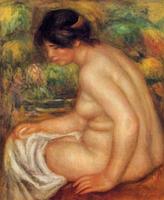
Seated Nude in Profile (Gabrielle)
Pierre-Auguste Renoir
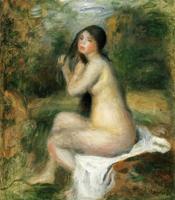
Seated Bather
Pierre-Auguste Renoir
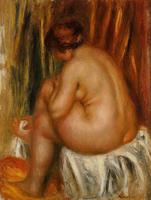
After Bathing (nude study)
Pierre-Auguste Renoir
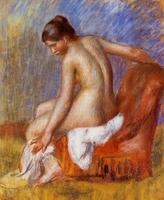
Nude in an Armchair
Pierre-Auguste Renoir

Nude on the Grass
Pierre-Auguste Renoir

After the Bath, Woman Drying Her Hair
Edgar Degas
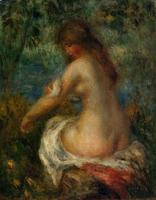
Bather
Pierre-Auguste Renoir
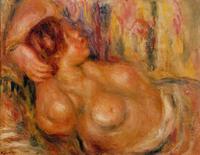
Woman At the Chest
Pierre-Auguste Renoir
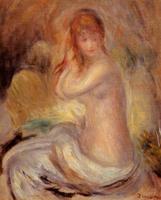
Bather
Pierre-Auguste Renoir
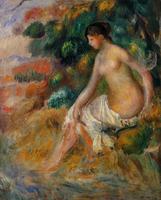
Nude in the Greenery
Pierre-Auguste Renoir
Seated Nude
Pierre-Auguste Renoir
Nude Woman on Green Cushions
Pierre-Auguste Renoir
Standing Nude
Pierre-Auguste Renoir