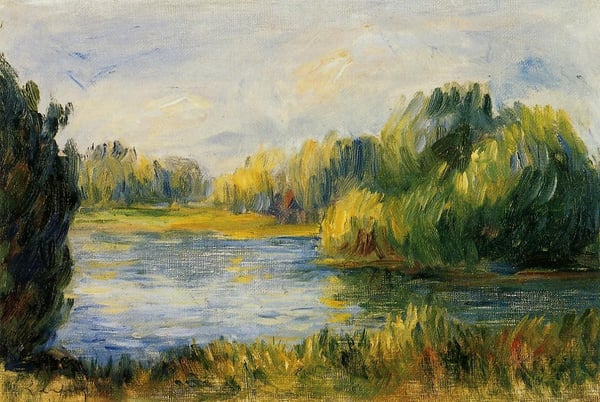
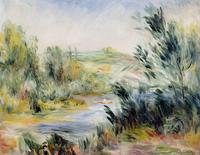
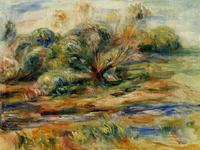
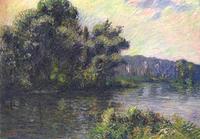
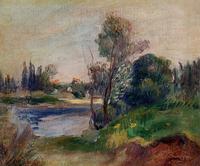
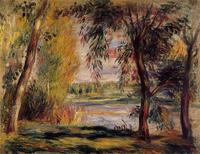
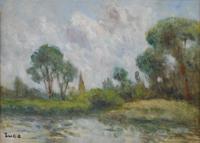
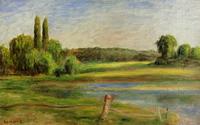
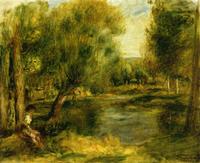
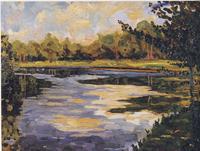
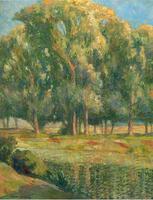
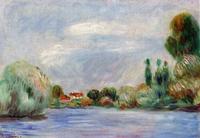
In this Impressionist landscape, Pierre-Auguste Renoir captures the ephemeral beauty of a riverside scene with remarkable sensitivity to light and atmosphere. The significance of "The Banks of the River" lies in its pure embodiment of the Impressionist ethos: the canvas is alive with broken brushstrokes that shimmer and vibrate, translating the fleeting effects of sunlight on water and foliage into dabs of pure, unmixed color. Renoir’s distinctive treatment of the riverbank—merging sky, water, and land through a warm, tonal harmony of blues, greens, and soft pinks—demonstrates his mastery of painting en plein air to convey a sense of immediacy and sensory experience. Unlike many Impressionists who focused on urban leisure, Renoir’s landscape here demonstrates how the movement could transform even a quiet natural setting into a dynamic play of light, texture, and emotional warmth, foreshadowing his later, more figure-driven works while solidifying his reputation as a painter of joy and atmosphere.