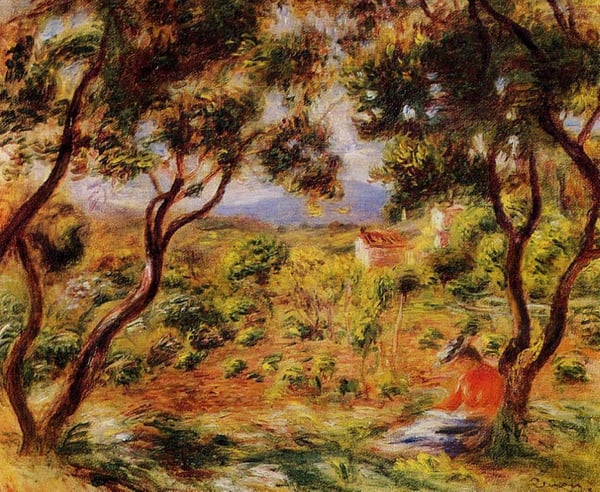
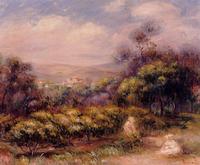
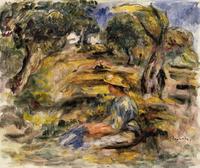
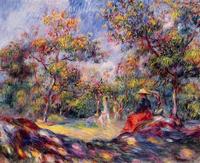
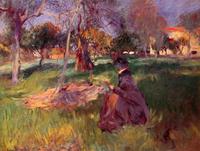
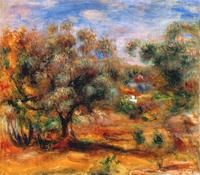
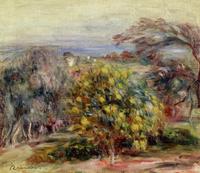
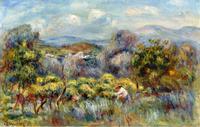
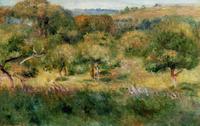
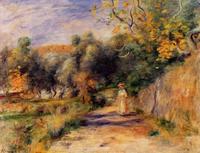
"The Vineyards of Cagnes" exemplifies Pierre-Auguste Renoir’s later years, a period when he moved away from the fleeting, atmospheric effects of high Impressionism toward a more classical, structured, and sensuous style. Painted in the hills of Cagnes-sur-Mer, where Renoir settled for his health, the work captures the Provençal landscape with a warmth and decorative richness that mark his mature output. The scene—likely depicting terraced vineyards under a luminous sky—is significant for its synthesis of Impressionist color and light with a firmer, more volumetric treatment of form. Renoir’s brushwork here is both fluid and deliberate, layering warm reds, ochres, and greens to evoke the sun-drenched fertility of the land, while the composition leads the eye through a rhythmic arrangement of slopes and foliage. This painting reflects Renoir’s enduring love for rural, idyllic subjects, but it also demonstrates his shift toward a more monumental, almost tapestry-like handling of landscape—a key development in his final decades. Within his oeuvre, it stands as a testament to how Impressionism could evolve beyond pure optical sensation into a deeper, more personal celebration of nature’s enduring beauty.