
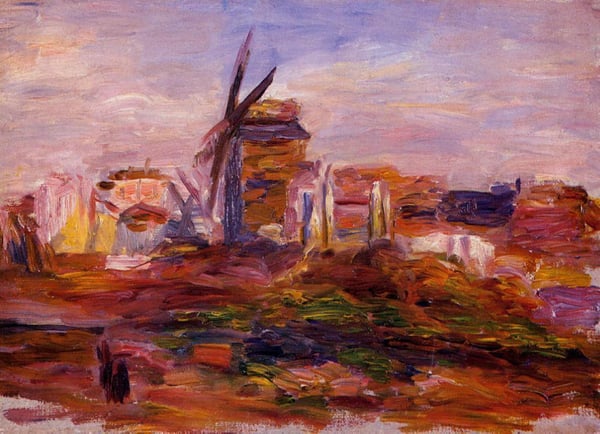
Windmill
Analisi esperta di Windmill di Pierre-Auguste Renoir
Stile: Impressionism · Genere: landscape
Expert Analysis of "Windmill" by Pierre-Auguste Renoir
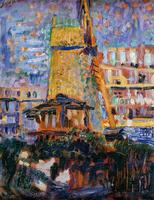
Pierre-Auguste Renoir’s Windmill stands as a quintessential example of Impressionist landscape painting, demonstrating the movement’s revolutionary approach to capturing light, atmosphere, and the transient beauty of the natural world. Executed in the genre of landscape, the work exemplifies Renoir’s mastery of broken color and loose, visible brushstrokes, which dissolve the windmill and its surroundings into a shimmering tapestry of vibrant hues.
Significance Within Impressionism and the Landscape Genre
-
Capturing Fleeting Light and Atmosphere
Like his fellow Impressionists, Renoir abandoned the studio’s controlled lighting to paint en plein air. In Windmill, he likely rendered the scene at a specific time of day, using rapid, dappled strokes to suggest the interplay of sunlight and shadow. The windmill itself becomes less a fixed structure and more a vessel for reflected color—blues, purples, and pinks merging with the greens of the landscape. This technique underscores the Impressionist goal of recording a momentary optical experience rather than a permanent, idealized view. -
Reimagining the Pastoral
While traditional landscape painting often idealized rural scenes through detailed finish, Renoir’s Windmill embraces a sense of immediacy and sensory pleasure. The windmill—a classic motif of rustic life—is not presented as a symbol of labor or nostalgia but as a harmonious part of a living, breathing environment. The blurred edges and soft focus suggest the viewer is glimpsing the scene from a distance, perhaps on a breezy afternoon, with the mill’s sails caught in motion. -
Color as Structure
Renoir’s palette in Windmill likely relies on complementary colors (e.g., warm oranges and cool violets) to create depth without traditional chiaroscuro. Shadows are not black but saturated with reflected blues and greens, a hallmark of Impressionist theory. This vibrant color harmony gives the landscape a sense of joy and vitality, reflecting Renoir’s personal optimism and his belief that painting should celebrate life’s pleasures. -
Impact on the Genre
As an Impressionist landscape, Windmill contributed to the broader shift away from academic conventions—minute detail, smooth brushwork, and moralistic subjects. Instead, Renoir elevated the ordinary countryside into a subject worthy of serious artistic exploration. His ability to infuse a simple windmill with such luminosity and tactile warmth helped redefine landscape painting as a medium for pure visual perception and emotional resonance.
In sum, Windmill is significant not only as a testament to Renoir’s technical brilliance but also as a vivid embodiment of Impressionism’s core ambition: to immobilize a fleeting instant and make the ordinary sublime through the poetry of light and color.
Museum / Gallery
Visivamente simili
20 opere con composizione e palette affini
Le Moulin de la Gallette 3
Vincent van Gogh
Le Moulin de la Gallette
Vincent van Gogh
Windmill
Nicholas Roerich
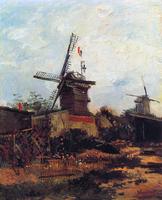
The Mill of Blute End
Vincent van Gogh
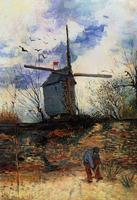
Moulin de la Galette
Vincent van Gogh
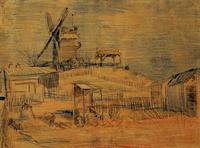
Gardens on Montmartre and the Blute-Fin Windmill
Vincent van Gogh
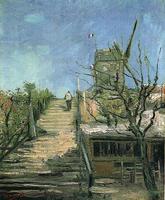
Windmill on Montmartre
Vincent van Gogh
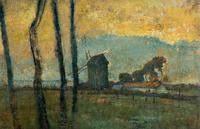
Landscape at Valery-sur-Somme
Edgar Degas
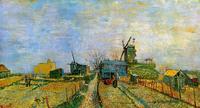
Vegetable Gardens in Montmartre
Vincent van Gogh
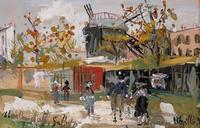
Moulin de la Galette
Maurice Utrillo
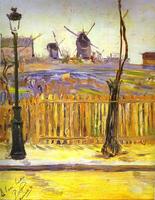
Rue Caulaincourt. Mills on Montmarte
Paul Signac
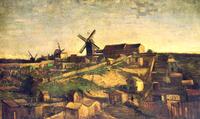
Montmartre the Quarry and Windmills
Vincent van Gogh
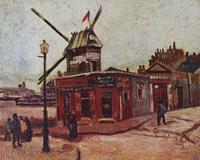
The Moulin de la Galette
Vincent van Gogh
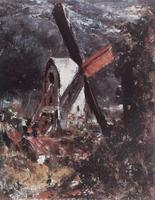
A Windmill near Brighton
John Constable
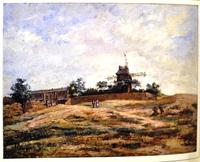
El molino
Francisco Oller
Le Moulin de la Galette
Vincent van Gogh
Moulin de la Galette
Maurice Utrillo
Windmills
Roman Selsky
Cayeux, Windmill in the Countryside, Morning
Eugene Boudin
Sawmill Het Luipaard
Jan Sluyters