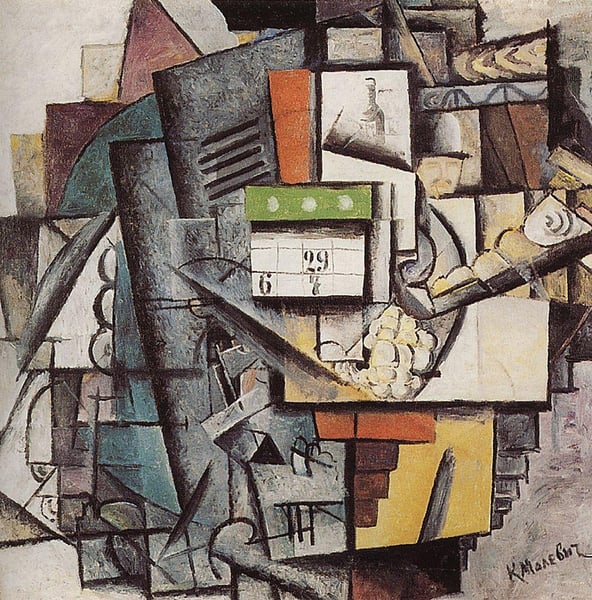
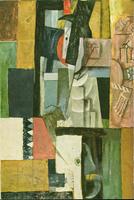
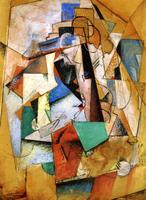
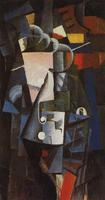
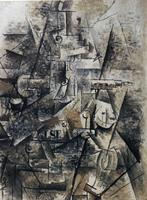
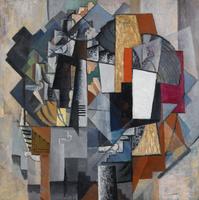
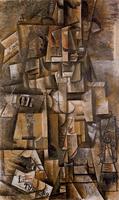
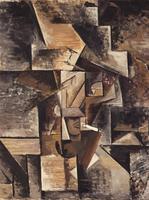
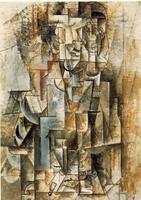
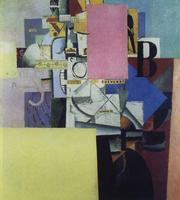
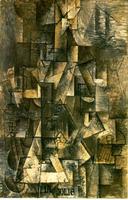
In Kazimir Malevich’s Lady on a Tram Station, the artist synthesizes the geometric fragmentation of Cubism with the dynamic energy of Futurism, producing a work that is emblematic of the Cubo‑Futurist style. The painting’s significance lies in how it transforms a mundane genre scene—a woman waiting at a tram stop—into a study of modern urban motion and perception. The figure and surroundings are broken into angular, overlapping planes, echoing the speed and mechanistic rhythms of early‑20th‑century city life. This approach not only captures a fleeting moment but also foreshadows Malevich’s own trajectory toward total abstraction in his later Suprematist works. Within the period, Lady on a Tram Station stands as a key example of Russian avant‑garde experimentation, demonstrating how everyday reality could be reimagined through a lens of pure visual dynamism and structural innovation.