
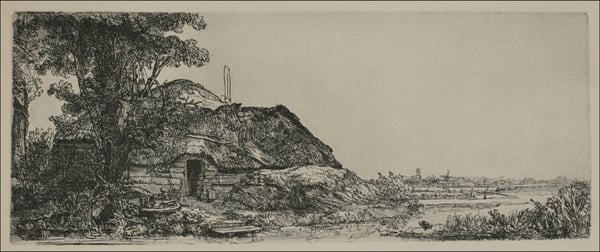
Expertenanalyse zu Rembrandts A Large Landscape with a Mill Sail
Stil: Baroque · Genre: landscape
Expert Analysis of A Large Landscape with a Mill Sail by Rembrandt (c. 1645–1648)
Rembrandt’s A Large Landscape with a Mill Sail (often called The Mill) stands as a singular achievement within the Baroque landscape genre—a work that transcends the era’s typical topographical or decorative aims to create a powerfully atmospheric, almost narrative scene.
Significance within the Baroque Style
While Baroque landscapes often emphasized grandeur, drama, or idealized nature (as in Claude Lorrain’s luminous vistas or Jacob van Ruisdael’s turbulent skies), Rembrandt’s approach is introspective and psychologically charged. Here, the towering mill and its protruding sail dominate the composition, rising from a low horizon that leaves two-thirds of the canvas to an immense, brooding sky. This bold asymmetry and the stark play of chiaroscuro—dappled sunlight breaking through storm clouds, casting long shadows across the foreground—imbue the ordinary Dutch countryside with a sublime, almost biblical gravity. The windmill becomes a silent protagonist; its purposeful tilt and the sweeping cloud formations evoke a sense of time passing, labor, and the fragile relationship between human industry and nature’s power.
Genre Innovation
As one of Rembrandt’s rare pure landscapes (most of his outdoor scenes were narrative or religious), The Mill exemplifies his radical departure from the detailed, “factual” Dutch landscape tradition. Rather than cataloging local topography, he compresses space and exaggerates scale—the mill looms monumentally, while tiny figures and a distant town diminish into the vista. This manipulation of perspective heightens the emotional impact, aligning the work more with history painting than with mere scenery. The rough, expressive brushwork in the foliage and sky prefigures the late-style freedom of his final years.
Legacy and Influence
Long celebrated as one of Rembrandt’s masterpieces, The Mill was highly prized by collectors (including the Marquess of Lansdowne) and was famously copied by John Constable, who marveled at its “chiaroscuro of nature.” It remains a defining example of how the Baroque aesthetic could transform a humble landscape into a universal meditation on light, atmosphere, and the sublime.
Visuell ähnlich
20 Werke mit ähnlicher Komposition und Farbpalette
Landscape with a Canal and Swan
Rembrandt
A Village with a River
Rembrandt
Landscape with a Man Sketching a Scene
Rembrandt
Village Road, Plate 12 from Regiunculae Et Villae Aliquot Ducatus Brabantiae
Master of the Small Landscapes
A Cottage with White Pales
Rembrandt
Large Sheds, Plate 21 from Regiunculae Et Villae Aliquot Ducatus Brabantiae
Master of the Small Landscapes
Farms, Cattle with Herdsmen and Milkmaids in the Foreground from Multifariarum Casularum Ruriumque Lineamenta Curiose Ad Vivum Expressa
Master of the Small Landscapes
Village Street, Hay Stacked in Front of a Farm from Praediorum Villarum Et Rusticarum Casularum Icones Elenoantissimae Ad Vivum in Apre Deformatae
Master of the Small Landscapes
Cottages in Saintes-Maries
Vincent van Gogh
A Thatched Cottage among Trees
Thomas Girtin
Large Sheds, plate 21 from Regiunculae et Villae Aliquot Ducatus Brabantiae
Master of the Small Landscapes
Pecken Wood
Graham Sutherland
In the village
Kateryna Bilokur
Road into a Village, Plate 19 from Regiunculae Et Villae Aliquot Ducatus Brabantiae
Master of the Small Landscapes
Country Village with Post Mill from Multifariarum Casularum Ruriumque Lineamenta Curiose Ad Vivum Expressa
Master of the Small Landscapes
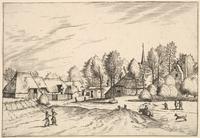
Country Village with Church Tower from Multifariarum Casularum Ruriumque Lineamenta Curiose Ad Vivum Expressa
Master of the Small Landscapes
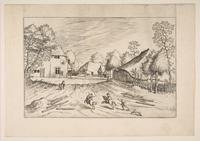
The Swan's Inn with Farms from the Series The Small Landscapes
Master of the Small Landscapes
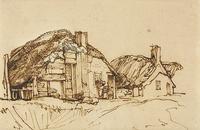
Two Thatched Cottages with Figures at the Window
Rembrandt
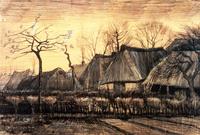
Houses with Thatched Roofs
Vincent van Gogh
Landscape with Three Huts
Rembrandt