Expertenanalyse zu Rembrandts A Nurse and an Eating Child
Stil: Baroque · Genre: sketch and study
Expert Analysis of "A Nurse and an Eating Child" by Rembrandt
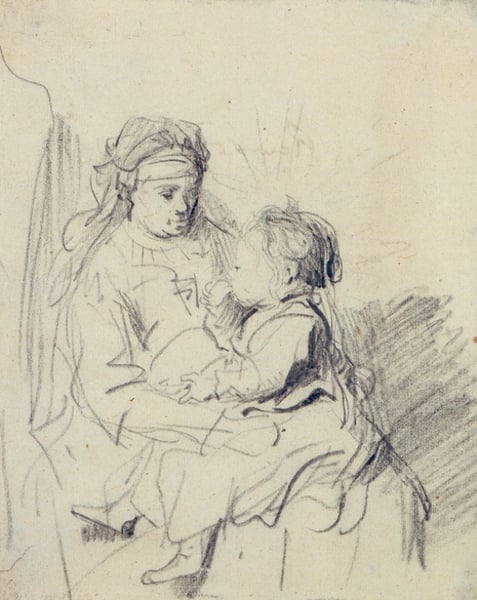
This work is a quintessential example of Rembrandt’s mastery within the Baroque style, rendered as a sketch and study. Its significance lies in how it encapsulates the Baroque preoccupation with immediacy, naturalism, and emotional directness while simultaneously offering a window into the artist’s private, investigative practice.
Baroque Sensibility in Everyday Life
Baroque art often thrived on dramatic tension, theatrical lighting, and grand historical or religious narratives. However, Rembrandt’s sketch subverts that expectation by focusing on an intimate, unglamorous domestic moment: a nurse feeding a child. In doing so, it champions the Baroque ideal of capturing life in motion—the fleeting gesture, the absorbed attention of the caregiver, the child’s instinctive act of eating. The scene is stripped of heroic artifice, yet it pulses with the same raw human energy found in Caravaggio’s religious dramas. This shift toward the quotidian, treated with profound seriousness, was a bold move that underscored Rembrandt’s belief that everyday experience contained its own kind of transcendence.
The Study as a Record of Observation
As a sketch and study, the work carries special weight. In the Baroque era, preparatory sketches were not merely rough drafts but vital documents of an artist’s thought process and technical innovation. Here, Rembrandt likely used the drawing to explore chalk or ink lines, rapid hatching, and the suggestion of light falling across forms. The unfinished quality enhances the sense of spontaneity—a hallmark of Baroque bravura. The nurse’s posture and the child’s eager mouth are captured with economical strokes, revealing Rembrandt’s unparalleled ability to convey psychological presence without over-defining details. This sketch may have informed later paintings, but it stands on its own as a testament to the artist’s insatiable curiosity about human behavior, a core tenet of Baroque naturalism.
Significance within Rembrandt’s Oeuvre
While Rembrandt is celebrated for his monumental paintings and etched self-portraits, his studies of anonymous subjects—nurses, beggars, children—are equally revolutionary. A Nurse and an Eating Child exemplifies his commitment to democratic observation: the idea that a lowly nurse or a hungry child deserves the same rigorous artistic attention as a king or a saint. Within the Baroque period, this approach pushed against academic hierarchies, aligning Rembrandt with the Northern Baroque tradition of genre realism (as pioneered by artists like Adriaen Brouwer). The sketch’s raw energy, its refusal to idealize, and its focus on a transient, everyday action make it a crucial piece in understanding how Baroque art could find the eternal in the momentary.
Museum / Gallery
Visuell ähnlich
20 Werke mit ähnlicher Komposition und Farbpalette
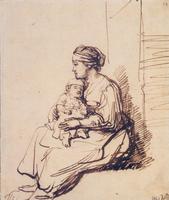
A Woman with a Little Child on her Lap
Rembrandt
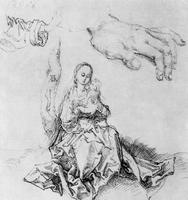
Study sheet with Madonna and child, hand and sleeve
Albrecht Durer
The Virgin with the Infant Jesus and St. John
Palma il Giovane
Mother and child
Pablo Picasso
The Emigrants
Nicolae Vermont
Madonna and child on the grassy bank
Albrecht Durer
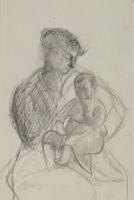
Berény Róbert, Anya a Gyermekével
Berény Róbert
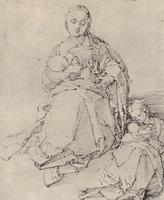
Study sheet with Mary and Child
Albrecht Durer
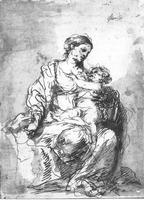
Virgin and Child
Bartolome Esteban Murillo
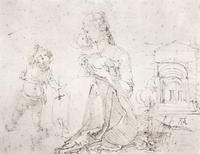
Madonna and Child with the little St. John
Albrecht Durer
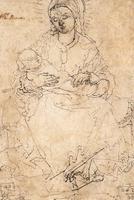
Madonna and Child on a Stone Bench
Albrecht Durer
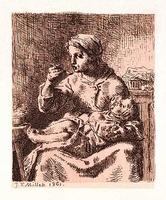
The porridge
Jean-Francois Millet
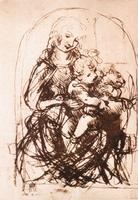
Study of the Madonna and Child with a Cat
Leonardo da Vinci
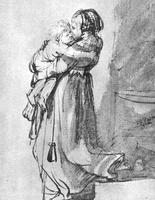
Saskia with a Child
Rembrandt
Mother and Child
Penry Williams
Madonna and child on the grassy bank
Albrecht Durer
The Virgin and Child in half-figure in her arms, from Guercino
Giovanni Battista Piranesi
Study of nursing Madonna and profile heads
Leonardo da Vinci
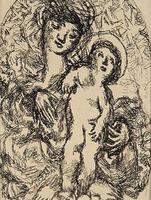
La Vierge et l'enfant
Louis Soutter
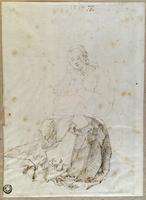
Sitting Mary with child
Albrecht Durer