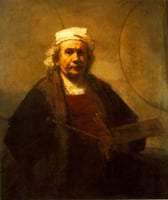
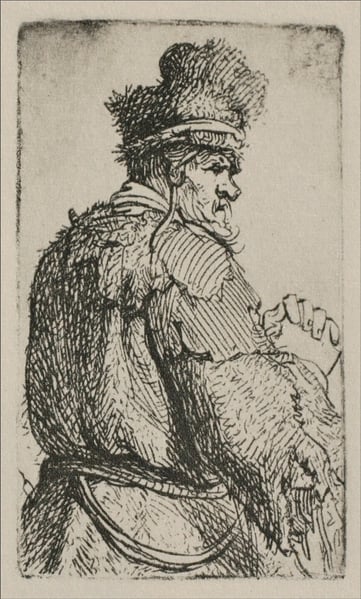
Analisi esperta di An Old Man Seen from Behind di Rembrandt
Stile: Baroque · Genere: portrait
Expert Analysis: An Old Man Seen from Behind by Rembrandt
Rembrandt van Rijn’s An Old Man Seen from Behind is a striking example of Baroque portraiture that subverts conventional expectations. In an era when portraits typically emphasized the sitter’s face, status, and direct engagement with the viewer, Rembrandt offers a radically intimate and introspective view—literally turning his subject away from us.
Significance within the Baroque Style
The Baroque period prized drama, emotional intensity, and the play of light and shadow (chiaroscuro). Rembrandt masterfully applies these principles even to a figure’s back. The old man’s hunched shoulders, the soft glow catching the nape of his neck and the folds of his cloak, and the deep shadows pooling around his form create a powerful sense of presence and vulnerability. This is not a portrait of external grandeur but of internal gravity—a meditation on aging, solitude, and the human condition. The lack of a face forces the viewer to read emotion through posture and texture, a bold departure from the typical Baroque focus on expressive faces.
Genre Innovation
As a portrait, this work is extraordinarily unconventional. Portraits of the 17th century were meant to preserve likeness, convey status, or demonstrate the artist’s skill in capturing character. By depicting the sitter from behind, Rembrandt rejects these norms. He invites us instead into a private, unguarded moment—as if we have stumbled upon the old man lost in thought. This aligns with Rembrandt’s lifelong fascination with human frailty and the passage of time, often explored in his later works through self-portraits and studies of elderly figures.
Art Historical Importance
The painting is significant for its psychological depth and its challenge to the traditional hierarchy of portrait subjects (exalting the face as the window to the soul). Rembrandt demonstrates that even an anonymous back can convey dignity, weariness, and quiet heroism. It is a testament to his ability to find the sublime in the mundane and to transform a simple study into a universal statement on mortality and grace. Within Baroque portraiture, it stands as a radical, empathetic, and deeply humanist work.
Visivamente simili
20 opere con composizione e palette affini
A Sketch for a Flight into Egypt
Rembrandt
The barrel organ player (Polander standing with arms folded)
Rembrandt
Polander leaning on a stick
Rembrandt
A Beggar and a Companion Piece, Turned to the Left
Rembrandt
A Polander Walking Towards the Right
Rembrandt
Peasant with his hands behind his back
Rembrandt
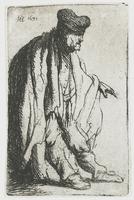
Beggar with his left hand extended
Rembrandt
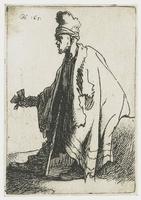
The leper (Lazarus clep)
Rembrandt
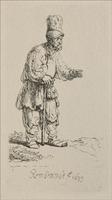
A Jew with the High Cap
Rembrandt
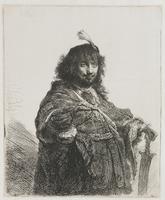
Self-portrait with plumed cap and lowered sabre
Rembrandt
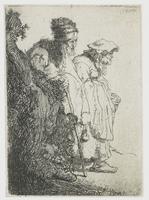
Beggar man and woman behind a bank
Rembrandt
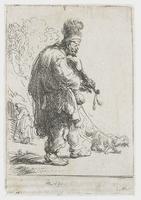
The blind fiddler
Rembrandt
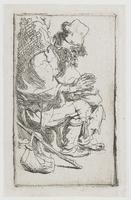
Beggar seated warming his hands at a chafing dish
Rembrandt
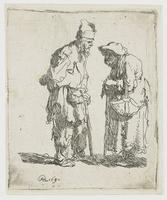
Beggar man and beggar woman conversing
Rembrandt
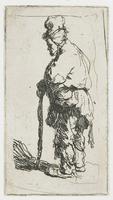
Beggar leaning on a stick, facing left
Rembrandt
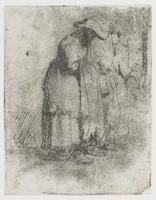
Beggar man and woman
Rembrandt
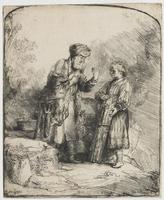
Abraham and Isaac
Rembrandt
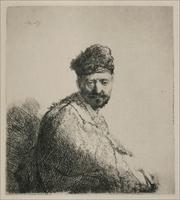
A Man with a Short Beard and Embroidered Cloak
Rembrandt
Man in a coat and fur cap leaning against a bank
Rembrandt
The blindness of Tobit
Rembrandt