
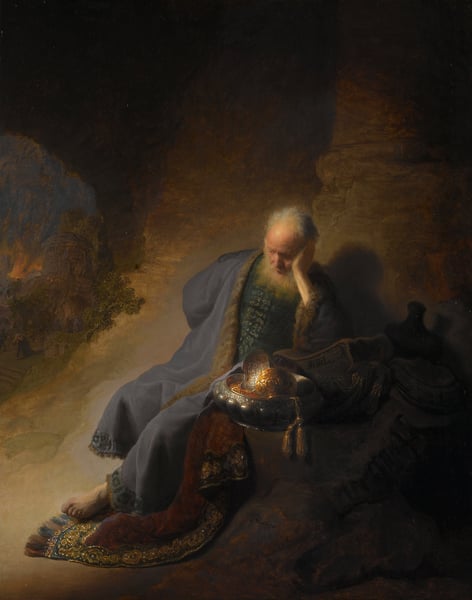
Expert analysis of Rembrandt’s Jeremiah mourning over the Destruction of Jerusalem
Style: Baroque · Genre: religious painting
As an expert art historian, I will provide an analysis based solely on the given facts: "Jeremiah mourning over the Destruction of Jerusalem" by Rembrandt, a Baroque religious painting.
This work is highly significant within the Baroque period for the way it translates religious narrative into a profound, intimate moment of human grief. Baroque art typically emphasizes drama, emotion, and theatrical contrast, and Rembrandt’s treatment of Jeremiah exemplifies these qualities in a uniquely inward, psychological register.
The painting’s significance lies in its departure from conventional depictions of biblical prophets as elevated, heroic figures. Instead, Rembrandt portrays Jeremiah in a state of deep, contemplative sorrow. The composition likely focuses on the figure’s isolation, with his downcast gaze and slumped posture conveying overwhelming loss. This psychological realism—a hallmark of Rembrandt’s best religious works—makes the biblical event feel immediate and personal.
Furthermore, as a Baroque religious painting, the work uses chiaroscuro (strong contrasts of light and shadow) not merely for theatrical effect but to symbolize spiritual weight. The light may fall on Jeremiah’s face or the sacred objects around him (like the Temple vessels), while the rest recedes into darkness—evoking both the historical fall of Jerusalem and the inner darkness of mourning. This fusion of external destruction with internal lament is what makes the piece so powerful: it turns a historical tragedy into a timeless meditation on loss, faith, and the human condition.
In summary, the painting is a masterpiece of Baroque religious art because it reimagines a familiar story through intense emotional focus and masterful use of light, making Jeremiah’s sorrow feel universal and deeply moving.
Museum / Gallery
Visually similar
20 works with related composition and palette
Anna and blind Tobit
Gerrit Dou
Anna and the Blind Tobit
Rembrandt
St. Paul at his Writing Desk
Rembrandt
King Lear and the Fool in the Storm
William Dyce
A Philosopher by Lamp Light
Joseph Wright
The Angel Appearing to Elijah
Ferdinand Bol
Old man Sleeping
Rembrandt
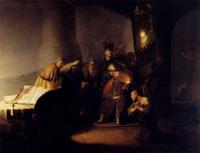
Repentant Judas Returning The Pieces Of Silver
Rembrandt
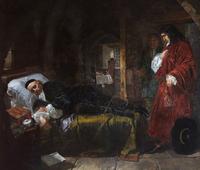
The Last Sleep of Argyll before His Execution, 1685
Edward Matthew Ward
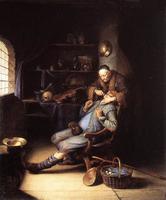
The Extraction of Tooth
Gerrit Dou
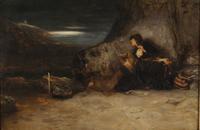
The vow
Nikolaos Gyzis
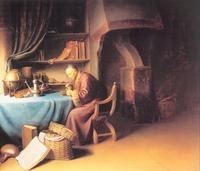
An Old Man Lighting his Pipe in a Study
Gerrit Dou
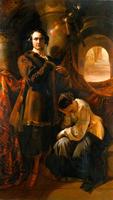
Macready as Werner
Daniel Maclise
The Temptation of Christ
Nikolai Ge
Eastern market
Carl Spitzweg
Isaac Blessing Jacob
Govert Flinck
Joseph tells his dreams to his parents and brothers
Rembrandt
Solomonic wisdom
Ludwig Knaus
Joseph Accused by Potiphar's Wife
Rembrandt
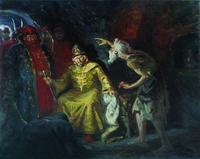
Ivan the Terrible
Andrei Ryabushkin