Expert analysis of Rembrandt’s Joseph Accused by Potiphar's Wife
Style: Baroque, Tenebrism · Genre: religious painting
Expert Analysis of "Joseph Accused by Potiphar's Wife" by Rembrandt
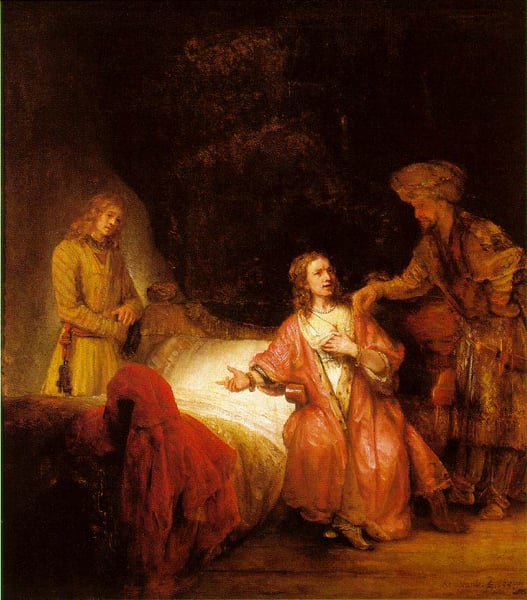
This painting exemplifies the dramatic and psychological intensity central to the Baroque period, while also showcasing Rembrandt’s mastery of Tenebrism—the stark, abrupt contrast of light and shadow that heightens narrative tension. The work is a religious painting drawn from the Genesis story (39:7–20), in which Potiphar’s wife falsely accuses Joseph of assault after he rejects her advances.
Rembrandt’s significance here lies in his ability to transform a biblical scene into a profoundly human drama. The Tenebrist lighting isolates the key figures: Joseph’s face is partially illuminated, revealing his distress and innocence, while the wife is cast in shadow, emphasizing her deceit and passion. This chiaroscuro technique, derived from Caravaggio, becomes in Rembrandt’s hands a tool for moral and emotional revelation rather than mere theatrical effect.
The composition is tightly focused on the accusatory gesture of the wife and Joseph’s recoiling posture, compressing the action into a moment of high psychological tension. Unlike many Baroque religious works that emphasize divine intervention or heroic virtue, Rembrandt dwells on the ambiguity and vulnerability of human righteousness. The dark, impasto background and the subtle modeling of fabric and flesh demonstrate his signature handling of paint, which adds texture and a sense of immediate, physical presence.
Within the Baroque style, this painting is significant for its refusal to glorify the saintly Joseph through radiant light or idealization. Instead, Rembrandt uses Tenebrism to create a deeply intimate and morally complex scene—a hallmark of his mature religious works, where the sacred is rendered through unflinching human truth.
Museum / Gallery
Visually similar
20 works with related composition and palette
Tobias's Farewell to his Parents
Samuel Dirksz van Hoogstraten
Preparatory sketch for The will of Isabella the Catholic
Eduardo Rosales
Jacob Blessing the Children of Joseph
Rembrandt
Joseph tells his dreams to his parents and brothers
Rembrandt
The Return of the Prodigal Son
Rembrandt
Raising of Jairus Daughter
Ilya Repin
Communion of Dying
Alexey Venetsianov
Desdemona Retiring to her Bed
Theodore Chasseriau
Charles V visits Francis I after the Battle of Pavia
Richard Parkes Bonington
Esther's Banquet
Salomon Koninck
Death of Barbara Radziwillowna
Jozef Simmler
The Ressurection of Jair's daughter
Vasily Polenov
Penelope is woken by Euryclea
Angelica Kauffman
Wolfert's Will
John Quidor
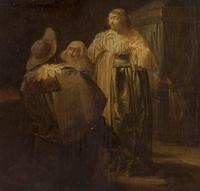
A Soldier, An Old Woman and a Young Woman
Pieter Codde
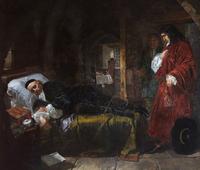
The Last Sleep of Argyll before His Execution, 1685
Edward Matthew Ward
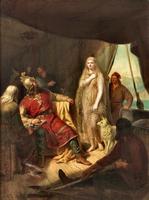
Ragnar Lodbrog meets Kraka
Mårten Eskil Winge
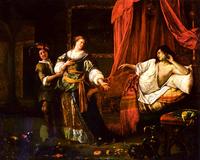
Amnon and Tamar
Jan Steen
The Prodigal Son
Gabriel Metsu
The Supper at Emmaus
Rembrandt