Analisi esperta di Man Pulling a Rope di Rembrandt
Stile: Baroque · Genere: genre painting
Expert Art Historical Analysis: "Man Pulling a Rope" (c. 1630s) – Rembrandt van Rijn
Significance within Baroque and Genre Painting
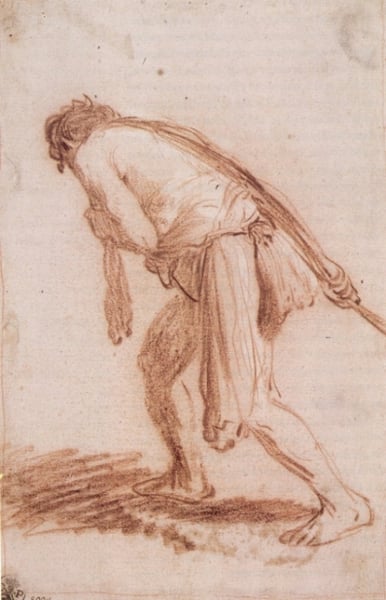
Rembrandt’s Man Pulling a Rope is a masterful example of Baroque genre painting that elevates an ordinary, physical act into a study of human effort, light, and psychological intensity. While the subject is simple—a laborer straining against a rope—the work encapsulates key innovations that define Rembrandt’s contribution to the Baroque period.
1. Chiaroscuro and Dramatic Focus
True to Baroque aesthetics, Rembrandt employs extreme contrasts of light and shadow (chiaroscuro) to isolate the figure from a dark, undefined background. The light falls diagonally across the man’s face, shoulders, and hands, emphasizing the tension in his muscles and the determined set of his jaw. The rope itself catches the light as it tightens, becoming a luminous line that directs the viewer’s eye along the arc of exertion. This spotlight effect transforms a mundane chore into a moment of heroic struggle—a hallmark of Rembrandt’s ability to find grandeur in the everyday.
2. Psychological Depth in a Common Subject
Unlike many Baroque genre scenes that lean toward moralizing or humor, Rembrandt focuses on the inner life of the worker. The man’s slight grimace, the furrow of his brow, and the downward gaze suggest not just physical strain but perhaps resignation, duty, or quiet endurance. This introspective treatment was revolutionary: Rembrandt treated a humble laborer with the same dignity and emotional complexity he afforded biblical or mythological figures. The painting thus bridges the gap between high art and the vernacular, a key shift in 17th-century Dutch painting.
3. Dynamic Composition and Baroque Movement
The figure’s diagonal posture—leaning back, arms extended, weight shifted onto one leg—creates a sense of arrested motion, as if the pull is occurring in real time. The rope’s taut curve and the man’s bent knees generate a visual torsion that engages the viewer viscerally. This dynamism, combined with the strong chiaroscuro, anchors the work in the Baroque love for movement and theatricality, yet Rembrandt tempers it with a quiet realism.
4. Significance in Rembrandt’s Oeuvre
Man Pulling a Rope is a testament to Rembrandt’s fascination with the human body under strain—a repeated theme in his etchings and early paintings. It also reflects the Dutch Republic’s interest in depicting the virtues of labor and everyday life, a departure from the aristocratic subjects favored elsewhere in Europe. By selecting a nameless worker as his protagonist, Rembrandt asserts the artistic and emotional worth of the common person, anticipating the social realism of later centuries.
Conclusion
Though modest in scale and subject, Man Pulling a Rope embodies the Baroque spirit: dramatic lighting, dynamic form, and profound human observation. It stands as a significant example of how Rembrandt transformed genre painting into a vehicle for timeless meditation on effort, dignity, and the human condition.
Visivamente simili
20 opere con composizione e palette affini
Study
Leonardo da Vinci
a Man Hauling a Net
Salvator Rosa
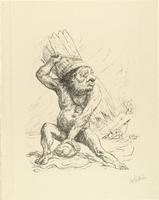
Caliban from the portfolio Visions of Shakespeare (Shakespeare Visionen)
Alfred Kubin
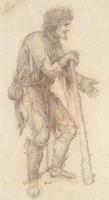
Masquerader in the guise of a Prisoner.jpg
Leonardo da Vinci
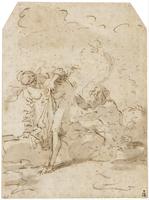
Glaucus and Scylla
Salvator Rosa
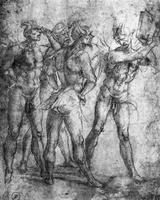
Four Demons with a Book
Luca Signorelli
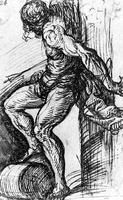
Saint Sebastian at the resurrection altin Brescia
Titian
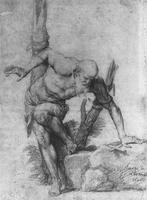
St. Albert
Jusepe de Ribera
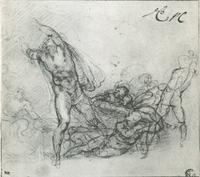
Study for a "Resurrection of Christ"
Michelangelo
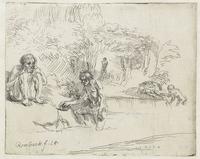
The bathers
Rembrandt
Drawing of Man Resting on Axe and Carrying Part of Tree Trunk on His Back
Katsushika Hokusai
Standing Male Figure
Salvator Rosa
A standing male nude, seen in profile, turned to the right
Francois-Bernard Lepicie
Sketch of moving farmer
Jean-Francois Millet
Study of Nudes
Luca Signorelli
Figure Studies
Bartholomeus Spranger
Five Male Nudes
Albrecht Durer
The Vicious Husband
Titian
A young man seated and standing (The walking trainer)
Rembrandt
Study of a Nude Man Kneeling on One Knee
Charles-Andre van Loo (Carle van Loo)