Expert analysis of Titian’s Saint Sebastian at the resurrection altin Brescia
Style: High Renaissance · Genre: religious painting
Expert Analysis of Titian’s Saint Sebastian at the Resurrection Altar in Brescia
Style: High Renaissance | Genre: Religious Painting
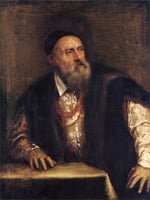
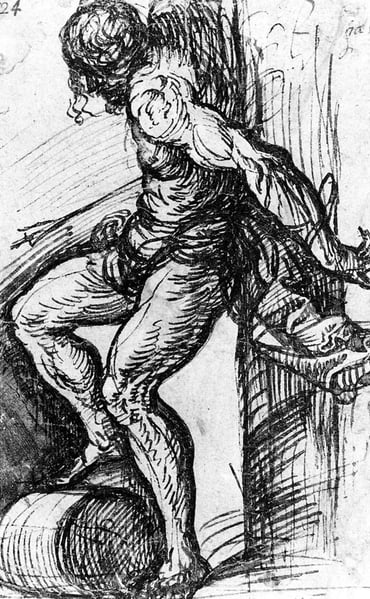
This work is a panel from the Averoldi Polyptych (1520–1522), a multi-part altarpiece Titian created for the Church of Santi Nazzaro e Celso in Brescia. The subject—the martyrdom of Saint Sebastian—is a standard theme, but Titian’s treatment elevates it to a landmark of the High Renaissance.
Key to Its Significance:
- Dramatic Tension and Anatomy – Titian depicts Sebastian not as a serene, passive martyr but as a virile, twisting figure caught in intense physical and emotional strain. The diagonal thrust of his body, the bulging muscles, and the contrapposto reminiscent of Michelangelo’s Dying Slave inject a palpable urgency into the scene. This dynamic pose anticipates Mannerist elongation and torsion.
- Luminosity and Color – The saint’s flesh glows against a deep, nocturnal background, lit from above as if by a divine spotlight. Titian’s Venetian colorito—rich, warm flesh tones contrasted with cool, shadowy drapery—creates a three-dimensional, almost tactile presence. The flickering arrows, rendered with delicate highlights, seem to hover in space.
- Narrative Innovation – Unlike earlier static depictions, Titian captures a specific instant: the release of the arrow. Sebastian’s head is thrown back, mouth slightly open, eyes rolled upward—a moment of both agony and transcendent faith. This psychological depth was revolutionary for the period.
- Structural Role in the Altarpiece – As part of the Resurrection ensemble, Sebastian’s suffering connects earthly martyrdom to Christ’s triumph, reinforcing the altarpiece’s soteriological message. His muscular, earthly vitality contrasts with the ethereal, risen Christ in the central panel.
Legacy: This Saint Sebastian became a touchstone for later artists—Tintoretto, El Greco, and even Caravaggio’s chiaroscuro—precisely because Titian fused High Renaissance idealism with a raw, human vulnerability. It remains a masterclass in how great painting can make a familiar saint feel newly alive, emotionally and physically.
Museum / Gallery
Visually similar
20 works with related composition and palette
St. Albert
Jusepe de Ribera
Male and Female Nudes
Albrecht Durer
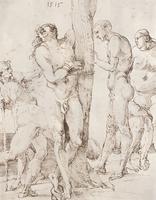
Study sheet with six nude figures
Albrecht Durer
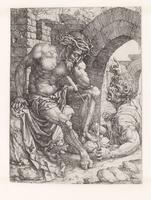
The Mocking of Christ (The man of sorrows)
Mabuse
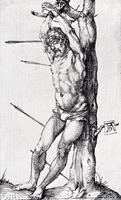
St. Sebastian At The Tree
Albrecht Durer
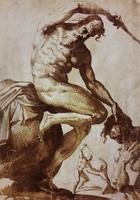
Abraham's Sacrifice
Francesco de' Rossi (Francesco Salviati), "Cecchino"
Faun with a pipe
Orest Kiprensky
Five Male Nudes
Albrecht Durer
St. Jerome and the Angel
Jusepe de Ribera
Sheet of Studies with St. Jerome, Seated at Right and Resting His Right Forearm on a Book, at Left An Ecclesiastical Figure Wearing a Cope and Miter, and at Bottom Two Putti
Palma il Giovane
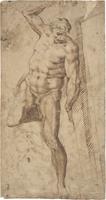
Copy of the Good Thief, From the Last Judgement of Michelangelo
Bartolomeo Passerotti
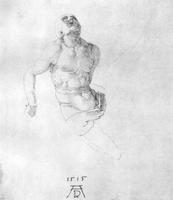
Study of a body of Christ
Albrecht Durer
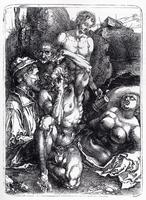
The Desperate Man
Albrecht Durer
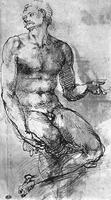
Study of nude man
Michelangelo
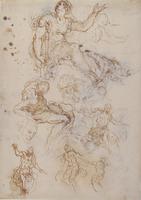
Seated Female Holding a Book, Two Heads of Bearded Men, Seated Male Nude, and Four Sketches for Christ Judging (recto); Studies for Cain Slaying Abel (verso)
Palma il Giovane
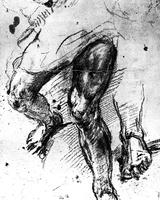
Study of legs
Titian
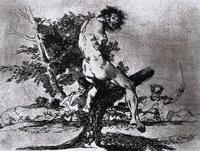
This is worse
Francisco Goya
Orpheus
Giovanni Battista Piranesi
Study of Nudes
Luca Signorelli
Flagellation
Albrecht Durer