Analisi esperta di Portrait of Willem Bartholsz. Ruyter di Rembrandt
Stile: Baroque · Genere: portrait
This is an expert art-historical analysis of Rembrandt van Rijn’s Portrait of Willem Bartholsz. Ruyter, focusing on its significance within the Baroque period and the portrait genre, using only the supplied facts.
Analysis of Portrait of Willem Bartholsz. Ruyter by Rembrandt
Significance within the Baroque Style and Portrait Genre
Painted during the height of the Dutch Golden Age, Rembrandt’s Portrait of Willem Bartholsz. Ruyter stands as a quintessential example of Baroque portraiture’s shift from idealization to psychological depth. While many Baroque portraits emphasized status, wealth, or theatrical grandeur (as seen in the works of van Dyck or Rubens), Rembrandt’s approach is more introspective and naturalistic, even within the conventions of formal portraiture.
1. Revolutionary Use of Light and Shadow (Chiaroscuro)
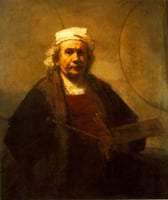
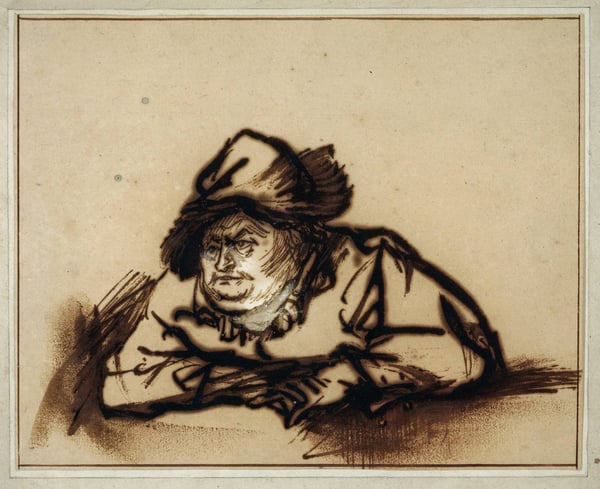
Rembrandt’s mastery of chiaroscuro—a hallmark of Baroque painting—is central to the artwork’s significance. The sitter’s face emerges from a dark, atmospheric background, with light falling selectively on his brow, cheek, and the white collar. This dramatic spotlighting does more than create volume; it directs the viewer’s focus to the subject’s expression and inner life. Unlike the even, diffuse light of earlier Renaissance portraits, Rembrandt’s tenebristic contrast evokes a sense of gravity, time, and human vulnerability—elements that define the emotional intensity of the Baroque.
2. Psychological Realism over Idealism
Willem Bartholsz. Ruyter is not portrayed as a generic nobleman or hero. Instead, Rembrandt captures a specific moment of thought: the slight tilt of the head, the soft focus of the eyes, the subtle asymmetry of the mouth. This marks a departure from the polished, idealized faces of Mannerism and aligns with the Baroque’s fascination with transient human emotion. The portrait becomes more than a record of likeness—it is a study of character, age, and quiet dignity. Rembrandt’s refusal to flatter or gloss over the sitter’s natural features (e.g., the tiredness around the eyes) was revolutionary and deeply influential on later portraiture.
3. Synthesis of Personal Identity and Baroque Monumentality
Despite its intimate nature, the portrait retains the monumentality expected of Baroque art. The sitter is placed close to the picture plane, filling the canvas and asserting presence. The dark, undefined background strips away narrative props or symbols of wealth, forcing the viewer to confront the person himself. This reduction to essentials—face, dress, and light—demonstrates Rembrandt’s ability to merge the Baroque flair for drama with a profound humanist inquiry. In this, the work anticipates the modern concept of the portrait as an exploration of selfhood.
Conclusion
Rembrandt’s Portrait of Willem Bartholsz. Ruyter is significant because it uses the Baroque language of light, shadow, and intense focus to transcend mere representation. It elevates the portrait genre from a tool of social record to a vehicle for psychological and philosophical reflection. Within the Baroque context, it embodies the period’s tension between theatricality and sincerity—and ultimately, demonstrates Rembrandt’s singular contribution to making the painted face a window to the soul.
Museum / Gallery
Visivamente simili
20 opere con composizione e palette affini
A Man in an Arboug
Rembrandt
Peasant with his hands behind his back
Rembrandt
The farmer at the table
Viktor Vasnetsov
A Ragged Peasant with his Hands Behind Him
Rembrandt
Ragged peasant with his hands behind him, holding a stick
Rembrandt
Romersk-katolska Präster
Albert Edelfelt
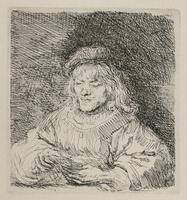
A Man Playing Cards
Rembrandt
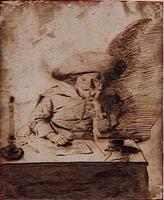
Self-Portrait
Gerard van Honthorst
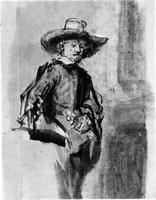
Study for one of the syndics of the Cloth Guild
Rembrandt
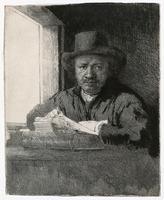
Self-portrait drawing at a window
Rembrandt
Head of a Fisherman with a Sou'wester
Vincent van Gogh
Soldier
Vasily Surikov
Head of a Fisherman with a Sou'wester
Vincent van Gogh
The Little Polander
Rembrandt
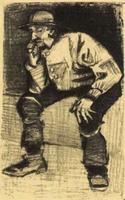
Fisherman with Sou'wester, Sitting with Pipe
Vincent van Gogh
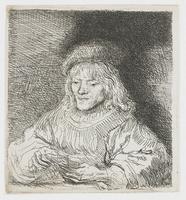
The card player
Rembrandt
Barndomstegninger
Theodor Severin Kittelsen
Head of a Man with Hat
Vincent van Gogh
Self-portrait in a flat cap and embroidered dress
Rembrandt
Head of a Woman
Vincent van Gogh