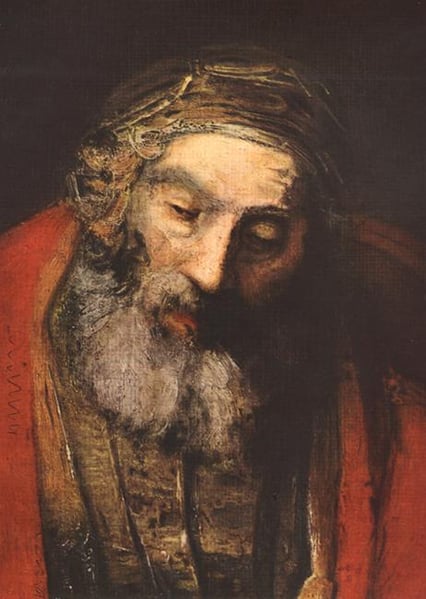
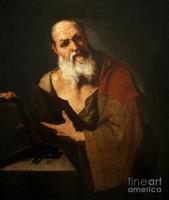
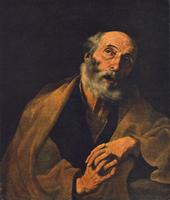
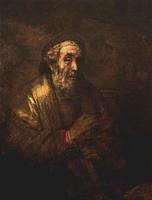
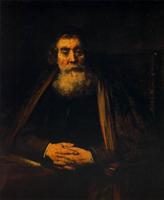
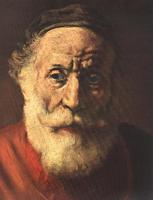
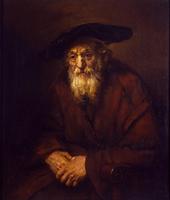
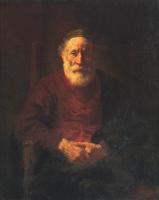
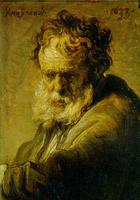
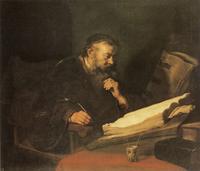
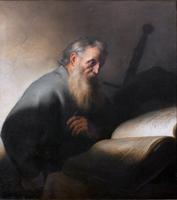
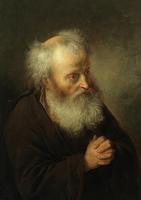
The fragment of Rembrandt’s Return of the Prodigal Son exemplifies the emotional and spiritual intensity of the late Baroque period. As a portrait, it isolates the most poignant moment of the biblical parable—the father’s embrace of his repentant son. Rembrandt’s mastery of chiaroscuro (the dramatic contrast of light and shadow) draws the viewer’s eye to the father’s weathered hands and the son’s bowed head, conveying profound tenderness and forgiveness. This work is significant for its psychological depth: rather than a narrative tableau, the fragment focuses on the raw humanity of the figures, a hallmark of Rembrandt’s mature style. The loose, almost impasto brushwork in the father’s garments and the soft, glowing light on his face demonstrate a departure from the polished surfaces of earlier Baroque portraits, emphasizing inner experience over outward detail. This fragment thus stands as a quintessential example of how Rembrandt transformed a religious story into a universal meditation on mercy and familial love, making it a landmark in Baroque portraiture.