Expert analysis of Rembrandt’s Homer
Style: Baroque, Tenebrism · Genre: portrait
Expert Art Historical Analysis: Homer by Rembrandt
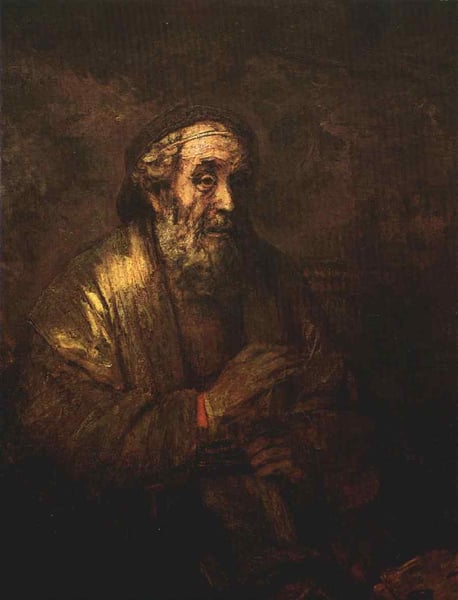
Rembrandt’s Homer stands as a masterful synthesis of Baroque dynamism and Tenebrist drama, distilled into the intimate genre of portraiture. Painted during the artist’s later period, the work eschews traditional heroic idealization in favor of a profoundly human, psychological study.
Significance within the Baroque and Tenebrist Traditions
- Baroque Emotional Intensity: True to the Baroque emphasis on movement and emotional engagement, Rembrandt captures Homer not as a static icon but as a living, contemplative presence. The poet’s furrowed brow, half-open mouth, and downward gaze suggest the act of recitation or deep thought, inviting the viewer into a moment of creative struggle. This focus on inner life is a hallmark of Rembrandt’s Baroque humanism.
- Tenebrist Illumination: The work exemplifies Tenebrism’s hallmark—sharp contrasts between light and shadow. A narrow beam of light falls on Homer’s face, hands, and the simple fold of his garment, while the background dissolves into near-total darkness. This selective illumination does more than model volume: it becomes a metaphor for the flash of poetic insight emerging from obscurity. Rembrandt’s light is tactile, revealing wrinkles and weathered skin, making the blind poet’s inner vision feel palpable.
- Subverting the Portrait Genre: Traditionally, a portrait of Homer would emphasize his status as a cultural hero—perhaps with laurel wreaths, scrolls, or idealized features. Instead, Rembrandt presents an aging, blind man whose humanity is laid bare. The Tenebrist shadow cuts across his face, half-revealing, half-concealing, suggesting that true wisdom comes from within rather than from external sight. This radical interiority redefines the Baroque portrait as a vehicle for spiritual and intellectual depth rather than mere likeness.
Why This Work Matters
Homer by Rembrandt is significant because it uses Baroque theatricality and Tenebrist chiaroscuro not for grand historical or religious narrative, but to dignify the solitary act of creation. It transforms a legendary poet into a universal figure of ageing, insight, and resilience—an enduring statement on the power of art to see beyond the visible.
Museum / Gallery
Visually similar
20 works with related composition and palette
Portrait of an Old Man in Red
Rembrandt
Jacob Tripp
Rembrandt
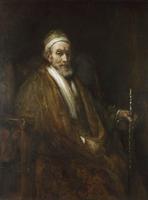
Portrait of Jacob Trip
Rembrandt
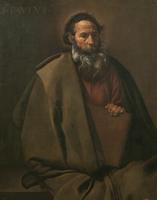
St. Paul
Diego Velazquez
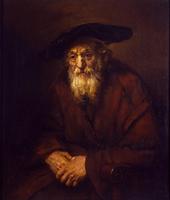
Portrait of an Old Jew
Rembrandt
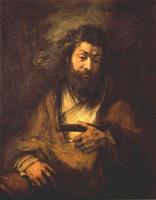
The Apostle Simon
Rembrandt
Return of the Prodigal Son(fragment)
Rembrandt
St. Bartholomew
Rembrandt
The Apostle Paul
Rembrandt
Old man Dressed as Saint Paul
Rembrandt
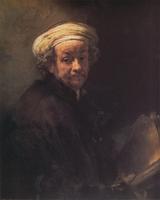
Self-portrait as the Apostle Paul
Rembrandt
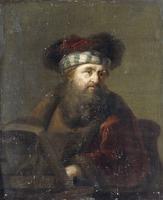
Portrait of a Rabbi
Rembrandt
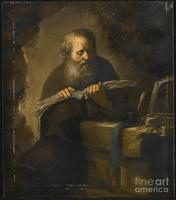
A Hermit in a Cave
Gerrit Dou
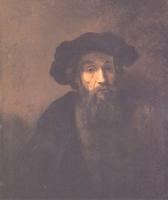
Bearded Man with a Beret
Rembrandt
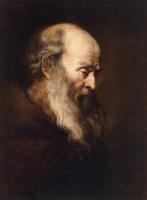
Portrait of an Old Man
Jan Lievens
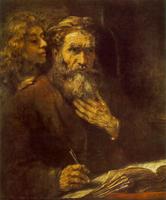
St. Matthew and The Angel
Rembrandt
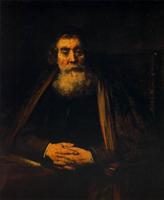
Portrait of an Old Man
Rembrandt
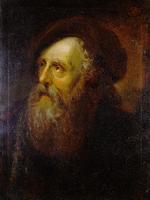
Portrait of an Old Jew
Antoine Pesne
The Repentant Saint Peter
Francisco Goya
St. Paul at his Writing Desk
Rembrandt