Rembrandt の The Visitation の専門的な分析
スタイル:Baroque · ジャンル:genre painting
Expert Analysis: "The Visitation" by Rembrandt
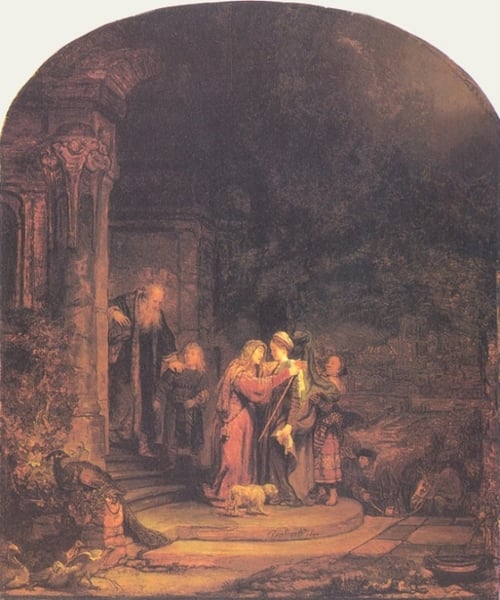
Within the context of the Baroque period, Rembrandt’s "The Visitation" stands as a masterful fusion of elevated subject matter and intimate, everyday realism—a hallmark of his genre-painting approach. By reimagining a biblical narrative through the lens of genre painting, Rembrandt transforms a sacred encounter into a profoundly human moment, thereby pushing the boundaries of Baroque art beyond dramatic spectacle toward psychological depth and domestic authenticity.
Significance within the Baroque Style:
Baroque art is characterized by dynamic composition, strong chiaroscuro, and emotional intensity. In this work, Rembrandt employs his signature tenebrism—deep shadows and selective, warm illumination—to draw the viewer’s focus to the tender exchange between Mary and Elizabeth. Rather than relying on theatrical gestures or sweeping diagonals typical of the Baroque, he creates a quiet, arrested moment of recognition. The figures are enveloped in a soft, almost palpable darkness, which emphasizes their inward emotion and the spiritual gravity of the scene. This is a subtler, more contemplative Baroque, where light itself becomes a vehicle for divine presence and human connection.
Significance as Genre Painting:
By categorizing "The Visitation" as a genre painting—a depiction of everyday life—Rembrandt deliberately blurs the line between sacred history and ordinary human experience. He portrays Mary and Elizabeth not as idealized biblical saints, but as two unremarkable women of modest means, draped in simple fabrics and situated in what feels like a humble domestic interior. The aged Elizabeth’s wrinkled hands and Mary’s downcast, humble posture root the story in a tangible, lived reality. This approach makes the miraculous—the Visitation and the recognition of the unborn John the Baptist—more accessible and emotionally immediate. It underscores Rembrandt’s revolutionary belief that divinity is most powerfully felt in the mundane moments of shared solidarity and quiet affection.
Overall Significance:
"The Visitation" is significant because it exemplifies Rembrandt’s unique contribution to Baroque art: the elevation of psychological complexity over overt drama. By treating a sacred subject as a genre scene, he invites viewers to see the holy within the ordinary, creating a work that resonates with profound empathy and timeless humanity.
Museum / Gallery
視覚的に類似
構図やパレットが近い作品 20 件
Ecce Homo
Rembrandt
Christ before Pilate
Rembrandt
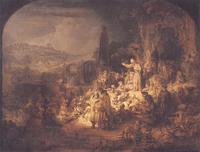
John the Baptist Preaching
Rembrandt
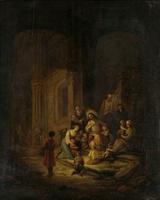
Christ Blessing the little Children
Jacob de Wit
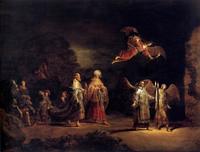
Journey of the Three Magi to Bethlehem
Leonaert Bramer
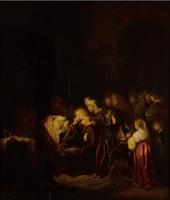
David and Bathsheba mourning their dead son
Salomon Koninck
The Adoration of the Magi
Salomon Koninck
Study from Tintoretto's Adoration of the Magi
John Ruskin
The Massacre of the Monks of Tamond
Sir Lawrence Alma-Tadema
The Family of Darius Pleading to Alexander
Gaspare Diziani
Simeon's Song of Praise
Rembrandt
Simeon's song of praise
Rembrandt
Presentation in the Temple
Rembrandt
David and Batsheba mourning over Their Dead Son
Salomon Koninck
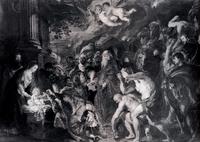
The Adoration of the Magi
Peter Paul Rubens
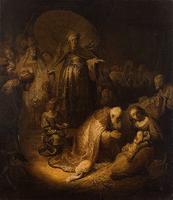
Adoration of the magi
Rembrandt
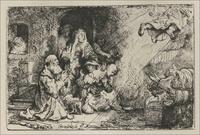
Angel Departing from the Family of Tobias
Rembrandt
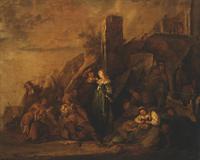
Halt of Travellers Among Ruins
Pieter Codde
First Christians in Kyiv
Vasily Perov
Christ and St. Mary Magdalene at the Tomb
Rembrandt