Expert analysis of Salvador Dali’s The Gaseous Swan
Style: Expressionism, Symbolism · Genre: mythological painting
Expert Analysis: "The Gaseous Swan" by Salvador Dalí
In this mythologically themed work from Dalí’s Classic Period (1941–1989), The Gaseous Swan marks a fascinating pivot—blending the emotional intensity of Expressionism with the layered meaning of Symbolism, while still echoing the master’s signature dreamlike iconography. Though Dalí is often cast as the arch-Surrealist, this painting belongs to a later phase when he consciously returned to formal rigor and classical mythology, reinterpreting ancient narratives through a modern, almost alchemical lens.
Significance within Style and Period
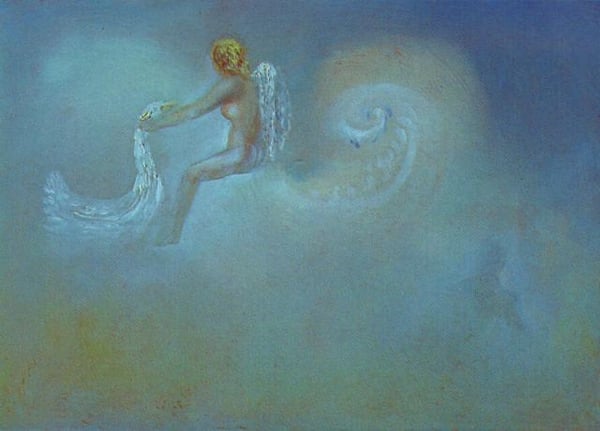
What makes The Gaseous Swan singular is its treatment of the swan not as a solid, noble creature but as a vapor-like, transient apparition. This choice is quintessentially Expressionist: the form is distorted, almost dissolving, to convey inner psychic states rather than outward reality. The “gaseous” quality—rendered through blurred contours and evanescent washes of color—suggests fragility, memory, or a spirit caught between being and non-being. Here, Dalí uses Expressionist technique not for raw anguish, but for a kind of mystical attenuation; the swan becomes a symbol of metamorphosis or the fleeting nature of beauty.
Simultaneously, the painting operates on a Symbolist register. The swan is a loaded mythographic figure: in Greek mythology, it is associated with Zeus’s transformation (Leda), with Apollo’s sacred bird, and with the soul’s journey. Dalí infuses the scene with symbolic ambiguity—perhaps the swan represents the artist’s own creative spirit, ephemeral yet sublime, or a commentary on the illusion of permanence in art. The background, likely a barren or cosmic landscape, heightens the sense of isolation and dreamlike silence, a hallmark of Symbolist painting’s tendency to evoke mood over narrative.
Context within Dalí’s Classic Period
This period saw Dalí turning away from the automatic techniques of his Surrealist heyday toward a more academic, sometimes mystical classicism. Paintings like The Gaseous Swan demonstrate his fascination with atomic and quantum imagery (gaseous states) merged with mythological archetypes. The swan’s diffusion into gas mirrors Dalí’s interest in the physics of reality and the subconscious—how matter dissolves into energy, how myths dissolve into symbols. It is a work that bridges his earlier hallucinatory precision with a later, more philosophical, almost science-inspired expressionism.
Conclusion
The Gaseous Swan is significant as a hybrid masterpiece: it defies easy categorization by fusing the emotional push of Expressionism with the intellectual pull of Symbolism, all while restaging a timeless myth in a contemporary, almost scientific idiom. For admirers of Dalí, it reveals an artist unafraid to let his forms breathe—literally—into the ether, proving that even in his classicizing phase, his vision remained radically fluid and psychologically charged.
Visually similar
20 works with related composition and palette
Pack Clouds Away and Welcome Day
Edward Robert Hughes
Untitled
Zdzislaw Beksinski
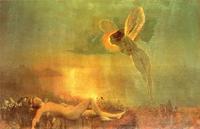
Endymion on Mount Latmus
John Atkinson Grimshaw
Adam's Deep Sleep
Georgi Mashev
Spring Symphony
Nikolaos Gyzis
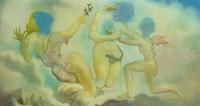
Psychoanalysis and Morphology Meet
Salvador Dali
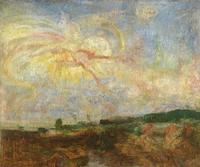
Adam and Eve Expelled from Paradise
James Ensor
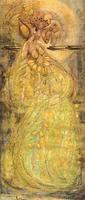
Summer
Margaret Macdonald
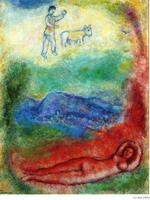
Rest
Marc Chagall
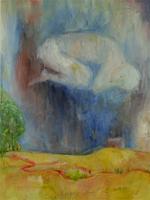
I Will Remember Nothing Escapes Me
Paul F. Yount
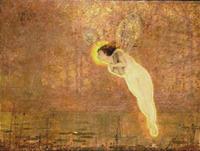
Iris
John Atkinson Grimshaw
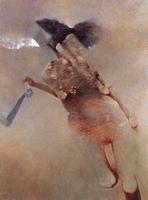
Untitled
Zdzislaw Beksinski
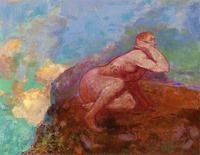
Nude Woman on the Rocks
Odilon Redon
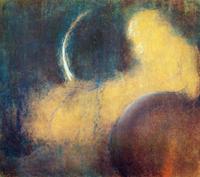
Night
Mikalojus Konstantinas Ciurlionis
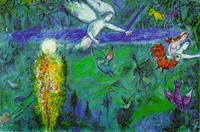
Adam and Eve expelled from Paradise
Marc Chagall
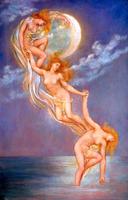
Moonbeams
Evelyn De Morgan
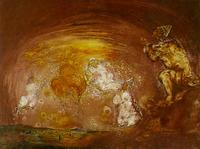
Untitled (Landscape with Celestial Beings)
Salvador Dali
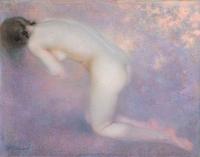
Ariette
Lucien Levy-Dhurmer
Aurora
Odilon Redon
Opal
Robert Lewis Reid