Analisi esperta di Manga di Katsushika Hokusai
Stile: Ukiyo-e · Genere: sketch and study
Expert Analysis of Katsushika Hokusai’s Manga
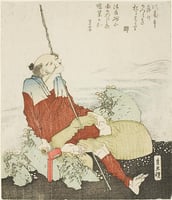
Katsushika Hokusai’s Manga (often translated as “Random Sketches” or “Ten Thousand Sketches”) is not a single artwork but a monumental series of published sketchbooks produced between 1814 and 1878 (with volumes completed posthumously). Its significance within the Ukiyo‑e tradition and the broader history of visual culture is profound, as it redefines the very concept of the “sketch” and “study” as a serious artistic form.
Innovative Role in Ukiyo‑e and Beyond
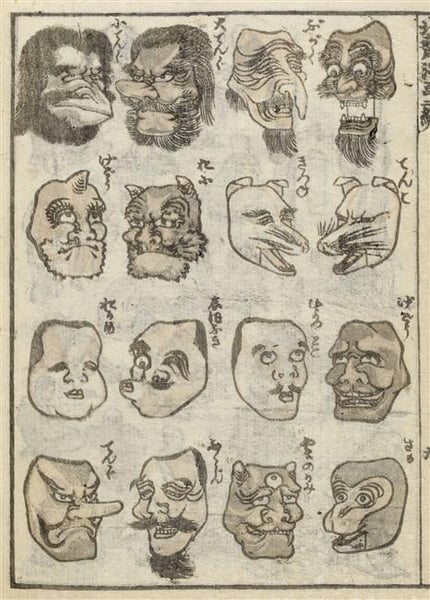
While Ukiyo‑e is typically associated with polished woodblock prints of courtesans, actors, and landscapes, Hokusai’s Manga elevates the informal sketch to a central artistic statement. The volumes contain thousands of rapid, energetic drawings of virtually everything imaginable: people in every conceivable pose, animals, mythical creatures, plants, landscapes, architectural details, and even supernatural phenomena. This encyclopedic approach demonstrates Hokusai’s obsessive observation of nature and daily life, a core tenet of his artistic philosophy.
Pioneering Sequential and Thematic Organization
Each volume of Manga is organized thematically, with pages that flow from one subject to the next in a quasi‑sequential manner. This layout anticipates the modern comic strip and manga format—indeed, the term “manga” itself was popularized by Hokusai’s series, and his dynamic linework, exaggerated expressions, and economical storytelling directly influenced later Japanese graphic storytelling. His sketches often capture movement with startling economy, as in his famous depictions of sumo wrestlers in mid‑thrust or birds in flight.
Artistic Technique and Educational Value
Hokusai’s Manga serves as both a personal studio record and a public instructional manual. The drawings are executed in a loose, flowing brush style (derived from Chinese ink painting and bokashi shading) that contrasts with the tight, chiseled lines of typical Ukiyo‑e prints. Hokusai deliberately leaves pencil under‑drawings visible, celebrating the raw process of creation. This transparency was radical: it gave aspiring artists a masterclass in composition, anatomy, and perspective, democratizing art education.
Cultural and Philosophical Implications
The Manga embodies Hokusai’s belief that art should capture the “rhythm of life.” He famously declared, “From the age of six, I had a mania for drawing the shapes of things… everything I produce is a sketch.” By treating the sketch as a finished product, Hokusai challenged the hierarchy of fine art versus craft. Furthermore, the series’ vast subject matter—from bustling Edo streets to serene Mount Fuji—offers an unparalleled visual encyclopedia of early 19th‑century Japanese society, religion, and folklore.
Lasting Influence
Hokusai’s Manga had an immediate impact on Ukiyo‑e artists like Utagawa Hiroshige and later on European modernists such as Edgar Degas and Vincent van Gogh (who collected Japanese prints). Its direct influence on the development of modern manga is immeasurable, inspiring the graphic vocabulary of Tezuka Osamu and virtually every manga artist since.
In essence, Manga is not merely a collection of studies—it is a bold declaration that the sketch is a complete, vibrant, and essential art form. Hokusai’s restless curiosity and technical mastery transform these pages into a living, breathing document of an artist’s eye and hand, solidifying the work as a cornerstone of global visual culture.
Museum / Gallery
Visivamente simili
20 opere con composizione e palette affini
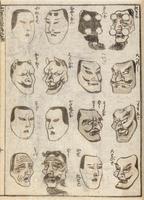
Manga
Katsushika Hokusai
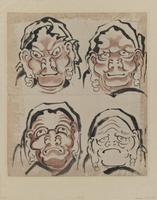
Sketch of Four Faces
Katsushika Hokusai
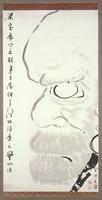
Giant Daruma
Soen Kogaku
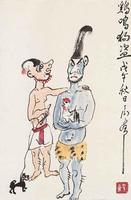
Opera Figures
Ding Yanyong
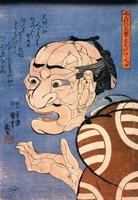
At first glance he looks very fiarce, but he's really a nice person
Utagawa Kuniyoshi
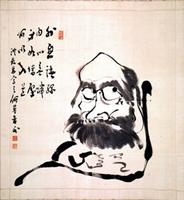
Daruma
Soen Kogaku
Generals
Boris Kustodiev
Sheet of caricatures
Annibale Carracci
Faces
Utagawa Kuniyoshi
Front-Facing Daruma
Soen Kogaku
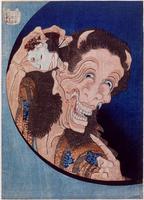
Laughing demon
Katsushika Hokusai
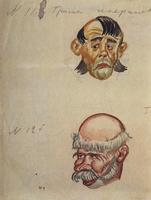
Generals
Boris Kustodiev
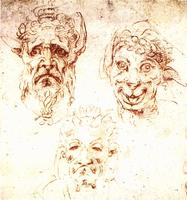
Studies of Grotesques
Michelangelo
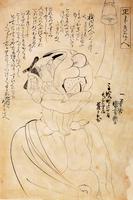
A person as a person should be
Utagawa Kuniyoshi
Daruma
Hakuin Ekaku
Multi-eyed Oni
Katsushika Hokusai
Kuma-921
Maki Haku
Figure
Ding Yanyong
Tokaido 53 Stations, Station #44, Yokkaichi
Utagawa Kunisada
Giant Daruma
Nakahara Nantenbo