Expertenanalyse zu Annibale Carraccis Sheet of caricatures
Stil: Baroque · Genre: sketch and study
Artwork Analysis: "Sheet of Caricatures" by Annibale Carracci
Expert Description and Significance
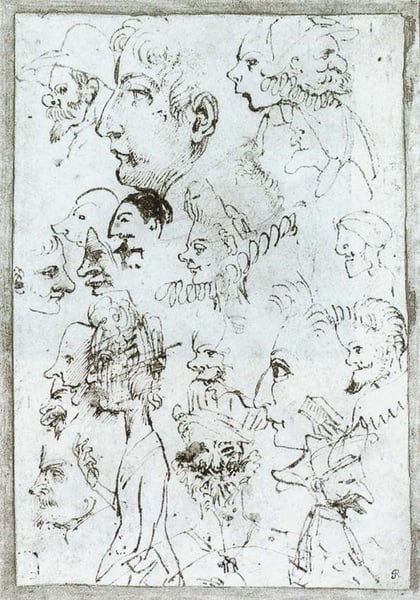
Annibale Carracci’s “Sheet of Caricatures” stands as a seminal work within the Baroque period, representing a genre that bridges formal sketch and playful study. Carracci, a leading figure of the Bolognese School and a key innovator of Baroque classicism, is credited with elevating caricature from mere mockery to a legitimate art form—a tradition that would influence generations of satirical artists from da Vinci’s grotesques to modern political cartoonists.
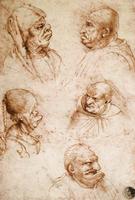
This sheet exemplifies the Baroque fascination with dynamic expression, physical exaggeration, and psychological immediacy. Unlike the idealized figures of Renaissance portraiture, Carracci here captures the essence of human character through deliberate distortion: elongated noses, bulging eyes, exaggerated postures, and sharp social observation. Each sketch is a rapid, incisive study in physiognomy—the belief that character is written on the face—rendered with the fluid, spontaneous lines of a master draftsman.
The work’s significance lies in its genre-defining role. At a time when drawing was predominantly a preparatory tool for monumental frescoes or altarpieces, Carracci treated the sketch as an independent, finished statement of wit and artistry. His caricatures were not mere jokes but analytical exercises in form and expression, merging the Baroque love for movement and theatricality with a humanistic curiosity about individuality.
Moreover, this sheet reveals Carracci’s influence on later iconoclasts like Gian Lorenzo Bernini (who also sketched caricatures) and foreshadows the flower of caricature in the 18th and 19th centuries. It is, in essence, a private workshop of ideas where the artist tests the boundaries of representation, proving that even within the Baroque’s grandeur, a quick, sharp line can capture truth more vividly than a formal portrait.
Museum / Gallery
Visuell ähnlich
20 Werke mit ähnlicher Komposition und Farbpalette
Griffonnage
Orest Kiprensky
Esbozo De Goya Repasado Por Weiss
Rosario Weiss Zorrilla
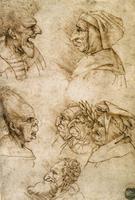
Seven caricatures
Francesco Melzi
Barndomstegninger
Theodor Severin Kittelsen
Head of a Man with a Hat, a Perspective Frame, and Other Sketches
Vincent van Gogh
Generals
Boris Kustodiev
Untitled
Wols
Generals
Boris Kustodiev
Caricature with a Bottle
Adalbert Erdeli
Fesjaa Vaare Medmennesker
Theodor Severin Kittelsen
Peasant Woman, Head
Vincent van Gogh
Planche de Croquis No 8
Theophile Steinlen
Characters and Caricaturas
William Hogarth
Studies of Monsters
Hieronymus Bosch
Madame Othon Friesz, La Marseillaise
Amedeo Modigliani
Untitled
Vasile Kazar
Amants, venez/Le coup d'envoi
Louis Soutter
Study sheet
Leonardo da Vinci
Sketches of people
Theophile Steinlen
Five Grotesque Heads
Francesco Melzi