Katsushika Hokusai sanatçısının Manga eseri hakkında uzman analizi
Tarz: Ukiyo-e · Tür: sketch and study
Expert Analysis of Manga by Katsushika Hokusai
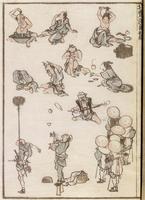
As a landmark of Ukiyo-e art and a pioneering work in the genre of sketch and study, Hokusai’s Manga (literally “whimsical pictures”) transcends the boundaries of a conventional art book. This multi-volume compendium, produced between 1814 and 1878, is not a single narrative but a vast, encyclopedic visual dictionary of the world as Hokusai observed and imagined it. Its significance lies in four key aspects:
1. Revolutionary Approach to Sketching and Study
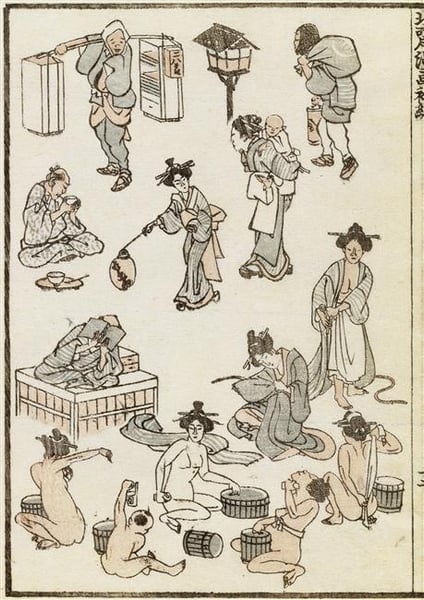
Hokusai’s Manga elevated the humble study into an art form. Each page is a masterclass in rapid, expressive linework—capturing motion, posture, and emotion with astonishing economy. Unlike polished Ukiyo-e prints, these sketches reveal the artist’s raw process: the dynamic curves of a wrestler’s body, the coiled tension of a jumping frog, or the subtle sag of a worn-out face. This unfiltered access to Hokusai’s hand made the Manga an unprecedented instructional tool for both contemporary students and future generations.
2. Encompassing the Full Spectrum of Existence
The Manga’s scope is breathtaking. It moves seamlessly from the sublime to the mundane: Buddhist deities, mythical beasts, kabuki actors, farmers at work, animals in motion, architectural details, and even erotic or grotesque caricatures. This egalitarian eye—treating a waterfall and a street vendor with equal reverence—reflects Hokusai’s belief that every aspect of life holds artistic potential. It is a proto-anthropological record of Edo-period Japan, but also a timeless meditation on form and movement.
3. Influence on Later Art and the Birth of “Manga”
The very term manga was popularized by Hokusai’s series, even though it later evolved into a distinct storytelling medium. Hokusai’s Manga directly inspired European artists during the Japonism wave of the 19th century: Vincent van Gogh praised its “complete freedom,” and Edgar Degas borrowed the skewed perspectives and sequential motion studies seen in volumes like One Hundred Views of Mount Fuji. The Manga also sowed the seeds for modern comic art and animation through its rhythmic paneling and character-driven vignettes.
4. A Window into Hokusai’s Philosophy
At its core, the Manga reflects Hokusai’s relentless pursuit of kiin—the “spirit of things.” He famously claimed that at age 70, he began to understand the true structure of birds, animals, and insects. These sketches are the visual manifestation of that lifelong study: every line is a distilled observation, every gesture a lesson in capturing life’s fleeting essence. The work stands as a testament that mastery is built not from finished masterpieces alone, but from the disciplined, joyful practice of looking and recording.
In summary, Hokusai’s Manga is far more than a sketchbook. It is a foundational document of visual literacy, a bridge between Eastern and Western art, and a enduring source of inspiration for any artist who believes that the world—in all its chaos and beauty—is worthy of being drawn.
Museum / Gallery
Görsel olarak benzer
İlişkili kompozisyon ve renk paletine sahip 20 eser
Street scenes newly pubished
Katsushika Hokusai
Tokaido 53 Stations, Station #45, Ishiyakushi
Utagawa Kunisada
New Year's Days of the Teahouse Ogi-ya
Katsushika Hokusai
Kuwana
Katsushika Hokusai
Tokaido 53 Stations, Station #3, Kawasaki
Utagawa Kunisada
Primer Book of Treasury loyal vassals
Katsushika Hokusai
Shower
Kitagawa Utamaro
Tokaido 53 Stations, Station #44, Yokkaichi
Utagawa Kunisada
Tokaido 53 Stations, Station #2, Shinagawa
Utagawa Kunisada
Manga
Katsushika Hokusai
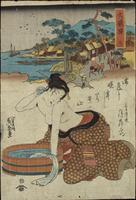
Oiso
Keisai Eisen
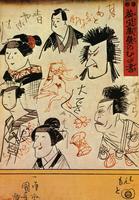
Faces
Utagawa Kuniyoshi
The Samurai
Utagawa Kunisada
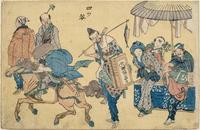
Street scenes newly pubished
Katsushika Hokusai
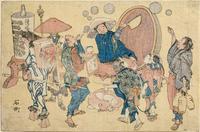
Street scenes newly pubished
Katsushika Hokusai
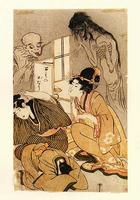
One Hundred Stories of Demons and Spirits
Kitagawa Utamaro
The Mosquito Netting
Utagawa Kunisada
A married man and a spinster
Kitagawa Utamaro
A Geisha in her Lover`s Room
Kitagawa Utamaro
People stopping to admire the gourd that miraculously appeared at the time of the birth of Prince Shôtoku
Utagawa Kuniyoshi