Analisi esperta di Manga di Katsushika Hokusai
Stile: Ukiyo-e · Genere: sketch and study
Expert Analysis: "Manga" by Katsushika Hokusai
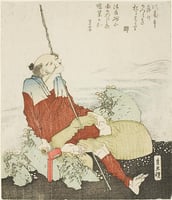
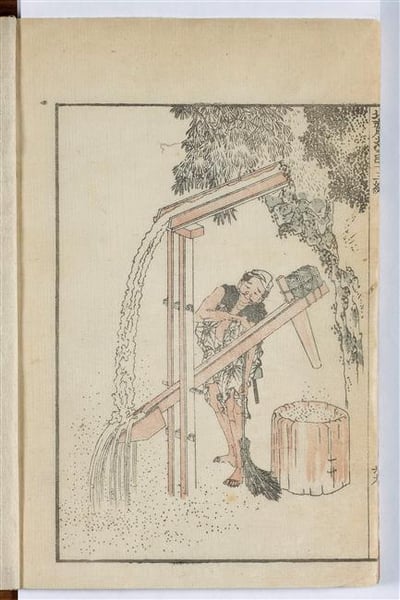
Katsushika Hokusai’s Manga (1814–1878) defies the conventional boundaries of a singular artwork; it is a sprawling, multi-volume compendium of thousands of sketches and studies that collectively revolutionized the visual language of Ukiyo-e and laid the conceptual groundwork for modern manga. Created as a series of informal "random drawings" (manga literally means "whimsical sketches"), the work is unparalleled in its encyclopedic scope and restless curiosity.
Significance within the Ukiyo-e Tradition
In the context of Ukiyo-e—an art form typically associated with refined woodblock prints of courtesans, actors, and landscapes—Hokusai’s Manga broke the mold by elevating the sketch to an independent artistic statement. It abandoned the polished, commercial finish of standard Ukiyo-e in favor of raw, spontaneous linework that captures motion, expression, and anatomy with breathtaking economy. This emphasis on studies (rather than finished compositions) allowed Hokusai to explore the essence of form—whether of a leaping frog, a twisting wrestler, or a cascading waterfall—free from the constraints of narrative or decoration.
What Makes It Revolutionary
-
Visual Encyclopedia of Life
The Manga is a compendium of everything: everyday people at work, mythical creatures, architectural details, flora and fauna, and even techniques of movement (e.g., waves, fire, or the human body in action). It served as both a teaching tool for artists and a record of Edo-period Japan, bridging high art and popular observation. -
Dynamic Lines and Rhythmic Composition
Hokusai’s line is the star: swift, calligraphic strokes that convey energy and humor. A single page might juxtapose a serene Buddha with a comical contortionist, demonstrating his mastery of both the sublime and the grotesque. This rhythmic variety influenced later Impressionists (Van Gogh, Degas) and modern cartoonists. -
Precursor to Modern Manga and Anime
By structuring an entire publication around sequential, lightly connected sketches, Hokusai invented a new visual grammar—one that prioritized storytelling through gesture and panel-like economy. Artists from Tezuka Osamu to contemporary animators cite the Manga as a direct ancestor of Japan’s modern sequential art.
Legacy
The Manga is significant not merely as a collection of studies but as a manifesto of observation: it celebrates the artist’s eye as a recorder of infinite motion and change. In its marriage of discipline (the precision of Ukiyo-e craft) and liberation (the freedom of the sketch), Hokusai’s work remains a touchstone for understanding how line, memory, and imagination converge to create art that is both timeless and vibrantly alive.
Museum / Gallery
Visivamente simili
20 opere con composizione e palette affini
Manga
Katsushika Hokusai
Manga
Katsushika Hokusai
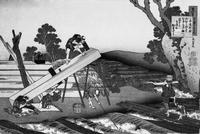
Sawyers Cutting a Log
Katsushika Hokusai
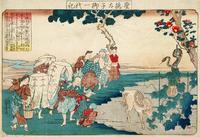
People stopping to admire the gourd that miraculously appeared at the time of the birth of Prince Shôtoku
Utagawa Kuniyoshi
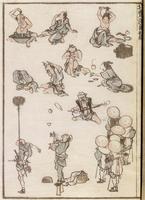
Manga
Katsushika Hokusai
Shah Tahmasp in a Tree House
Kamal ud-Din Behzad
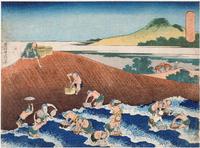
Fishing in the River Kinu
Katsushika Hokusai
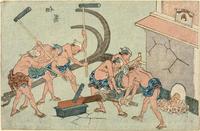
Street scenes newly pubished
Katsushika Hokusai
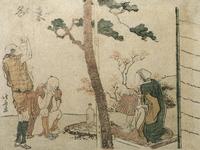
Kuwana
Katsushika Hokusai
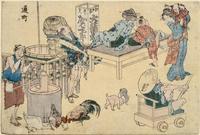
Street scenes newly pubished
Katsushika Hokusai
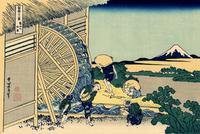
Watermill at Onden
Katsushika Hokusai
Sketch for "Moving the Boats"
Nicholas Roerich
Tokaido 53 Stations, Station #45, Ishiyakushi
Utagawa Kunisada
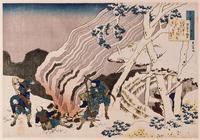
The fire fighters in the mountains
Katsushika Hokusai
Woman
Katsushika Hokusai
No Kakinomoto Hitomaro
Katsushika Hokusai
Tokaido 53 Stations, Station #3, Kawasaki
Utagawa Kunisada
Kuwana
Katsushika Hokusai
Forge Daejanggan
Kim Hong-do
Street scenes newly pubished
Katsushika Hokusai