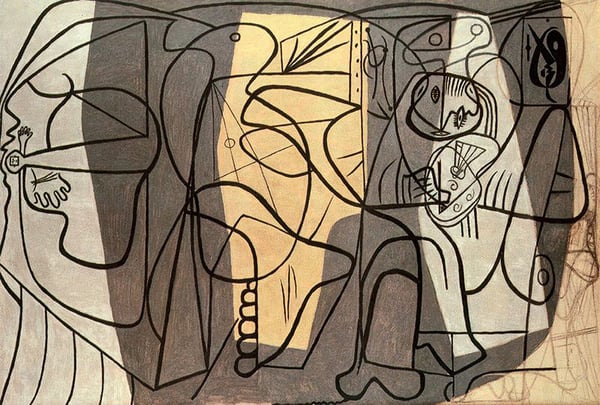
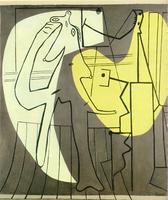
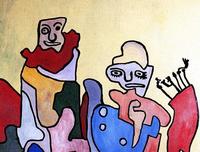
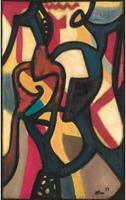
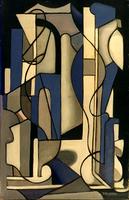
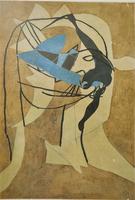
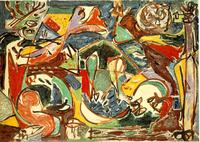
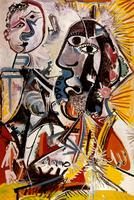
In Picasso’s Artist and his Model, executed during his Neoclassicist & Surrealist Period, the work stands as a crucial bridge between two seemingly opposed impulses. Classified as Surrealism within the genre painting tradition, it subverts the mundane studio scene by injecting dreamlike distortion and psychological tension. The artist’s presence alongside his model—a staple of academic painting—is here reimagined through surrealist dislocation, where form and space obey the logic of the unconscious rather than faithful representation. This tension between the classical subject (artist/model) and the surrealist transformation of that subject encapsulates Picasso’s broader period struggle: grounding the irrational in a recognizable human drama, making the everyday strange. The painting’s significance lies in its refusal to settle—it is at once a nod to Neoclassical order and a surrender to Surrealist freedom, charting a pivotal moment in modern art’s redefinition of reality.