
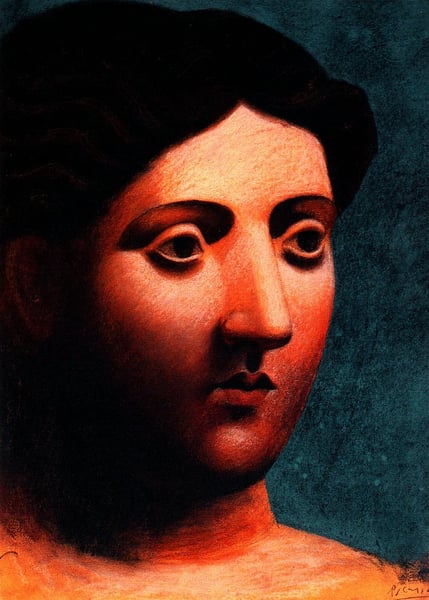
Head of woman
Dettagli
Analisi esperta di Head of woman di Pablo Picasso
Stile: Neoclassicism · Genere: portrait
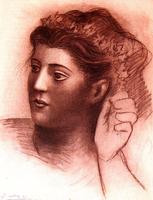
This portrait, Pablo Picasso’s Head of a Woman (c. 1921–1924), stands as a fascinating pivot point within the artist’s career—a work that embodies the stylistic tension between Neoclassicism and the emerging currents of Surrealism.
Created during what scholars term the Neoclassicist & Surrealist Period, this piece is significant precisely because it does not belong exclusively to either movement. Instead, it reveals Picasso’s dialogue with tradition while foreshadowing his later, more overtly irrational distortions.
Stylistic Significance:
In this portrait, Picasso abandons the fractured planes of his Cubist years and instead adopts the monumental clarity of Neoclassicism. The woman’s head is rendered with a simplified, almost sculptural solidity—her brow, nose, and jawline are sharply defined, evoking the profile of an ancient Greek or Roman marble bust. The strong contour lines and smooth, volumetric shading recall the draftsmanship of Jean-Auguste-Dominique Ingres, a master Picasso deeply admired during this phase. Yet, even within this classical framework, Picasso cannot suppress his modernist instinct: the eyes are slightly mismatched in size, the neck stretches with an unnatural elegance, and the overall face bears a mask-like, impassive expression—a hint that this is not a faithful portrait but an idealized, almost archetypal type.
Tension with Surrealism:
Though the style is Neoclassical, the period label acknowledges Picasso’s concurrent absorption of Surrealist ideas. The Head of a Woman was created at a time when Picasso was close to André Breton and the Surrealist circle, who championed the irrational, the subconscious, and the dreamlike. In this portrait, that influence manifests subtly: the Classical serenity feels hollow or uncanny, as if the figure is a marble statue from a dream. The excessive simplification of the features—the blank, unseeing eyes, the overly symmetrical cheeks—creates a sense of psychological detachment. The woman is not a specific sitter but a fetishized, monumental archetype, which Surrealists would later explore as a vehicle for primal, unconscious desires.
Art-Historical Importance:
This work is a key example of Picasso’s “return to order” after the upheaval of World War I, yet it resists a mere nostalgic revival. It demonstrates that Neoclassicism for Picasso was not a reactionary retreat but a deliberate, ironic adoption of classical language. By freezing the female form in hyper-idealized geometry, Picasso prefigures the Surrealist interest in the objet trouvé and the uncanny—a classical head that feels more like a fetish object than a living woman.
In summary, Head of a Woman is significant for its dual allegiance: it honors the clear, disciplined forms of Neoclassicism while planting the seeds of Surrealist irrationalism. It marks Picasso’s ability to inhabit a style completely, only to undermine it with a modern, disruptive sensibility—a tension that makes this portrait a crucial bridge between two seemingly opposite movements.
Visivamente simili
20 opere con composizione e palette affini
Head of woman
Pablo Picasso
Head of woman
Pablo Picasso
Head of a woman
Pablo Picasso

The City 1
Carlo Maria Mariani
Profile
Carlo Maria Mariani
Portrait of Venus
Julie Buchet
Madame Moitessier (study)
Jean Auguste Dominique Ingres
Head of a Woman
Albrecht Durer
Theme & Variation Plate #1
Fornasetti
Head of woman
Pablo Picasso
Jane Morris
Dante Gabriel Rossetti

Madame de Pompadour
Maurice Quentin de La Tour
Head of a Woman
Orazio Gentileschi
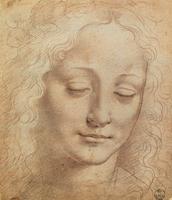
Female Head
Leonardo da Vinci
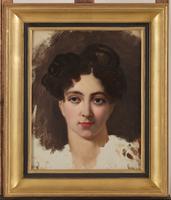
Anne-François-Hippolyte Boutet, known as Mademoiselle Mars
Horace Vernet
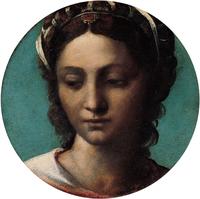
Head of a Woman
Sebastiano del Piombo
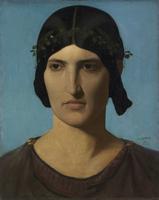
Head of an Italian Woman
Jean-Leon Gerome
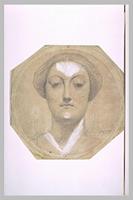
Portrait of Isabella Hittorff
Jean Auguste Dominique Ingres
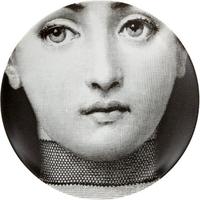
Theme & Variations Decorative Plate #220 (Face with Choker Necklace)
Fornasetti
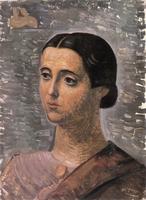
Figura di Donna
Mario Tozzi