
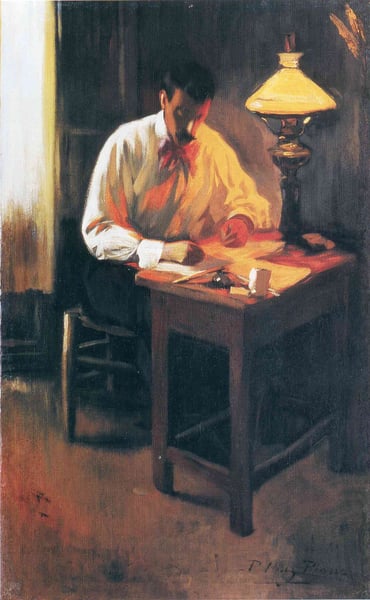
Portrait of Josep Cardona
Подробности
Экспертный разбор работы «Portrait of Josep Cardona» художника Pablo Picasso
Стиль: Impressionism · Жанр: genre painting
This artwork is a fascinating window into Pablo Picasso’s formative years, before he revolutionized modern art with Cubism. Painted in the Impressionist style during his Early Years, Portrait of Josep Cardona stands out for several reasons:
-
Bridging tradition and innovation: While Picasso’s later work would shatter perspective and form, here he embraces the core tenets of Impressionism—loose, visible brushstrokes, a focus on capturing changing light, and a sense of immediacy. The painting demonstrates his early mastery of these techniques, showing that his radical later experiments were built on a solid foundation of late-19th‑century artistic language.
-
Genre painting as portraiture: The work is classified as a genre painting (scenes of everyday life) rather than a formal portrait. This choice aligns with Impressionism’s interest in candid, unposed moments. Picasso presents Josep Cardona not as a stiff, symbolic figure but as a living person caught in a natural, perhaps even mundane, activity. This humanizes the subject and reflects the artist’s growing desire to depict reality as experienced, not as idealized.
-
Significance within Picasso’s early development: During his Early Years (roughly the 1890s to 1900), Picasso absorbed a wide range of influences—from academic realism to Symbolism. Portrait of Josep Cardona exemplifies his brief but important Impressionist phase, where he learned to prioritize light, atmosphere, and subjective perception. This phase directly preceded his Blue and Rose periods, and its focus on emotional tone and fleeting visual effects can be seen as a stepping stone toward those more personal, symbolic works.
-
Rarity and historical context: Impressionist works by Picasso are relatively scarce compared to his later output, making this painting a valuable document of his artistic evolution. It shows that even as a young artist, Picasso was not content with a single style; he was already experimenting with the avant‑garde currents of his time, setting the stage for his eventual break with tradition.
In sum, Portrait of Josep Cardona is significant because it captures a moment of transition—Picasso’s embrace of Impressionism’s spontaneity and everyday subject matter, which laid the groundwork for his later, more radical innovations.
Визуально похожие
20 работ с близкой композицией и палитрой
Iltahetki
Elin Danielson-Gambogi
Sharing Lamplight
Noè Bordignon
Homework
Nikolay Bogdanov-Belsky
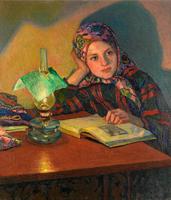
Inspiration
Nikolay Bogdanov-Belsky
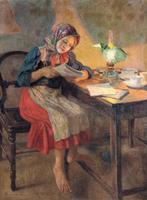
Reading by the Lamp (Schoolgirl)
Nikolay Bogdanov-Belsky
Lamplight
Victor Pasmore
The ill woman
Vasily Polenov
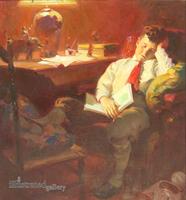
Boy Falls Asleep in a Chair With Book in His Lap
Haddon Sundblom
Appraising the Day's Work
Anna Ancher
Twenty Minutes Past Three
Tom Roberts
Evening
Jakub Schikaneder
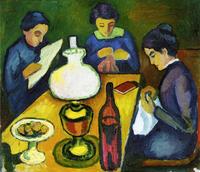
Three Women at the Table by the Lamp
August Macke
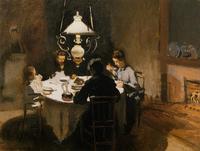
The Dinner
Claude Monet
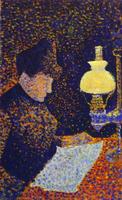
Woman by a lamp
Paul Signac
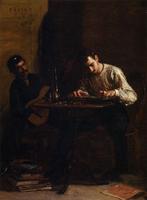
Professionals at Rehearsal
Thomas Eakins
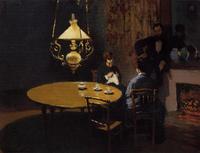
The Dinner
Claude Monet
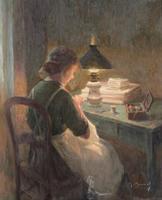
Sewing Under the Lamp
Maurice Louis Monnot
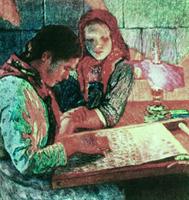
At work
Nikolay Bogdanov-Belsky

Sisters
Elin Danielson-Gambogi
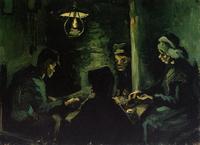
Four Peasants at a Meal (Study for 'The Potato Eaters')
Vincent van Gogh