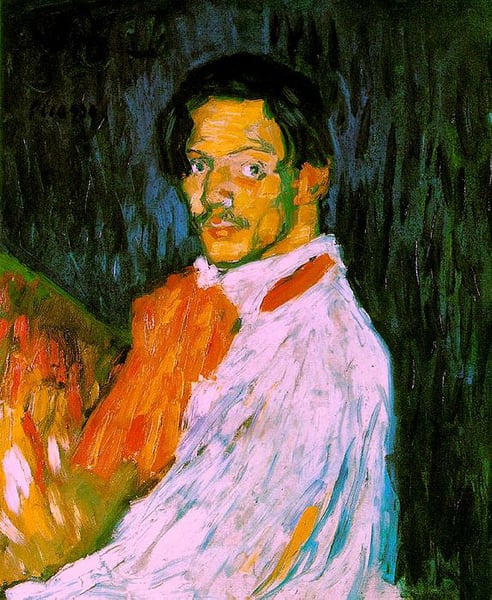
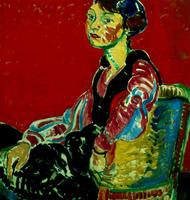
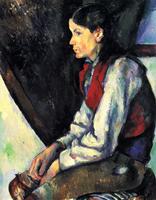
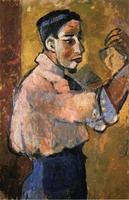
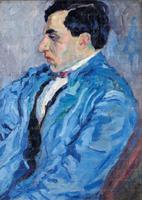
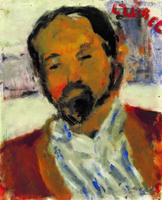
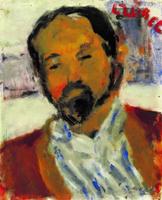
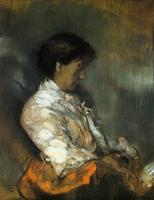
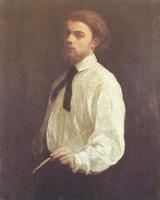
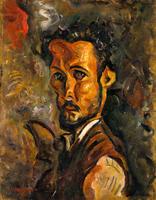
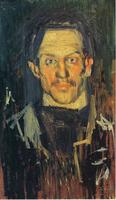
As an expert art historian, I will analyze Pablo Picasso’s Self-Portrait based strictly on the provided facts: it belongs to the Impressionist style, the self-portrait genre, and Picasso’s “Early Years” period. This combination is significant because it places Picasso’s work within a transitional phase—long before his revolutionary Cubist breakthroughs—and highlights his engagement with the dominant avant-garde movement of the late 19th century. The work is remarkable for demonstrating Picasso’s early mastery of Impressionist techniques—loose brushwork, emphasis on light and color, and a focus on capturing a fleeting moment of self-perception. As a self-portrait, it also offers intimate insight into the young artist’s evolving identity, showing him not yet as the radical innovator but as a skilled painter absorbing and reinterpreting the lessons of Monet, Renoir, and Degas. Within the broader Impressionist canon, this piece stands out for its raw, personal energy, foreshadowing the bold subjectivity that would define Picasso’s later career. Its significance lies in documenting the foundation of a genius, rooted in the Impressionist celebration of direct visual experience, while subtly hinting at the psychological depth that would become a hallmark of modern self-portraiture.