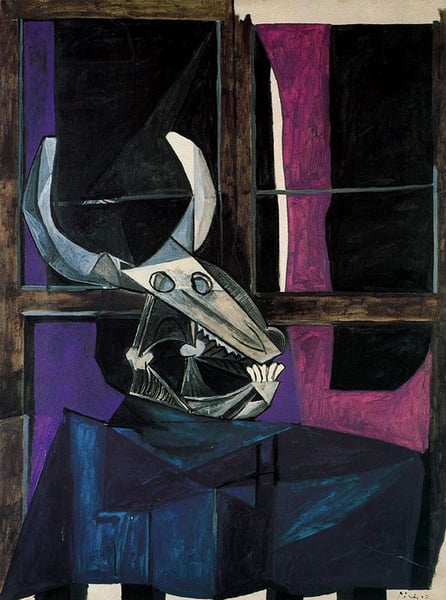
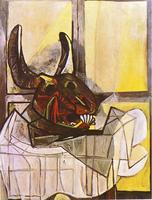
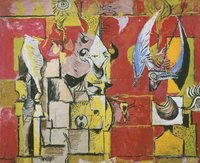
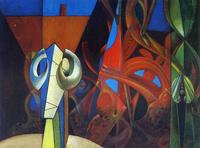
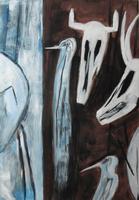
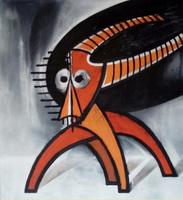
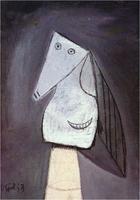
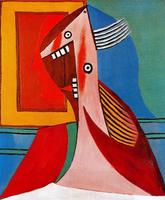
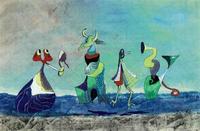
This work exemplifies a pivotal moment in Picasso’s career, where the rigid structure of Cubism merges with the dreamlike, irrational logic of Surrealism. As a still life from his Neoclassicist & Surrealist Period, the “skull of ox” becomes both a geometric dissection of form (Cubist tradition) and a symbolic, psychologically charged object (Surrealist preoccupation). The choice of a skull—a traditional memento mori—is reinterpreted through fragmented planes and distorted perspective, challenging the viewer to see death not as a static emblem but as a dynamic, disquieting presence. This hybrid approach makes the painting significant as a bridge between two revolutionary movements, showing how Picasso could fuse analytical structure with subconscious imagery within the intimate genre of still life.